This site is devoted to Walt Whitman: his works, life, and my personal associaton with his works. Besides poetry, there are posts about music inspired by Whitman. Several posts focus on Whitman's New York.
Category Archives: essays / commentary (Roger W. Smith)
This poem almost needs no commentary. But I would say that its simplicity and lack of affectation – and its directness – are notable..
And that Whitman speaks to me. Personally. To my personal thoughts and observations.
I find myself observing unhappiness and worse in the course of the days and passing time. . Human suffering and degradation that one hears or reads about; and situations that produce such feelings in persons of my acquaintance. And besides suffering, regrets and remorse.
VIGIL strange I kept on the field one night;
When you my son and my comrade dropt at my side that day,
One look I but gave which your dear eyes return’d with a look I shall never forget,
One touch of your hand to mine O boy, reach’d up as you lay on the ground,
Then onward I sped in the battle, the even-contested battle,
Till late in the night reliev’d to the place at last again I made my way,
Found you in death so cold dear comrade, found your body son of responding kisses, (never again on earth responding,)
Bared your face in the starlight, curious the scene, cool blew the moderate night-wind,
Long there and then in vigil I stood, dimly around me the battle-field spreading,
Vigil wondrous and vigil sweet there in the fragrant silent night,
But not a tear fell, not even a long-drawn sigh, long, long I gazed,
Then on the earth partially reclining sat by your side leaning my chin in my hands,
Passing sweet hours, immortal and mystic hours with you dearest comrade—not a tear, not a word,
Vigil of silence, love and death, vigil for you my son and my soldier,
As onward silently stars aloft, eastward new ones upward stole,
Vigil final for you brave boy, (I could not save you, swift was your death,
I faithfully loved you and cared for you living, I think we shall surely meet again,)
Till at latest lingering of the night, indeed just as the dawn appear’d,
My comrade I wrapt in his blanket, envelop’d well his form,
Folded the blanket well, tucking it carefully over head and carefully under feet,
And there and then and bathed by the rising sun, my son in his grave, in his rude-dug grave I deposited,
Ending my vigil strange with that, vigil of night and battle-field dim,
Vigil for boy of responding kisses, (never again on earth responding,)
Vigil for comrade swiftly slain, vigil I never forget, how as day brighten’d,
I rose from the chill ground and folded my soldier well in his blanket,
And buried him where he fell.
This post is in the format of a 20-page essay (downloadable Word document above).
My essay is entitled “The Beauty of Walt Whitman’s Images.”
from the introduction:
I have become well acquainted with Walt Whitman’s Leaves of Grass through repeated readings — I have committed many lines to memory. From familiarity — and, I suppose one would say, the spiritual comfort Whitman’s poetry gives me — Leaves of Grass has become a sort of Bible for me.
Below is a compilation by me of striking, beautiful, brilliant — so original, and often unique — images that I have culled from Leaves of Grass. I think they prove that Whitman, who is deliberately and studiously non-literary — without affectation and without using common poetic tropes — constantly infuses his poetry with images of startling beauty. That’s the best way I know how to put it.
“No one makes craft, carefully wrought, seem more casual than Walt Whitman.”
— Richard Rhodes, How to Write: Advice and Reflections (New York: William Morrow and Company, 1995), pg. 12
A former friend of mine, the poet Charles Pierre, made a comment to me — I wish I could remember exactly what he said — to the effect that Walt Whitman is actually very difficult. Difficult for the reader, that is. That he presents a level of difficulty that requires acute understanding of? I think Pierre would have said: an understanding of what Whitman is doing; of his poetic technique, of his originality, poetic genius, and ingenuity. That Whitman, who seems on the surface so simple, is not really simple.
And yet, I find Whitman to be easy to become acquainted with and comprehend without necessarily being (as in the case of myself) expert at poetry. I “got” his poetry almost right away.
I knew a man . . . . he was a common farmer . . . . he was the father of five sons . . .
and in them were the fathers of sons . . . and in them were the fathers of sons.
This man was of wonderful vigor and calmness and beauty of person;
The shape of his head, the richness and breadth of his manners, the pale yellow
and white of his hair and beard, the immeasurable meaning of his black eyes,
These I used to go and visit him to see . . . . He was wise also,
He was six feet tall . . . . he was over eighty years old . . . . his sons were massive
clean bearded tanfaced and handsome,
They and his daughters loved him . . . all who saw him loved him . . . they did not
love him by allowance . . . they loved him with personal love;
He drank water only . . . . the blood showed like scarlet through the clear brown
skin of his face;
He was a frequent gunner and fisher . . . he sailed his boat himself . . . he had a fine
one presented to him by a shipjoiner . . . . he had fowling-pieces, presented to
him by men that loved him;
When he went with his five sons and many grandsons to hunt or fish you would pick
him out as the most beautiful and vigorous of the gang,
You would wish long and long to be with him . . . . you would wish to sit by him in
the boat that you and he might touch each other.
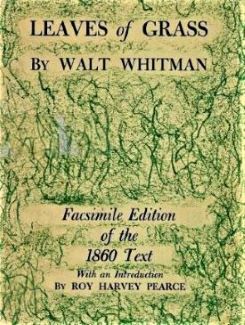
Written in free verse, “I knew a man,” by Walt Whitman, is part of “I SING THE BODY ELECTRIC.,” a poem with nine short subsections included in the original (1855) edition of Leaves of Grass.
It is a great example of the utter simplicity and non-literary character of Whitman’s poetry. (This aspect of Whitman’s poetry is analyzed and explained definitively in C. Carroll Hollis’s monograph Language and Style in Leaves of Grass [Louisiana State University Press, 1983]).
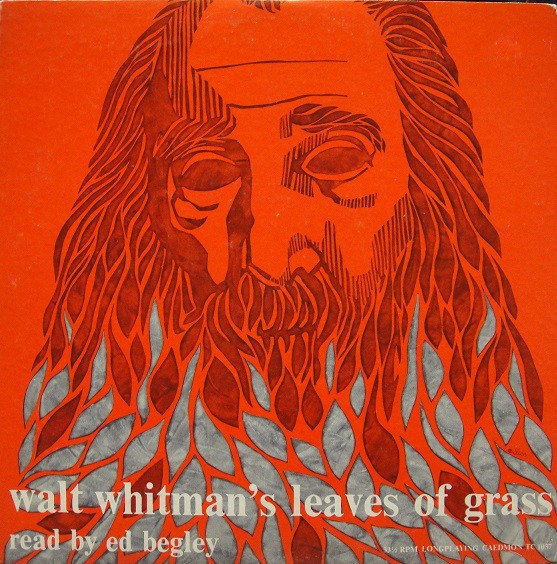
The poem is read here by the actor Ed Begley (1901-1970). Begley is, without question, the greatest reader, the greatest vocal interpreter, of Whitman’s poetry ever.
Reflecting upon this poem, it occurs to me that I know, and have known (beginning with my parents), people eliciting such thoughts, such admiration from me.
People seemingly ordinary. Meaning not famous, or great as we commonly take great to mean when we speak of a great statesman, a great author, or any other person of such stature.
Ordinary people.
Yet remarkable people.
Men and women whose character, integrity, sincerity, kindness, thoughtfulness, unselfishness, fortitude, and so forth one is struck by over and over, almost daily. Of whom one finds oneself reminding oneself constantly what a privilege it is to know such persons. And of what they have to offer. To you or me.
Whitman stopped to admire a blade of grass. I often find myself, as did Whitman in this poem, “stopping to admire” ordinary people whom I meet and reflecting upon their wonderful qualities and, by extension, upon our common humanity.
The house-builder at work in cities or anywhere,
The preparatory jointing, squaring, sawing, mortising,
The hoist-up of beams, the push of them in their places, laying them regular,
Setting the studs by their tenons in the mortises according as they were prepared,
The blows of mallets and hammers, the attitudes of the men, their curv’d limbs,
Bending, standing, astride the beams, driving in pins, holding on by posts and braces,
The hook’d arm over the plate, the other arm wielding the axe,
The floor-men forcing the planks close to be nail’d,
Their postures bringing their weapons downward on the bearers,
The echoes resounding through the vacant building;
The huge storehouse carried up in the city well under way,
The six framing-men, two in the middle and two at each end,
carefully bearing on their shoulders a heavy stick for a
cross-beam,
The crowded line of masons with trowels in their right hands
rapidly laying the long side-wall, two hundred feet from front to rear,
The flexible rise and fall of backs, the continual click of the trowels striking the bricks,
The bricks one after another each laid so workmanlike in its place, and set with a knock of the trowel-handle,
The piles of materials, the mortar on the mortar-boards, and the steady replenishing by the hod-men;
As I told my students when I was teaching at St. John’s University, Walt Whitman the poet used the simplest words, images, and tropes he could find. He built his poems out of all-original materials that were, so to speak, close at hand (sort of like a bird using twigs on the ground to build a nest) — nothing was “literary” or derived.
Here we see minute observation.
The particular made universal. The concrete, the here and now, timeless.
Wonderful.
Whitman had a genius for using so called deverbal nouns, as is explained by James Perrin Warren in a fascinating book I have been reading: Walt Whitman’s Language Experiment (The Pennsylvania State University Press, 1990).
Walt Whitman’s father, Walter Whitman, was a carpenter and house builder. Whitman was living in Brooklyn when Leaves of Grass was first published. His father was making a living then as a house builder. It was there that Ralph Waldo Emerson called in the year 1855 upon the poet, who in the frontispiece to the first edition of Leaves of Grass was pictured as a common working man, a Christlike carpenter-poet.
I hear America singing, the varied carols I hear,
Those of mechanics, each one singing his as it should be blithe and strong,
The carpenter singing his as he measures his plank or beam,
The mason singing his as he makes ready for work, or leaves off work,
The boatman singing what belongs to him in his boat, the deckhand singing on the steamboat deck,
The shoemaker singing as he sits on his bench, the hatter singing as he stands,
The wood-cutter’s song, the ploughboy’s on his way in the morning, or at noon intermission or at sundown,
The delicious singing of the mother, or of the young wife at work, or of the girl sewing or washing,
Each singing what belongs to him or her and to none else,
The day what belongs to the day—at night the party of young fellows, robust, friendly,
Singing with open mouths their strong melodious songs.
In the 1970’s, when I first lived in New York, I used to frequently borrow LP records from the New York Public Library. I once borrowed an LP on the Caedmon label (a pioneer in audio recordings) of the actor Ed Begley (1901-1970) reading selections from Walt Whitman’s Leaves of Grass.
I told my poet friend Charles Pierre, a great admirer of Whitman, whose poetry influenced the former’s own book of poetry (his first), Green Vistas, about the marvelous (as I found it to be) recording.
“Who was the reader?” he asked.
“Ed Begley,” I said.
“Ed Begley,” he answered. “Oh, he’s wonderful.”
I was wondering how he knew this (when it came to Whitman).
“I Hear America Singing” was the first poem by Whitman – THE poem — that got me into Whitman. I had to hear it out loud, it seemed.
Listen.
I heard the poem being read (by a different reader) on an audiotape yesterday.
It is a very short poem. Notable for:
Utter simplicity. Saying just enough to convey the meaning, profoundly, without anything else (and no extraneous references or allusions, literary or otherwise). For example: “The delicious singing of the mother, or of the young wife at work, or of the girl sewing or washing.” Just that: a girl sewing or washing. Nothing more needs to be said. (Normally, we might expect to hear “sewing a new coat,” or “washing clothes.”)
Biblical cadences and parallelism: “The mason singing his as he makes ready for work, or leaves off work;” “the ploughboy’s on his way in the morning, or at noon intermission or at sundown.” Giving the reader an exquisite sense of aesthetic satisfaction and of completion.
Parallelism achieved by the use of grammatical constructions — i.e., gerunds such as “sewing” or “washing.”
Repetition in the way one might hear in a nursery rhyme: “The boatman singing what belongs to him in his boat, the deckhand singing on the steamboat deck”; “the day what belongs to the day.”
The use of adjectives that one might not expect in the context, adjectives that delight: “the delicious singing of the mother.”
A manner of stating things so that what seems simple and apparent has profound implications, and what is not said or left out is as important as what is said. For example: “the hatter singing as he stands.” This phrase invites us to “fill in the blanks” and envision the hatter standing at a workbench. Whitman tells only so much and invites the reader to complete the picture in his or her mind. It is a kind of addition by subtraction.
“I see Christ once more eating the bread of his last supper, in the midst of youths and old persons, ”
— Walt Whitman, “Salut au Monde!,” Leaves of Grass (1856 edition)
How — by what miracle of human inspiration and creativity — does the self-educated poet Walt Whitman make the old and familiar seem fresh and new, as if we were encountering and hearing about it anew, or perhaps for the first time?
(Hint: It’s because he created everything anew, relying on no preexisting models or poetic tropes.)
On Monday, November 6, 2017, I attended a performance of A German Requiem, to Words of the Holy Scriptures (“Ein deutsches Requiem, nach Worten der heiligen Schrift”) by Johannes Brahms at Carnegie Hall in New York. The work was composed between 1865 and 1868 and consists of seven movements. The work is, as noted in a Wikipedia entry, “sacred but non-liturgical,” which can be seen in the fact that it is not in Latin and is not based on the Latin mass.
The program notes state:
Unlike the traditional Requiem, a prayer for the dead, Ein deutsches Requiem speaks to the mourners, comforting them and reminding them that the inevitability of death makes it a part of life. … Bypassing the traditional prayers for the dead, Brahms selected his text from the German Lutheran Bible and the Apocrypha. In so doing, he expressed his own feelings toward death, which were not governed by a formal sense of religion. Ein deutsches Requiem focuses on the needs of the living — Brahms had considered calling it a “human” requiem — on the brevity of life and the expectation of “evige Freude,” eternal joy.
This brought to mind other famous requiems, namely Mozart’s and Berlioz’s requiems. Both use the traditional liturgy and, what is most notable, both are masses for the DEAD. They are solemn, mournful — without, I would say, a hint of joy, and, in the case of the Berlioz requiem (which is a masterpiece), I would say, scary, almost terrifying.
I could not help thinking also about the parallels with Walt Whitman and his views of death. Below are some excerpts from the text of the Brahms requiem and some observations about Whitman’s views on death and excerpts from his poems.
Selig sind, die da Leid tragen, denn sie sollen getröstet werden. (Blessed are they that mourn; for they shall be comforted.) – Matthew 5:4
Die mit Tränen säen, werden mit Freuden ernten. Sie gehen hin und weinen und tragen edlen Samen, und kommen mit Freuden und bringen ihre Garben. (They that sow in tears shall reap in joy. He that goeth forth and weepeth, bearing precious seed, shall doubtless come again with rejoicing, bringing his sheaves with him.) – Psalm 126:5,6
Denn alles Fleisch ist wie Gras und alle Herrlichkeit des Menschen wie des Grases Blumen. Das Gras ist verdorret und die Blume abgefallen. (For all flesh is as grass, and all the glory of man as the flower of grass. The grass withereth, and the flower thereof falleth away.) – 1 Peter 1:24
Ihr habt nun Traurigkeit; aber ich will euch wieder sehen und euer Herz soll sich freuen und eure Freude soll neimand von euch nehmen. (And ye now therefore have sorrow; but I will see you again, and your heart shall rejoice, and your joy no man taketh from you.) – John 16:22
Ich will euch trösten, wie Einen seine Mutter tröstet. (As one whom his mother comforteth, so will I comfort you.) – Isaiah 66:13
Siehe, ich sage euch ein Geheimnis: Wir werden nicht alle entschlafen, wir werden aber alle verwandelt werden; und dasselbige plötzlich, in einem Augenblick, zu der Zeit der letzten Posaune. Denn es wird die Posaune schallen, und die Toten wervandelt werden. Dann wird erfüllet werden das Wort, das geschrieben steht: Der Tod is verschlungen in den Sieg. Tod, wo ist dein Stachel? Hölle, wo ist dein Sieg? (Behold, I shew you a mystery; We shall not all sleep, but we shall all be changed. In a moment, in the twinkling of an eye, at the last trump: for the trumpet shall sound, and the dead shall be raised incorruptible, and we shall be changed … then shall be brought to pass the saying that is written, Death is swallowed up in victory. O death, where is they sting? O grave, where is they victory?) – 1 Corinthians 15:51, 52, 54, 55
Walt Whitman is a great poet of the joys of life, but he is equally a great poet of death. Few poets have been immersed in the mystery of death or lived so close to death as he did. Fewer still have treated death with such an eloquent voice or created such an awesome persona. Death is a major component of the richness and variety of Leaves of Grass. …. Whitman’s poetry illustrates the universal truth that death is not only the most overwhelming and the least understood event of our existence but also the most intriguing. He realized from the outset of his poetic career that if his poetry were to reflect the essence and scope of our life experiences — and those of his own life — it must speak of death openly, imaginatively, and unswayed by clichés or established doctrines. He became a sensitive student of death and dying, familiar with disease, anguish, violence, and the displays of both fear and courage among the many dying persons he observed.
“Death is a vital part of [Whitman’s]s gospel of universal brotherhood and sisterhood, of his luminous vision of the progressive unfolding of the human race … and of his profound spirituality. And it is a vital element in the yearning for love that permeates the poems. … He viewed death as an eternal and benign mystery. … At times his poems treat death gladly, as if to embrace it; at times they treat it quizzically.
Throughout Leaves of Grass he proclaimed his faith that death was not a plunge into the terminal nada and was convinced that we can live our life fully only if we are prepared to welcome death as a transition in a continued, but still mysterious, process of spiritual evolution. Underlying this conviction was his belief that death promises some kind of future continuity for everyone—and particularly for himself. And, as the poems reveal, this belief did not come easily but was part of a trying personal and ideological struggle. Moreover, he felt that a profound respect for death was fundamental to his aesthetic and to all great art. … [Whitman’s] “Song of Myself” contains some of the most affecting death scenes in all poetry. — Harold Aspiz, So Long! Walt Whitman’s Poetry of Death (The University of Alabama Press, 2004)
Whitman had an intimate acquaintance of death as a volunteer nurse in Civil War hospitals. — Roger W. Smith
From the beginning Whitman seems to have recognized his ability to comfort the ailing immigrants and later the hospitalized horse-car drivers and injured firemen and soldiers by speaking with them in the humble manner that characterized his — and their — humble origins and by entering into their mode of thinking. — Harold Aspiz, So Long! Walt Whitman’s Poetry of Death
The grave—the grave—what foolish man calls it a dreadful place? It is a kind friend, whose arms shall compass us round about, and while we lay our heads upon his bosom, no care, temptation, nor corroding passion shall have power to disturb us. Then the weary spirit shall no more be weary; the aching head and aching heart will be strangers to pain; and the soul that has fretted and sorrowed away its little life on earth will sorrow not any more.
I do not dread the grave. There is many a time when I could lay down, and pass my immortal part through the valley of the shadow, as composedly as I quaff water after a tiresome walk. For what is there of terror in taking our rest? What is there here below to draw us with such fondness? Life is the running of a race—a most weary race, sometimes. Shall we fear the goal, merely because it is shrouded in a cloud?
– “The Tomb-Blossoms,” The United States Magazine and Democratic Review, January 1842
I wish I could translate the hints about the dead young men and women,
And the hints about old men and mothers, and the offspring taken soon out of their laps.
What do you think has become of the young and old men?
And what do you think has become of the women and children?
They are alive and well somewhere,
The smallest sprout shows there is really no death,
And if ever there was it led forward life, and does not wait at the end to arrest it,
And ceas’d the moment life appear’d.
All goes onward and outward, nothing collapses,
And to die is different from what any one supposed, and luckier.
— Leaves of Grass
I know I am deathless,
I know this orbit of mine cannot be swept by a carpenter’s
compass,
I know I shall not pass like a child’s carlacue cut with a burnt stick at night.
— Leaves of Grass
[A carlacue (variant of curlicue) is a fancifully curved or spiral figure.]
I bequeath myself to the dirt to grow from the grass I love,
If you want me again, look for me under your boot-soles.
You will hardly know who I am, or what I mean,
But I shall be good health to you nevertheless,
And filter and fibre your blood.
Failing to fetch me at first, keep encouraged,
Missing me one place, search another,
I stop somewhere waiting for you.
— Leaves of Grass
If all came but to ashes of dung,
If maggots and rats ended us, then Alarum! for we are betray’d,
Then indeed suspicion of death.
Do you suspect death? if I were to suspect death I should die now,
Do you think I could walk pleasantly and well-suited toward annihilation?
— Leaves of Grass
Great is Death—sure as Life holds all parts together, Death holds all parts together,
Death has just as much purport as Life has,
Do you enjoy what Life confers? you shall enjoy what Death confers,
I do not understand the realities of Death, but I know they are great,
I do not understand the least reality of Life—how then can I understand the realities of Death?
— Leaves of Grass
I do not know what follows the death of my body,
But I know well that whatever it is, it is best for me,
And I know well that what is really Me shall live just as much as before.
— Leaves of Grass
O the beautiful touch of Death, soothing and benumbing a few moments, for reasons;
O that of myself, discharging my excrementitious body, to be burned, or rendered to powder, or buried,
My real body doubtless left to me for other spheres,
My voided body, nothing more to me, returning to the purifications, further offices, eternal uses of the earth.
— Leaves of Grass
Whereto answering, the sea,
Delaying not, hurrying not,
Whisper’d me through the night, and very plainly before day-break,
Lisp’d to me the low and delicious [italic added] word death,
And again death, death, death, death,
Hissing melodious, neither like the bird nor like my arous’d child’s heart,
But edging near as privately for me rustling at my feet,
Creeping thence steadily up to my ears and laving me softly all over,
Death, death, death, death, death.
— “Out of the Cradle Endlessly Rocking.”
And if the memorials of the dead were put up indifferently everywhere, even in the room where I
eat or sleep, I should be satisfied,
And if the corpse of any one I love, or if my own corpse, be duly rendered to powder, and poured
in the sea, I shall be satisfied,
Or if it be distributed to the winds, I shall be satisfied.
— Leaves of Grass
Death is beautiful from you, (what indeed is finally beautiful except death and love?)
O I think it is not for life I am chanting here my chant of lovers, I think it must be for death,
For how calm, how solemn it grows to ascend to the atmosphere of lovers,
Death or life I am then indifferent, my soul declines to prefer,
(I am not sure but the high soul of lovers welcomes death most,)
Indeed O death, I think now these leaves mean precisely the same as you mean.
— Leaves of Grass
My dead absorb or South or North—my young men’s bodies absorb, and their precious precious blood,
Which holding in trust for me faithfully back again give me many a year hence,
In unseen essence and odor of surface and grass, centuries hence,
In blowing airs from the fields back again give me my darlings, give my immortal heroes,
Exhale me them centuries hence, breathe me their breath, let not an atom be lost,
O years and graves! O air and soil! O my dead, an aroma sweet!
Exhale them perennial sweet death, years, centuries hence.
— Leaves of Grass
I saw battle-corpses, myriads of them,
And the white skeletons of young men, I saw them,
I saw the debris and debris of all the slain soldiers of the war,
But I saw they were not as was thought,
They themselves were fully at rest, they suffer’d not,
The living remain’d and suffer’d, the mother suffer’d,
And the wife and the child and the musing comrade suffer’d,
And the armies that remain’d suffer’d.
– “When Lilacs Last in the Dooryard Bloom’d”
I make a scene, a song, brief (not fear of thee,
Nor gloom’s ravines, nor bleak, nor dark—for I do not fear thee,
Nor celebrate the struggle, or contortion, or hard-tied knot),
Of the broad blessed light and perfect air, with meadows, rippling tides, and trees
and flowers and grass,
And the low hum of living breeze—and in the midst God’s beautiful eternal right hand,
Thee, holiest minister of Heaven—thee, envoy, usherer, guide at last of all,
Rich, florid, loosener of the stricture-knot call’d life,
Sweet, peaceful, welcome Death.
“Death’s Valley” (published in Harper’s Monthly Magazine, April 1892):
Selig sind, die da Leid tragen (Blessed are they who bear suffering)
the opening of Ein deutsches Requiem
Denn alles Fleisch, es ist wie Gras (For all flesh, it is as grass)
the second movement of Ein deutsches Requiem
This extraordinarily powerful, lyrical movement never fails to move me. I had long thought that the lyrics must mean something like: Let’s face it, everyone is going to die; death and decay are inevitable. But the words from scripture are actually consoling:
Denn alles Fleisch ist wie Gras und alle Herrlichkeit des Menschen wie des Grases Blumen. Das Gras ist verdorret und die Blume abgefallen.
So seid nun geduldig, lieben Brüder, bis auf die Zukunft des Herrn. Siehe, ein Ackermann wartet auf die köstliche Frucht der Erde und is geduldig darüber, bis er empfahe den Morgenregen und Abendregen.
Aber des Herrn Wort bleibet in Ewigkeit.
Die Erlöseten des Herrn werden wieder kommen, und gen Zion kommen mit Jauchzen; ewige Freude wird über ihrem Haupte sein; Freude und Wonne werden sie ergreifen und Schmerz und Seufzen wird weg müssen.
(For all flesh is as grass, and all the glory of man as the flower of grass. The grass withereth, and the flower thereof falleth away.
Be patient therefore, brethren, unto the coming of the Lord. Behold, the husbandmen waiteth for the precious fruit of the earth, and hath long patience for it, until he receive the early and latter rain.
But the word of the Lord endureth for ever.
Those whom the Lord delivers shall return, and come to Zion with songs and everlasting joy upon their heads: they shall obtain joy and gladness, and sorrow and sighing shall flee away.)
The music perfectly matches these sentiments.
Introitus
from Mozart, Requiem in D minor, K. 626
Requiem aeternam and Kyrie
from Berlioz, Grande Messe des morts (or Requiem), Op. 5
Pie Jesu
from Gabriel Fauré, Requiem in D minor, Op. 48
The focus of this “choral-orchestral setting of the shortened Catholic Mass for the Dead in Latin … is on eternal rest and consolation. … Fauré wrote of the work, ‘Everything I managed to entertain by way of religious illusion I put into my Requiem, which moreover is dominated from beginning to end by a very human feeling of faith in eternal rest.’ … He told an interviewer: ‘It has been said that my Requiem does not express the fear of death and someone has called it a lullaby of death. But it is thus that I see death: as a happy deliverance, an aspiration towards happiness above, rather than as a painful experience.’ (Wikipedia)
“Every soul has its own individual language, often unspoken, or lamely feebly haltingly spoken; but a true fit for that man, and perfectly adapted to his use.—The truths I tell to you or any other may not be plain to you, because I do not translate them fully from my idiom into yours.—If I could do so, and do it well, they would be as apparent to you as they are to me; for they are truths.—No two have exactly the same language, and the great translator and joiner of the whole is the poet, He has the divine grammar of all tongues, and says indifferently and alike How are you friend? to the President in the midst of his cabinet, and Good day my brother, to Sambo, among the hoes of the sugar field and both understand him and know that his speech is right.—”
— Walt Whitman, Notebooks and Unpublished Prose Manuscripts (New York University Press, 1984), vol. 1, pp. 60-61
This is characteristic Whitmanesque language. So bracing. So original. So simple and straightforward. Utterly sincere and spontaneous. Utterly unaffected. It feels like language made anew in the workshop of the consciousness. It is almost childlike in its simplicity yet profound in its implications. If feels as if not only were a new poetic language and grammar being invented, but as if the world were being seen anew with fresh eyes. Yet, not pompously from on high, but from the level of a friend of yours or mine — of the president or a slave — who can be so greeted without ceremony.

 Roger W. Smith's Walt Whitman site