Category Archives: miscellaneous

on the glories of English


It is organic. It is unstructured and unregulated. It has developed naturally. It seems to a native speaker such as myself unequaled in its richness, by which I mean to say the variety of source languages — such as the Germanic and French — out of which it grew, and its astonishing richness of vocabulary.

— Roger W. Smith


*****************************************************

“The learned among the French will own that the comprehensiveness of expression is a glory in which the English tongue not only equals, but excels it neighbours.

“… it really is the noblest and most comprehensive of all the vulgar languages of the world.”

— Daniel Defoe, “Of Academies,” An Essay Upon Projects (1697)


NOTE: By “vulgar,” Defoe meant the word not in the sense commonly used today, but a commonly spoken tongue — as opposed to a language such as Latin, which was used at his time for scholarly writing and discourse.


*****************************************************

“Viewed freely, the English language is the accretion and growth of every dialect, race, and range of time, and is the culling and composition of all. From this point of view, it stands for Language in the largest sense, and is really the greatest of studies. It involves so much; is indeed a sort of universal absorber, combiner, and conqueror. The scope of its etymologies is the scope not only of man and civilization, but the history of Nature in all departments, and of the organic Universe, brought up to date; for all are comprehended in words, and their backgrounds. This is when words become vitalized, and stand for things, as they unerringly and very soon come to do; in the mind that enters on the study with fitting sprit, grasp, and appreciation.”

— Walt Whitman, “Slang in America,” North American Review, November 1855


“The English language befriends the grand American expression … it is brawny enough and limber and full enough.”

– Walt Whitman, Preface to Leaves of Grass


“What would you name as the best inheritance America receives from all the processes and combinations, time out of mind, of the art of man? One bequest there is that subordinates any perfection of politics, erudition, science, metaphysics, inventions, poems, the judiciary, printing, steam-power, mails, architecture, or what not. This is the English language—so long in growing, so sturdy and fluent, so appropriate to our America and the genius of its inhabitants.

“The English language is by far the noblest now spoken – probably ever spoken – upon this earth. It is the speech for orators and poets, the speech for the household, for business, for liberty, and for common sense. It is, indeed, as characterized by Grimm, the German scholar, ‘a universal language, with whose richness, sound sense, and flexibility, those of none other can for a moment be compared.’ ”

— Walt Whitman, “America’s Mightiest Inheritance” (an article published in the magazine Life Illustrated, April 12, 1856)


“Never will I allude to the English Language or tongue without exultation. This is the tongue that spurns laws, as the greatest tongue must. It is the most capacious vital tongue of all—full of ease, definiteness and power—full of sustenance.—An enormous treasure-house, or range of treasure houses, arsenals, granary, chock full with so many contributions from the north and from the south, from Scandinavia, from Greece and Rome—from Spaniards, Italians and the French,—that its own sturdy home-dated Angles-bred words have long been outnumbered by the foreigners whom they lead—which is all good enough, and indeed must be.—America owes immeasurable respect and love to the past, and to many ancestries, for many inheritances—but of all that America has received from the past, from the mothers and fathers of laws, arts, letters, &c., by far the greatest inheritance is the English Language—so long in growing—so fitted.”

— Walt Whitman, “An American Primer”


*****************************************************

“[T]he English [language] is like an English park, which is laid out seemingly without any definite plan, and in which you are allowed to walk everywhere according to your fancy without having to fear a stern keeper of rigorous regulations. The English language would not have been what it is if the English had not been for centuries great respecters of the liberties of each individual and if everybody had not been free to strike out new paths for himself.”

— Otto Jespersen, Growth and Structure of the English Language (1905)


— posted by Roger W. Smith

   October 2017; updated August 2018


*****************************************************

Addendum: Such statements should not be taken for granted. Comments I have received on at least two of my recent posts

Brummagem (more thoughts about language policing)

and

an exchange about political correctness, pedagogy, and LANGUAGE

show that some, perhaps many, of my readers do not necessarily have a sensitivity to or appreciation of the fact that language is organic or of the magnificence of the English language as it has evolved.

writers: walkers


In a previous post of mine

“on walking (and exercise)”

https://rogersgleanings.com/2017/09/26/on-walking-and-exercise/


I wrote that “walking, as is well known, is conducive to thinking and creativity, which is why so many writers and intellectuals have always been walkers.”

Por favor, read on!


*****************************************************

CHARLES DICKENS

Dickens was a man of abundant, restless energy. His chief exercise was walking, and his “daily constitutionals,” as he referred to his long walks, could extend as far as twenty to thirty miles each day. He once wrote, “My only comfort is, in Motion,” and told John Forster that “if I couldn’t walk fast and far, I should just explode and perish.” — gallery text, “Charles Dickens and the Spirit of Christmas,” exhibit at The Morgan Library & Museum, New York, November 2017


*****************************************************

HENRY DAVID THOREAU

I think that I cannot preserve my health and spirits, unless I spend four hours a day at least–and it is commonly more than that-–sauntering through the woods and over the hills and fields, absolutely free from all worldly engagements. … When sometimes I am reminded that the mechanics and shopkeepers stay in their shops not only all the forenoon, but all the afternoon too, sitting with crossed legs, so many of them–as if the legs were made to sit upon, and not to stand or walk upon–I think that they deserve some credit for not having all committed suicide long ago.

“Walking” (The Atlantic Monthly, June 1862)


*****************************************************

WALT WHITMAN

“Why are there trees I never walk under but large and melodious thoughts descend upon me?”

“Song of the Open Road” (1856)


I too walked the streets of Manhattan Island, and
bathed in the waters around it,
I too felt the curious abrupt questionings stir within
me,
In the day, among crowds of people, sometimes they
came upon me,
In my walks home late at night, or as I lay in my
bed, they came upon me.

“Crossing Brooklyn Ferry” (1860)


My joys in the open air—my walks through the Mannahatta

“To My Soul” (1860)


I continually enjoy these streets, planned on such a generous scale, stretching far, without stop or turn, giving the eye vistas. I feel freer, larger in them. Not the squeezed limits of Boston, New-York, or even Philadelphia; but royal plenty and nature’s own bounty—American, prairie-like. It is worth writing a book about, this point alone. I often find it silently, curiously making up to me the absence of the ocean tumult of humanity I always enjoyed in New-York. Here, too, is largeness, in another more impalpable form; and I never walk Washington, day or night, without feeling its satisfaction.

In my walks I never cease finding new effects and pictures, and I believe it would continue so if I went rambling around here for fifty years.

Walt Whitman, Letter from Washington, New York Times, October 4, 1863


GIVE me the splendid silent sun, with all his beams full-
dazzling; ….
Give me odorous at sunrise a garden of beautiful flowers,
where I can walk undisturb’d; …
While yet incessantly asking, still I adhere to my city;
Day upon day, and year upon year, O city, walking
your streets, …
Give me faces and streets! give me these phantoms incessant and endless along the trottoirs! …
Give me such shows! give me the streets of Manhattan!
Give me Broadway, with the soldiers marching—give
me the sound of the trumpets and drums! …
Give me the shores and the wharves heavy-fringed
with the black ships! …
People, endless, streaming, with strong voices, passions,
pageants;
Manhattan streets, with their powerful throbs, with the
beating drums, ….
Manhattan crowds with their turbulent musical chorus
—with varied chorus and light of the sparkling
eyes;
Manhattan faces and eyes forever for me.

“Give Me The Splendid Silent Sun” (1865)


NIGHT on the prairies;
The supper is over—the fire on the ground burns
low;
The wearied emigrants sleep, wrapt in their blankets;
I walk by myself—I stand and look at the stars,
which I think now I never realized before.

Leaves of Grass (1867)


My little dog is stretched out on the rug at full length, snoozing. He hardly lets me go a step without being close at my heels—follows me in my slow walks, & stops or turns just as I do.

letter from Whitman to his friend Pete Doyle, 26–27 March, 1874


SKIRTING the river road, (my languid forenoon walk, my rest,)

“The Dalliance of the Eagles” (1880)


I came down yesterday amid sousing rain & cloudy weather—but this forenoon it is sunshiny & delightful—I have just returned from a two hours ramble in the old woods—wintry & bare, & yet lots of holly & laurel—& I only wish I could send you some cedary branches thick with the china-blue little plums, so pretty amid the green tufts— … We had a flurry of snow last evening, & it looks wintry enough to-day, but the sun is out, & I take my walks in the woods.

letter from Whitman to Herbert Gilchrist, 30–31 December 1881


Thy windows rich, and huge hotels—thy side-walks wide;
Thou of the endless sliding, mincing, shuffling feet!
Thou, like the parti-colored world itself—like infinite, teeming,
mocking life!
Thou visor’d, vast, unspeakable show and lesson!

“Broadway” (1888)


Sunday, October 21, 1888.

7.20 evening. W. lying on the bed, dressed, I entered very quietly: stood there without a word. He had been dozing. Started up. “Come in! Come in!” After we had shaken hands he described his day: “… he [Whitman] asked: “And you—what have you done with the day?” I had been far in the country on a long walk. I said something about “the joy of going on and on and not getting tired.” This aroused him. “I can fully realize that joy—that untranslatable joy: I have known its meaning to the full. In the old days, long ago, I was fond of taking interminable walks—going on and on, as you say, without a stop or the thought of a stop. It was at that time, in Washington, that I got to know Peter Doyle—a Rebel, a car-driver, a soldier: have you met him here? seen him? talked with him? Ah yes! we would walk together for miles and miles, never sated. Often we would go on for some time without a word, then talk—Pete a rod ahead or I a rod ahead. Washington was then the grandest of all the cities for such strolls. In order to maintain the centrality, identity, authority, of the city, a whole chain of forts, barracks, was put about it and roads leading out to them. It was therefore owing to these facts that our walks were made easy. Oh! the long, long walks, way into the nights!—in the after hours—sometimes lasting till two or three in the morning! The air, the stars, the moon, the water—what a fullness of inspiration they imparted!—what exhilaration! And there were the detours, too—wanderings off into the country out of the beaten path: I remember one place in Maryland in particular to which we would go. How splendid, above all, was the moon—the full moon, the half moon: and then the wonder, the delight, of the silences.” He half sat up in bed as he spoke. “It was a great, a precious, a memorable, experience. To get the ensemble of Leaves of Grass you have got to include such things as these—the walks, Pete’s friendship: yes, such things: they are absolutely necessary to the completion of the story.”

Horace Traubel, With Walt Whitman in Camden, Volume 2


Tuesday, November 20, 1888.

W. had another letter for me. He picked it up from the accustomed place on the table. “It’s from Rossetti,” he said: ” I’ve been reading it over: William Rossetti: full of wise beautiful things—overflowing with genial winsome good will: you ‘ll feel its treasurable quality.” I sat there and read. He said: “Read it aloud: I can easily enjoy it again.” When I got to the passage describing the walks W. interrupted me: “Oh! that’s so fine—so fine, fine, fine: he brings back my own walks to me: the walks alone: the walks with Pete [Doyle, Whitman’s friend]: the blessed past undying days: they make me hungry, tied up as I am now and for good in a room …

Horace Traubel, With Walt Whitman in Camden, Volume 3


AH, whispering, something again, unseen,
Where late this heated day thou enterest at my window, door,
Thou, laving, tempering all, cool-freshing, gently vitalizing
Me, old, alone, sick, weak-down, melted-worn with sweat;
Thou, nestling, folding close and firm yet soft, companion better than
talk, book, art,
(Thou hast, O Nature! elements! utterance to my heart beyond the
rest—and this is of them,)
So sweet thy primitive taste to breathe within—thy soothing fingers on
my face and hands,
Thou, messenger-magical strange bringer to body and spirit of me,
(Distances balk’d—occult medicines penetrating me from head to foot.)
I feel the sky, the prairies vast—I feel the mighty northern lakes,
I feel the ocean and the forest—somehow I feel the globe itself swift-
swimming in space;
Thou blown from lips so loved, now gone—haply from endless store,
God sent,
(For thou art spiritual, Godly, most of all known to my sense,)
Minister to speak to me, here and now, what word has never told, and
cannot tell,
Art thou not universal concrete’s distillation? Law’s, all Astronomy’s
last refinement?
Hast thou no soul? Can I not know, identify thee?

“To The Sunset Breeze” (1890)


Friday, February 14, 1890

On B[uckwalter]. expressing his pleasure that W. got out of doors, W. said: “I got out yesterday—today it has not been possible. Yesterday’s jaunt—and it was quite a jaunt—was a fine one. The sky, the river, the sun—they are my curatives.”

Horace Traubel, With Walt Whitman in Camden , Volume 6


Who was not proud of his songs, but of the measureless ocean of
love within him, and freely pour’d it forth,
Who often walk’d lonesome walks thinking of his dear friends, his
lovers, …
wandering hand in hand, they twain
apart from other men,
Who oft as he saunter’d the streets curv’d with his arm the shoulder of his friend, while the arm of his friend rested upon
him also.

“Recorders Ages Hence” (1891)


— Roger W. Smith

   originally posted November 2017; updated December 2017


*****************************************************

addendum:

Note that Charles Dickens is said to frequently have taken long walks that could extend to twenty to thirty miles a day, and that Henry David Thoreau wrote: “I cannot preserve my health and spirits, unless I spend four hours a day at least — and it is commonly more than that” walking. I wonder if Dickens really did thirty miles that often.

My record for a single day was two separate walks (one in the morning and one in the afternoon) of a combined total length of twenty-four miles. I try to take one very long walk once a week. This walk is usually about twelve miles, though sometimes I do around fifteen or sixteen miles.

However, it is noted in The Man Who Invented Christmas: How Charles Dickens’s A Christmas Carol Rescued His Career and Revived Our Holiday Spirits by Les Standiford that Dickens went to work in a blacking factory at age twelve to support his family, which was in financial straits and that, after working all day, he would walk home every night, a distance of five miles.


— posted by Roger W. Smith

   December 2017
the Water Music; thoughts about death


Last night, on December 2, 2017, I attended a concert by the Orpheus Chamber Orchestra at Carnegie Hall in New York.

The concert began with Handel’s Water Music Suite No. 2 in D Major.

It is good when hearing a musical composition such as the Water Music to see the actual players and how they are arranged on the stage. The horn player — essential to the piece — was at the rear, almost hidden behind the other musicians. The same players, pretty much, in the same arrangement, must have been performing on a barge in the first performance of the Water Music on July 17, 1717. The piece came through so strongly during last night’s performance, so convincingly, just as it must have three hundred years ago.

There was no conductor!


*****************************************************

The second work on the program was Shostakovich’s Cello Concerto No. 1 in E-flat Major. It is the first of two cello concertos that Shostakovich composed for the great Soviet cellist Mstislav Rostropovich. What impresses me most, as shown in this work, is the “drive” and energy and the “forward motion” of Shostakovich’s music, which in effect propels the listener along.

The first movement opens with and is built upon a four-note motif from which the piece evolves, just as is the case with Beethoven’s fifth symphony, which opens with a famous four-note motif. It is quite likely that Shostakovich had Beethoven in mind. He is supremely innovative, very modern and often avant-garde, yet at the same time he is, paradoxically, very mindful of composers of the past.

I did not realize that Shostakovich’s two cello concertos were written so late in his career. The Cello Concerto No. 1 was first performed in 1959.


*****************************************************

I have been reading a book about Walt Whitman and his views of death as revealed in his poetry: So Long!: Walt Whitman’s Poetry of Death by Harold Aspiz.

I have been reading the book for several weeks — it seems like I’m never going to finish it.

It often takes me a long time to complete books. I plod along, sometimes reading only a page or two before stopping. I mull over passages and often stop to read them a second or third time and digest them after chewing over a passage and pausing to think.


*****************************************************

Whitman’s views were continually evolving. He tried to reconcile them. He feared death. He often pretended not to, said (not ingenuously) that he welcomed it.

The author of the book about Whitman I am reading, Harold Aspiz, states:

Although he was acquainted with many of the scientific and religious movements of his age, Whitman could not accept the prevailing secular theories concerning death or those advocated by established religion. He viewed death as an eternal and benign mystery. … At times his poems approach death gladly, as if to embrace it; at times they treat it quizzically, revealing an uncertainty about his own assumptions.

I fear death. I don’t think about it all the time, but I fear it.

I was thinking during the concert of Handel in this connection, and by extension, of all art. It seems to be one way to transcend death, to become “immortal,” to live beyond one’s physical demise. The Water Music has not died, is not desiccated; it lives on in our hearing.

But there other ways to live on: in people’s memories.

Can you suggest other ways? It would be a comfort to be able to contemplate them.


*****************************************************

There were over 600 students in the balcony, attending the concert free as guests of the orchestra. They clapped between each movement, a no-no. I forgive them!


— Roger W. Smith

   December 3, 2017

“I hear and behold God in every object”


I hear and behold God in every object, yet I understand God not in the least,

Nor do I understand who can ever be more wonderful than myself.


— Walt Whitman, Leaves of Grass


*****************************************************

I am not sure how the last part of the assertions made by Whitman might apply to me. But, I felt the truth of what he says about God’s presence everywhere during a day long ramble yesterday on Staten Island.


— Roger W. Smith

   November 26, 2017

***************************************************

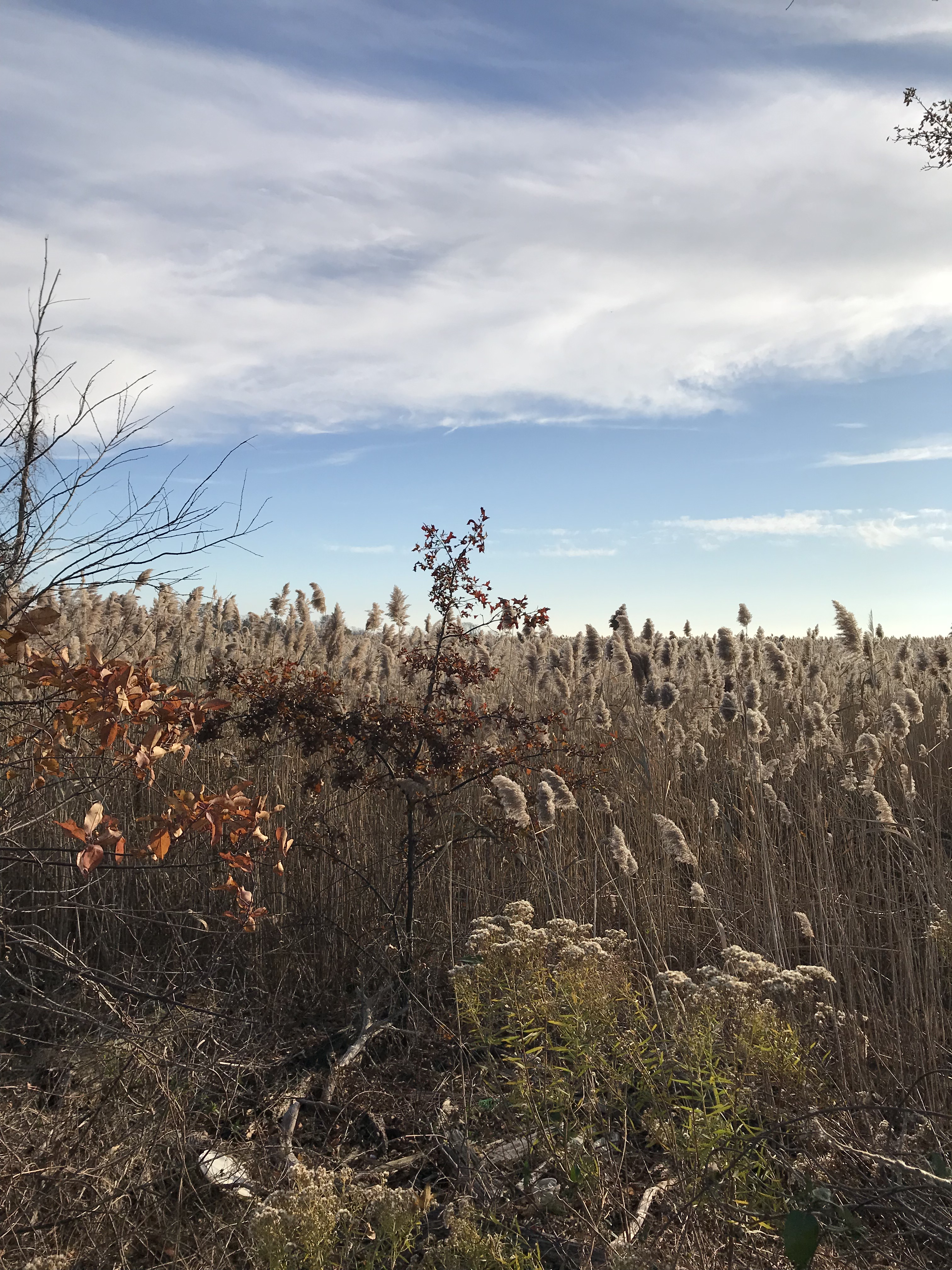
photographs by Roger W. Smith

SI 1

IMG_1514.jpg

SI 2

SI 3.JPG


a disappointing review of two lost Whitman works


re:

“Two New Old Books That Show Walt Whitman’s Different Selves”

New York Times Book Review

August 30, 2017


hi, Zack —

This review by Ted Genoways  is okay, but nothing more. Why did it take the NYTBR so long to review [two hitherto lost works by Walt Whitman] “The Life and Adventures of Jack Engle” and “Manly Health and Training”?

I thoroughly disagree with James McWilliams (“Against Rediscovery: Why the ‘Lost Novel’ Phenomenon Hurts Readers,” Paris Review, May 22, 2017). In the case of a Whitman or James Joyce, the discovery of a lost work or fragment, or of a lost letter, is cause for rejoicing.

I also feel that Genoways gives Whitman’s lost works “Jack Engle” and “Manly Health and Training,” which you have unearthed — remarkably — shorter shrift than they deserve.


Best wishes,

Roger Smith

email to Zachary Turpin, September 3, 2017

was Walt Whitman “politically corrected”?


As noted in a recent New York Times article

“In a Walt Whitman Novel, Lost for 165 Years, Clues to ‘Leaves of Grass“

By Jennifer Schuessler

The New York Times, February 20, 2017

Zachary Turpin, a graduate student at the University of Houston, has recently discovered — which is to say found and published — the manuscript of a “lost” Walt Whitman novel.

The novel, Life and Adventures of Jack Engle, was published anonymously by Whitman as a serial in a newspaper, The New York Atlas, in 1858. The novel has been published online by The Walt Whitman Quarterly Review and in book form by the University of Iowa Press. I have read it already. It’s a good read.

While I was reading the novel and subsequently, I had the following exchange of emails with Mr. Turpin, whom I have had the good fortune to since meet.

See emails below.


— Roger W. Smith

   June 2017


*****************************************************

Roger Smith to Zachary Turpin

March 13, 2017

Dear Mr. Turpin,

I am currently reading “Life and Adventures of Jack Engle.” What a find!

A real reading pleasure for a Whitman lover such as myself.

On the third line of page 53, I noted the words, in quoted dialogue: ‘the world to some’

Shouldn’t it be the world to come?


Zachary Turpin to Roger Smith

March 13, 2017

Roger — Many thanks for your email! It should indeed be “the world to come”—good eye.

Call it a coincidence, but a friend and fellow Whitmanian just emailed me to say the same thing, shortly after you. Great minds. Anyway, I’ll forward this along to the University of Iowa Press, since I know they’ll want to hear about it.

Thank you for your kind message.


Roger Smith to Zachary Turpin

May 30, 2017

Dear Zack,

Hello. I consider it my good fortune to have met you briefly at the American Literature Association conference on Thursday.

I am still wondering about a couple of words on page 95 of “Jack Engle”: “… the reader must supply it from his or her imagination.”

It’s bothering me — perhaps it shouldn’t. But, I keep wondering, is that what Whitman really wrote? Seems very uncommon for a nineteenth century writer, even one such as Whitman who could be considered to have been ahead of his time on many (but not all) issues, to have used “him or her.” But, then it’s entirely possible that he did. Or, did a zealous copyeditor change “his” to “his or her”?


Zachary Turpin to Roger Smith

May 30, 2017

Roger,

Yep, I hear you, it seems uncommon—but then Whitman was anything but common for his era. His egalitarianism extended to men and women right from the very first edition of Leaves of Grass (1855):

To pass among them . . to touch any one . . .. to rest my arm ever so lightly round his or her neck for a moment … what is this then?

And again:

Each has his or her place in the procession.

Three more instances appear in the 1856 edition:

Each of us limitless—each of us with his or her right upon the earth,…..

They bring none to his or her terminus, or to be content and full,….

Of authors and editors I do not know how many there are in The States, but there are thousands, each one building his or her step to the stairs by which giants shall mount.

And so on. There are many others. 1881:

Who holds duly his or her triune proportion of realism, spiritualism, and of the aesthetic or intellectual,….

Or in 1892, in “A Backward Glance O’er Travel’d Roads”:

The reader will always have his or her part to do, just as much as I have had mine.

And that’s just in his poetry! His journalism, reminiscences, interviews, and fiction contain more.

So, I think one of two things may be at issue here. Either (1) this construction came about earlier than it may seem to have, or (2) when it comes to even the smallest gender-equality issues, like pronouns, Whitman was still more conscientious and forward-thinking than his contemporaries. Or both, of course!

In any case, I bet you could write a very interesting piece on the “his or her” construction in 19th-century American writings, especially in its relation to democratic poetics.


Roger Smith to Zachary Turpin

May 30, 2017

Zack,

Thanks!

You’ve convinced me.

Totally.


Roger Smith to Zachary Turpin

June 3, 2017

Zack,

I told you I would get back to you again.

I am finally getting around to it.

I want to thank you again for you reply, which was very informative and so thorough. Much appreciated.

I now see that Whitman was way ahead of his time when it came to “gender inclusive” grammatical constructions. A very cumbersome way to put it. Sorry.

I guess I should have known better when it comes to the poet who wrote:

Think of womanhood, and you to be a woman;
The creation is womanhood;
Have I not said that womanhood involves all?
Have I not told how the universe has nothing better
than the best womanhood?

I guess what one might say that, for someone completely original and also possessing intuitive genius, as was true of Whitman, grammatical norms don’t necessarily account for that much. He was capable of inventing his own “grammar” when it suited him.


'Life and Adventures of Jack Engle' - cover.jpg

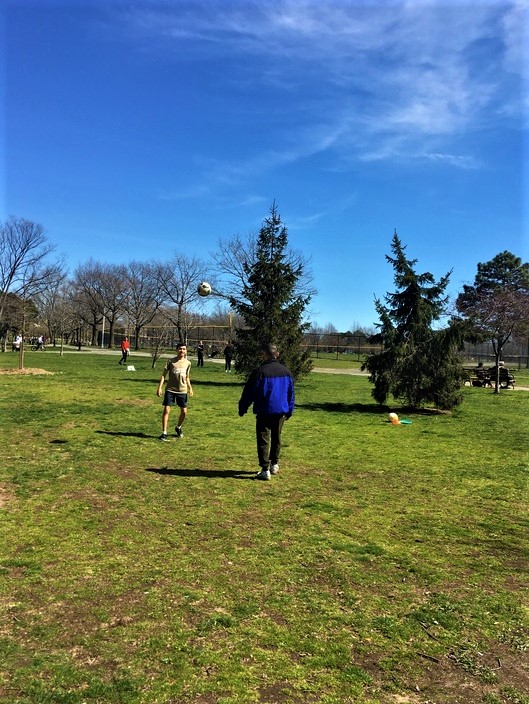
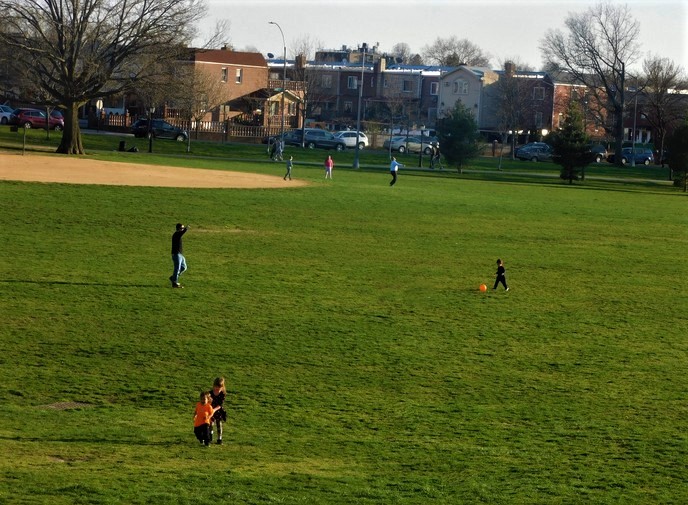
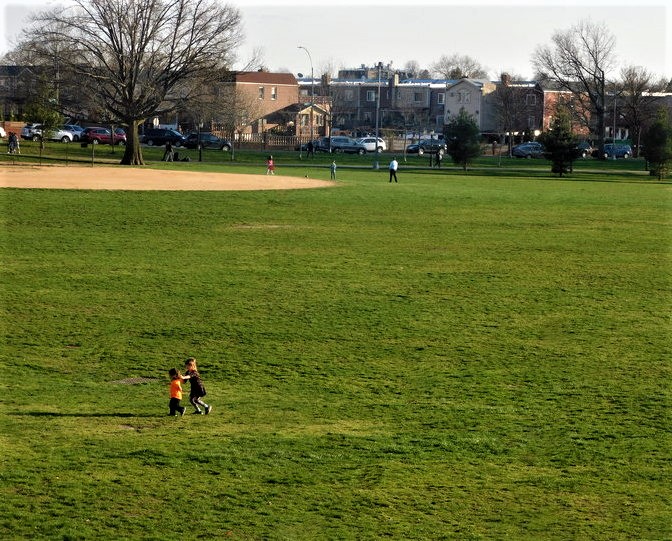
let them frolic!


“Sunday: we make it the dullest day in the week when it might be made the cheeriest. Will the people ever come to base ball, plays, concerts, yacht races, on Sundays? That would seem like clear weather after a rain. Why do you suppose people are so narrow-minded in their interpretation of the Sunday? If we read about Luther we find that he was not gloomy, not sad-devout, not sickly-religious: but a man full of blood who didn’t hesitate to outrage ascetic customs or play games if he felt like it on Sunday. The Catholic regards Sunday with a more nearly sane eye. It does seem as though the Puritan was responsible for our Sunday: the Puritan had his virtues but I for one owe him a grudge or two which I don’t hesitate to talk about loud enough to be heard.”

— Walt Whitman quoted by Horace Traubel, With Walt Whitman in Camden, Volume 2 (Sunday, September 2, 1888)


photographs by Roger W. Smith, April 2017

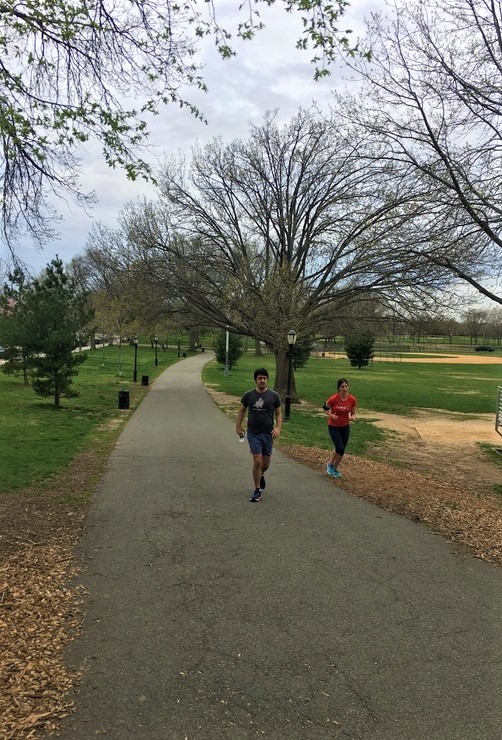
Juniper Valley Park 2-50 p.m. 4-9-2017

Juniper Valley Park 6-16 p.m. 4-12-2017 (2).jpg

Juniper Valley Park 6-16 p.m. 4-12-2017.jpg

Juniper Valley Park 10-22 a.m. 4-17-2017

Is it okay to associate with disreputable people?


is it okay

And passing on from there Jesus saw a man named Matthew sitting at the tax-collection house, and says to him, “Follow me.” And rising he followed him. And it happened that, as he was reclining at table in the house, look: Many tax-collectors and sinners came and reclined at table with Jesus and his disciples. And, seeing this, the Pharisees said to his disciples, “Why does your teacher eat with tax-collectors and sinners?” But he heard them and said, “The hale do not have need of a physician, but rather those who are ill. Go then and learn what this means: ‘I desire mercy and not sacrifice’; for I come to call not the upright, but sinners.”.

Matthew 9:10-13

Now a certain one of the Pharisees requested him to dine with him, and entering the Pharisee’s house he reclined at table. And look: There was a woman in the city who was a sinner, and knowing that he is reclining in the home of the Pharisee, and bringing an alabaster phial of unguent. And standing behind, weeping at his feet, she began to make his feet wet with her tears, and she wiped them off with the hair of her head, and fervently kissed his feet and anointed them with unguent. But, seeing this, the Pharisee who had invited him talked to himself, saying, “This man, if he were a prophet, would have known who and of what sort this woman who touches him is, for she is a sinner.” And in reply Jesus said to him, “Simon, I have something to say to you.” … And turning to the woman he said to Simon, “Do you see this woman? I entered your home, you did not give me water for my feet; but she washed my feet with her tears and wiped them off with her hair. You gave me no kiss of friendship, but she from the time I entered has not ceased fervently kissing my feet. You did not anoint my head with oil; but she anointed my feet with unguent. By virtue of which, I tell you, her sins—which are many—have be forgiven, because she loved much; but one to whom little is forgiven loves little.” And he said to her, “Your sins have been forgiven.” And those reclining at table with him began to say among themselves, “Who is this, who even forgives sins?” And he said to the woman: “Your faith has saved you, go in peace.” thee; go in peace.

Luke 7:37-50

— The New Testament: A Translation, by David Bentley Hart


This is the meal equally set—this is the meat for
natural hunger;
It is for the wicked just the same as the righteous—I
make appointments with all;
I will not have a single person slighted or left away;
The kept-woman, sponger, thief, are hereby invited;
The heavy-lipp’d slave is invited—the venerealee is invited:
There shall be no difference between them and the rest.

— Walt Whitman, Leaves of Grass


If you become degraded, criminal, ill, then I become so for your
sake,
If you remember your foolish and outlaw’d deeds, do you think
I cannot remember my own foolish and outlaw’d deeds?
If you carouse at the table I carouse at the opposite side of the
table,
If you meet some stranger in the streets and love him or her, why
I often meet strangers in the street and love them.

Why what have you thought of yourself?
Is it you then that thought yourself less?
Is it you that thought the President greater than you?
Or the rich better off than you? or the educated wiser than you?

(Because you are greasy or pimpled, or were once drunk, or a
thief,
Or that you are diseas’d, or rheumatic, or a prostitute,
Or from frivolity or impotence, or that you are no scholar and
never saw your name in print,
Do you give in that you are any less immortal?)

Walt Whitman, “A Song for Occupations”


Recall Christ, brother of rejected persons—brother of
slaves, felons, idiots, and of insane and diseas’d
persons.

Walt Whitman, “Think of the Soul”


***************************************************

Commentary:

In my senior year in high school, I took an IQ test administered by a graduate student at Boston University. A question on the test, which he administered orally, was why should one not associate with disreputable people? I answered that I did not agree with the premise.

Some fifty years later, I still feel the same way.

I have learned a great deal from, and my life has been enriched by, people of all levels of intelligence, backgrounds, occupations, persuasions, personality types, idiosyncracies, and life situations.

I have given rides and handouts to just released ex-convicts; associated with people whose opinions and/or behavior could be considered immoral, criminal, improper, antisocial, deviant, clueless, or odd by others; have never chosen my friends according to their political or religious views.

The driving force, in my own experience, behind making acquaintances and forming friendships has been: how is that person disposed towards ME? Do they wish to associate and communicate; do they desire or need human contact? Then, I find that it behooves me to respond affirmatively. I am a priori willing to accept anyone as a friend.

I have benefited, immeasurably, from such associations.   These people have taught me so much or, to put it the other way around, I have learned so much from them.

I see no reason to change.

And, I am amazed and gladdened by the innate goodness and sincerity of so many people who are prone to neglect and sometimes scorn or to being rejected by polite society.


— Roger W. Smith

   January 2017

Walt Whitman, immigration policy, and Donald Trump’s wall; or, the Berlin Wall redux


In response to:

“Supreme Court Tie Blocks Obama Immigration Plan,” The New York Times, June 23, 2016

‘Supreme Court tie blocks Obama immigration plan’ – NY Times


I offer the following brief comments of my own as well as pertinent quotations from Walt Whitman and about him.

The controversy over immigration has been going on for a long time.


— Roger W. Smith

   June 2016


************************************************

In response to great waves of immigration that occurred between 1880 and 1920, the so-called Brahmins had become ever more insistent about a particular perspective on American culture, asserting that the real, pure, or true Americans were Anglo-Saxons. The great migrations coincided with the founding of such groups as the Society of Mayflower Descendants and the Sons and Daughters of the American Revolution. The migrations also coincided with the efforts of publishers who commissioned numerous professors (almost all from New England) to write literary histories for high school and college use with the hope of unifying the heterogeneous American people under the “aegis of New England” by fashioning a national history anchored in that region. Nina Baym has noted that “conservative New England leaders knew all too well that the nation was an artifice and that no single national character undergirded it. And they insisted passionately . . . [on] instilling in all citizens those traits that they thought necessary for the future: self-reliance, self-control, and acceptance of hierarchy.

[Walt] Whitman, less radical in the 1850s in the face of the slavery crisis than many Boston intellectuals, had become by the 1880s increasingly associated with the teeming masses, the immigrants, the downtrodden of all types. Meanwhile some of the same Boston intellectuals who had led the charge for the emancipation of blacks had come to be associated with propriety, exclusiveness, and backsliding on racial issues. [It seems my New England ancestors had such prejudices.]

— Kenneth M. Price, To Walt Whitman, America, pg. 31


************************************************

It is a shame that what I consider to be enlightened attitudes do not prevail today. We do not seem to have reached, or advanced beyond, the point reached by Whitman in the evolution of his views.

Whitman, who got his start as a journalist, editorialized against all immigration restriction, insisting that America must embrace immigrants of all backgrounds.

— Roger W. Smith, June 2016


************************************************

The following are excerpts from Whitman’s poems and from remarks of Whitman that were recorded by his “Boswell,” Horace Traubel.


the perpetual coming of immigrants … the free commerce … the fluid movement of the population
— Walt Whitman, Preface to Leaves of Grass


‘’See, in my poems immigrants continually coming and landing,

— Walt Whitman, “Starting From Paumanok”; Leaves of Grass


The man’s body is sacred, and the woman’s body is sacred,
No matter who it is, it is sacred;
Is it a slave? Is it one of the dull-faced immigrants
just landed on the wharf?
Each belongs here or anywhere just as much as the well-off–just as much as you,
Each has his or her place in the procession.

— Walt Whitman, “I Sing the Body Electric,” Leaves of Grass


[Thomas B.] Harned broached the subject of the restriction of immigration, and happening to say, “most people believe in it–it’s very unpopular now-a-days not to believe in it,” W[hitman]. exclaimed contemptuously: “All, did you say, Tom–or almost all? Well, here’s one who spits it all out, contract labor, pauper labor, or anything else, notwithstanding.” Harned said: “I did not say I believe in restriction–I said most people do.” W. went on vehemently: “Well for you, Tom, that you do not say it. I have no fears of America–not the slightest. America is for one thing only–and if not for that for what? America must welcome all–Chinese, Irish, German, pauper or not, criminal or not–all, all, without exceptions: become an asylum for all who choose to come. We may have drifted away from this principle temporarily but time will bring us back. The tide may rise and rise again and still again and again after that, but at last there is an ebb–the low water comes at last. Think of it–think of it: how little of the land of the United States is cultivated–how much of it is still utterly untilled. When you go West you sometimes travel whole days at lightning speed across vast spaces where not an acre is plowed, not a tree is touched, not a sign of a house is anywhere detected. America is not for special types, for the caste, but for the great mass of people–the vast, surging, hopeful, army of workers. Dare we deny them a home–close the doors in their face–take possession of all and fence it in and then sit down satisfied with our system–convinced that we have solved our problem? I for my part refuse to connect America with such a failure–such a tragedy, for tragedy it would be.” W. spoke with the greatest energy. It is a subject that always warms him up. “You see,” he said finally, “that the immigrant, too, like the writer, comes up against the canons, and has to last them out.”

— Horace Traubel, With Walt Whitman in Camden, vol. II, pg. 34 (entry for Tuesday, July 24, 1888)


[Whitman] said: “I believe in the higher patriotism–not, my country whether or no, God bless it and damn the rest!–no, not that–but my country, to be kept big, to grow bigger, to lead the procession, not in conquest, however, but in inspiration. If the procession, not in conquest, however, but in inspiration.

— Horace Traubel, With Walt Whitman in Camden, vol. II, pg. 94 (entry for Sunday, August 5, 1888)


************************************************

For what it’s worth, I am thoroughly in agreement with Whitman.

We Americans, all of us, are the descendants of immigrants. They have brought so much in terms of cultural richness, ingenuity, initiative, and plain hard work to this nation. THEY are who and what make this country great.

I am completely opposed to Donald Trump’s Know Nothing stance. He wants to set us back a century in terms of attitudes towards immigrants. He wants to build a wall at the Mexican border! It’s the Berlin Wall redux.

Note — it’s ironic, is it not? — what Walt Whitman said emphatically (as quoted above) 128 years ago, when similar sentiments were being propagated:

“Dare we … close the doors in their [immigrants’] face–take possession of all and fence it in [italics added]?”

In Berlin on June 12, 1987, President Ronald Reagan made the famous speech in which he said: “Mr. Gorbachev, open this gate. Mr. Gorbachev, tear down this wall!” The demolition of the wall began three years later.

Now Trump wants to build one of his own.


— Roger W. Smith,

      June 2016


************************************************

See also:


“Up Against the Wall” (editorial), The New York Times, April, 2017

‘Up Against the Wall’ – NY Times 4-8-2017

A very penetrating analysis of what’s wrong with Trump’s proposal to build a wall at our Southern border.


Plus:


http://www.nydailynews.com/news/national/scotus-immigration-ruling-puts-millions-deportation-limbo-article-1.2685908


https://www.washingtonpost.com/news/monkey-cage/wp/2016/06/24/how-the-supreme-courts-deadlock-will-change-immigration-politics/