musical settings of Walt Whitman’s “When Lilacs Last in the Dooryard Bloom’d”


Hindemith


Sessions


*****************************************************

Critic Harold Bloom has observed that “Only a few poets in the language have surpassed [Walt Whitman’s poem] ‘When Lilacs Last in the Dooryard Bloom’d’.”

I believe that it is Whitman’s greatest poem, which is saying something. Close rivals for that distinction among Whitman’s poetry might be “Out of the Cradle Endlessly Rocking” and “Crossing Brooklyn Ferry.”

I have posted here (above) two musical settings of “Lilacs.”

German composer Paul Hindemith, who lived in the United States for over a decade, set Whitman’s text to music to mourn the death of President Franklin Delano Roosevelt. The work, an oratorio, was titled “When Lilacs Last in the Dooryard Bloom’d: A Requiem for those we love” (1946).

I have heard this work performed live once, at Carnegie Hall. It never fails to move me. The ninth track on the recording posted here, “Sing on! you gray-brown bird,” brings tears to my eyes.

The recording posted here is by the Robert Shaw Chorale, which commissioned the work, with the mezzo-soprano Jan DeGaetani. It is my favorite performance.

Also posted here is American composer Roger Sessions’s setting of the poem (1977), a cantata. It is noted in a Wikipedia entry that

The University of California at Berkeley commissioned American neoclassical composer Roger Sessions to set the poem as a cantata to commemorate their centennial anniversary in 1964. Sessions did not finish composing the work until the 1970’s, dedicating it to the memories of civil rights leader Martin Luther King, Jr. and political figure Robert F. Kennedy. Sessions first became acquainted with Leaves of Grass in 1921 and began setting the poem as a reaction to the death of his friend, George Bartlett, although none of the sketches from that early attempt survive. He returned to the text almost fifty years later, composing a work scored for soprano, contralto, and baritone soloists, mixed chorus and orchestra. The music is described as responding “wonderfully both to the Biblical majesty and musical fluidity of Whitman’s poetry, and here to, in the evocation of the gray-brown bird singing from the swamp and of the over-mastering scent of the lilacs, he gives us one of the century’s great love letters to Nature.”

This recording is of a performance conducted by Seiji Ozawa.


— Roger W. Smith

  October 2017

“On the Beach at Night Alone” (Vaughan Williams, Whitman)


“On the Beach at Night Alone” is the second movement from Ralph Vaughan Williams’s “A Sea Symphony” (written between 1903 and 1909; first performed in 1910).

The text of “A Sea Symphony” comes from Walt Whitman’s Leaves of Grass.

“On the Beach at Night Alone” is a poem by Whitman.

I find this symphony extremely moving and impressive, and this movement has never failed to hold me in awe. I can feel a sense of identity with, and the vicarious experience of, being a walker on the beach (which Whitman often was).

— Roger W. Smith

   October 2017


*****************************************************

ON THE BEACH AT NIGHT ALONE.

ON the beach at night alone,
As the old mother sways her to and fro singing her husky song,
As I watch the bright stars shining, I think a thought of the clef
of the universes and of the future.

A vast similitude interlocks all,
All spheres, grown, ungrown, small, large, suns, moons, planets,
All distances of place however wide,
All distances of time, all inanimate forms,
All souls, all living bodies though they be ever so different, or in
different worlds,
All gaseous, watery, vegetable, mineral processes, the fishes, the
brutes,
All nations, colors, barbarisms, civilizations, languages,
All identities that have existed or may exist on this globe, or any
globe,
All lives and deaths, all of the past, present, future,
This vast similitude spans them, and always has spann’d,
And shall forever span them and compactly hold and enclose them.

— Walt Whitman


*****************************************************

addendum:

“On the Beach at Night Alone”

What does the poem mean?

Here is my attempt at explaining the poem. Comments are welcome. I am not a poetry expert.

— Roger W. Smith


The poet is walking on the beach at night.

“[T]he old mother sways her to and fro singing her husky song.”

The old mother is the sea.

Singing her husky song … the surf roars.

(No fancy words here; Whitman uses the plainest.)

He thinks of the “clef” (key) of the “universes” (multiple universes) and the future (what is now and what is to come, linking the past and the future).

He sees that “A vast similitude interlocks all.”

He sees that things that we often think of as not alike, different, separate: the animate and inanimate … celestial bodies far out in space, the living and the dead, different peoples and nations, are all part of life, having the same life force.

The “vast similitude” is like a giant blanket covering and enveloping anything that ever has existed, does exist, or can be contemplated.

There is unity and coherence in all things.

a disappointing review of two lost Whitman works


re:

“Two New Old Books That Show Walt Whitman’s Different Selves”

New York Times Book Review

August 30, 2017


hi, Zack —

This review by Ted Genoways  is okay, but nothing more. Why did it take the NYTBR so long to review [two hitherto lost works by Walt Whitman] “The Life and Adventures of Jack Engle” and “Manly Health and Training”?

I thoroughly disagree with James McWilliams (“Against Rediscovery: Why the ‘Lost Novel’ Phenomenon Hurts Readers,” Paris Review, May 22, 2017). In the case of a Whitman or James Joyce, the discovery of a lost work or fragment, or of a lost letter, is cause for rejoicing.

I also feel that Genoways gives Whitman’s lost works “Jack Engle” and “Manly Health and Training,” which you have unearthed — remarkably — shorter shrift than they deserve.


Best wishes,

Roger Smith

email to Zachary Turpin, September 3, 2017

Walt Whitman, “Jaunt up the Hudson”


“Jaunt up the Hudson”

June 20th.—ON the “Mary Powell,” enjoy’d everything beyond precedent. The delicious tender summer day, just warm enough—the constantly changing but ever beautiful panorama on both sides of the river—(went up near a hundred miles)—the high straight walls of the stony Palisades—beautiful Yonkers, and beautiful Irvington—the never-ending hills, mostly in rounded lines, swathed with verdure,—the distant turns, like great shoulders in blue veils—the frequent gray and brown of the tall-rising rocks—the river itself, now narrowing, now expanding—the white sails of the many sloops, yachts, &c., some near, some in the distance—the rapid succession of handsome villages and cities, (our boat is a swift traveler, and makes few stops)—the Race—picturesque West Point, and indeed all along—the costly and often turreted mansions forever showing in some cheery light color, through the woods—make up the scene.

— Walt Whitman, Specimen Days


*****************************************************

This is vintage, typical Whitman. A man who loved every minute of his life — savored it. Reminds one of this as it applies to our own lives. Knew how to express this beautifully. Felt and appreciated things keenly as few do.

jaunt (noun) — a short excursion or journey for pleasure


— Roger W. Smith

   August 2017

Walt Whitman on Manhattan (plus my own impressions and thoughts)


MANNAHATTA.

I WAS asking for something specific and perfect for my city,
Whereupon lo! upsprang the aboriginal name.

Now I see what there is in a name, a word, liquid, sane, unruly,
musical, self-sufficient,
I see that the word of my city is that word from of old,
Because I see that word nested in nests of water-bays, superb,
Rich, hemm’d thick all around with sailships and steamships, an
island sixteen miles long, solid-founded,
Numberless crowded streets, high growths of iron, slender, strong,
light, splendidly uprising toward clear skies,
Tides swift and ample, well-loved by me, toward sundown,
The flowing sea-currents, the little islands, larger adjoining islands,
the heights, the villas,
The countless masts, the white shore-steamers, the lighters, the
ferry-boats, the black sea-steamers well-model’d,
The down-town streets, the jobbers’ houses of business, the houses
of business of the ship-merchants and money-brokers, the river-streets,
Immigrants arriving, fifteen or twenty thousand in a week,
The carts hauling goods, the manly race of drivers of horses, the
brown-faced sailors,
The summer air, the bright sun shining, and the sailing clouds
aloft,
The winter snows, the sleigh-bells, the broken ice in the river,
passing along up or down with the flood-tide or ebb-tide,
The mechanics of the city, the masters, well-form’d, beautiful-
faced, looking you straight in the eyes,
Trottoirs throng’d, vehicles, Broadway, the women, the shops and
shows,
A million people—manners free and superb—open voices—
hospitality—the most courageous and friendly young men,
City of hurried and sparkling waters! city of spires and masts!
City nested in bays! my city!


*****************************************************

Broadway.

What hurrying human tides, or day or night!
What passions, winnings, losses, ardors, swim
thy waters!
What whirls of evil, bliss and sorrow stem, thee!
What curious questioning glances—glints of
love!
Leer, envy, scorn, contempt, hope, aspiration!
Thou portal—thou arena—thou of the myriad
long-drawn lines and groups!
(Could but thy flagstones, curbs, facades tell
their inimitable tales);
Thy windows, rich and huge hotels—thy side-
walks wide;
Thou of the endless sliding, mincing, shuffling
feet!
Thou, like the parti-colored world itself—like
infinite, teeming, mocking life!
Thou visor’d, vast, unspeakable show and
lesson!


****************************************************

addendum:

The following are some present day thoughts of my own occasioned by the above two poems of Walt Whitman. “Mannahatta” was Whitman’s stomping grounds during what was probably the most creative period of his life. It is my adopted city; my feelings parallel Whitman’s.

“Mannahatta”: Mannahatta is derived from the aboriginal name for the place, most likely meaning island of many hills. Whitman chose to sometimes call Manhattan “Mannahatta” and to call Long Island “Paumanok,” also derived from a Native American word.

“nested in nests of water-bays, superb,
Rich”

The fact of Manhattan’s being surrounded by water is one of its greatest and most appealing attributes. (This is also stressed by Herman Melville in the opening chapters of Moby-Dick). The rivers and bays act as a natural counterweight to urban sprawl.

“hemm’d thick all around with sailships and steamships”

Not true anymore, for the most part. Too bad. But, Manhattan Island, being bounded on all sides by water, retains a unique appeal because of this.

“an island sixteen miles long”

Sixteen miles from Battery Park (the southern tip of Manhattan Island) to Spuyten Duyvil (the northern end of the island).

“Numberless crowded streets”

Still true. Crowded, which is a blessing. You don’t find lonely, deserted spots or forsaken places. Crowed, yes, but the crowds usually aren’t oppressive.

“high growths of iron, slender, strong,
light, splendidly uprising toward clear skies”

Space is limited in Manhattan. Tall buildings reaching to the skies create a sense of awe.

“Tides swift and ample, well-loved by me, toward sundown,
The flowing sea-currents, the little islands, larger adjoining islands,
the heights, the villas”

Still true. There are islands, rivers with eddies, great vistas. All can still be seen by someone who strolls along the East River, the Battery, the banks of the Hudson, or the rarely visited but wonderful stretches of parkland at the upper tip of the island.

“the lighters, the ferry-boats”

Ferries still run, to the delight and for the convenience of many. A lighter is a barge used in unloading or loading ships. In one of Whitman’s greatest poems, “Crossing Brooklyn Ferry,” there is a reference to a “belated lighter.”

“The down-town streets, the jobbers’ houses of business, the houses
of business of the ship-merchants and money-brokers, the river-streets”

The small businesses are mostly gone, but there are still “river-streets.” Yet, access to the rivers is not so convenient anymore, since highways on the East and West Sides impede (but do not entirely prevent) access.

“Immigrants arriving, fifteen or twenty thousand in a week”

New York is still a city of immigrants, thank God. Mostly immigrants speaking, it seems, practically every imaginable tongue.

“The carts hauling goods, the manly race of drivers of horses”

Whitman loved to ride with and become acquainted with the drivers of horse drawn omnibuses on the main thoroughfares of Manhattan.

“The summer air, the bright sun shining, and the sailing clouds aloft”

So true, still. See photo below.
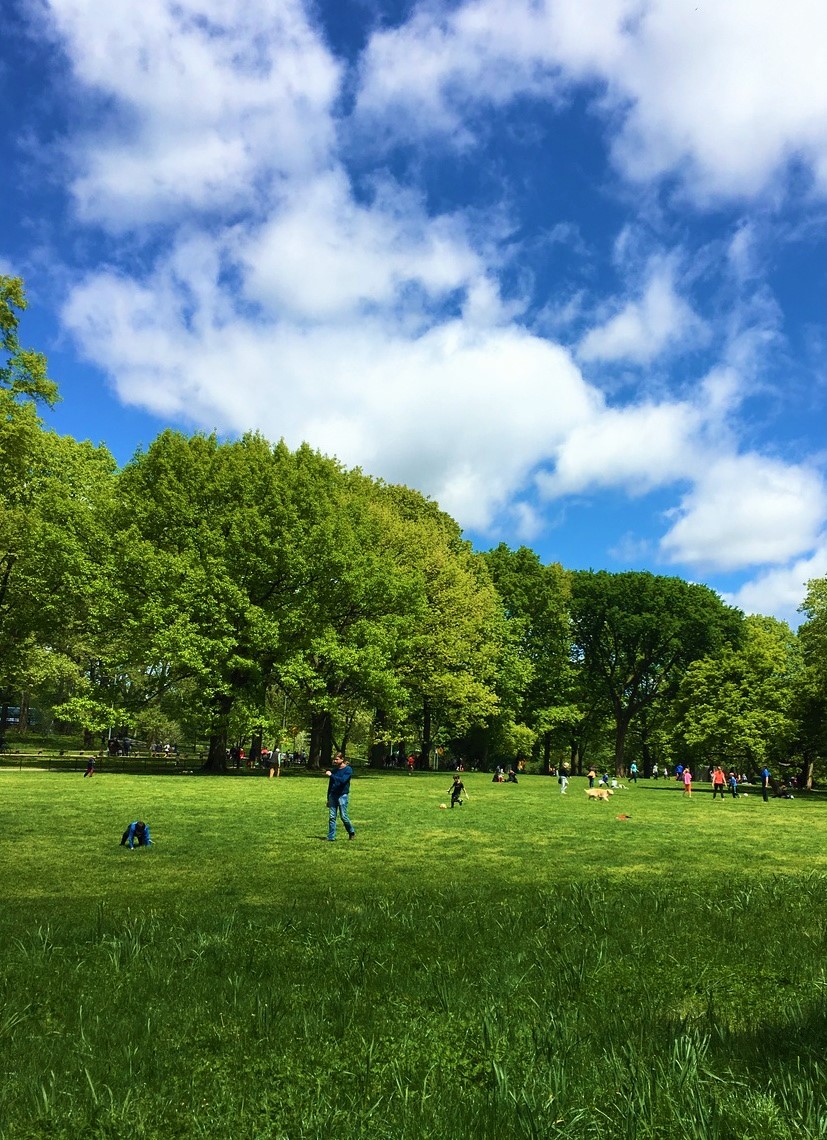
Central Park 11-36 a.m. 5-14-2017 (4).jpg

Central Park; photograph by Roger W. Smith

The winter snows, the sleigh-bells, the broken ice in the river,
passing along up or down with the flood-tide or ebb-tide”

Herman Melville, in Moby-Dick (Chapter LXXXVII), also mentions ice breaking up on the Hudson: “A low advancing hum was soon heard; and then like to the tumultuous masses of block-ice when the great river Hudson breaks up in Spring, the entire host of whales came tumbling upon their inner center. …” I myself have observed this (once) during wintertime on the Hudson. The river froze over, and I can remember the hissing and popping sounds as the ice was breaking up slowly.

“The mechanics of the city, the masters, well-form’d, beautiful-
faced, looking you straight in the eyes”

People in Manhattan — pedestrians passing — still look at you, often, with friendly eyes, not averting their gaze. There is a wonderful openness about them. The City fosters it.

Trottoirs throng’d, vehicles, Broadway”

It is still the case that the streets are thronged, with cars, pushcarts, bicycles. I love it. It drives the city traffic engineers crazy.

Trottoir is the French word for sidewalk. Whitman, who was not well versed in foreign languages, loved to use foreign words, on occasion, mostly French ones. He has been faulted for this. Some people can’t realize that one is not required to always say “sidewalk” when another word might be substituted. For various reasons, including a delight in language.

“the women, the shops and shows”

Manhattan is a wonderful place for shopping and window shopping. The “shows” continue to go on. And on. The women — a friend of mine, Charles Pierre, once remarked — are Manhattan’s “last great natural resource.” They range from classic beauties to exotic looking women with natural beauty of all backgrounds and races.

“A million people—manners free and superb—open voices—
hospitality—the most courageous and friendly young men”

This is all so true. The concentration of humanity is wonderful. The people are open and friendly.

“City of hurried and sparkling waters! city of spires and masts!
City nested in bays! my city!”

All still true, except for the “masts.” The current in the rivers is swift; they do indeed sparkle in the sunlight.


*****************************************************

Broadway.

Whitman’s Broadway would have, in the mid-1850’s, meant an area of the city below 14th Street.

“What hurrying human tides, or day or night!”

“thy side-walks wide;”
“Thou of the endless sliding, mincing, shuffling
feet!”

The sidewalks in Manhattan are indeed wide and welcoming. No thoroughfare lacks them. The pedestrian is not shunted aside or forced to walk (as is the case in the suburbs) on a faux sidewalk. The sidewalks in the City are always full of trampers, day and night.

Note: “Broadway” was originally published in the New York Herald of April 10, 1888. “Mannahatta” exists in a couple of versions published in Leaves of Grass.


— Roger W. Smith

   July 2017
Emerson and Whitman


In his [Ralph Waldo Emerson’s] view the material creation is but an emblem of spiritual life. … To trace the operations of a subtle divine Presence in the mysteries of being—to ascend from the visible phenomena to universal laws—to embody the absolute, the unchanging, the perfect in the expressive forms of poetry—these are the problems which have challenged his warmest interest, and made him a retired and meditative sage, instead of a man of affairs. … Relying on certain mystic revelations to the soul of the individual, he shows scarcely any trace of logical faculty. … You look in vain for any consecutive order in the array of his thoughts. … Mr. Emerson’s predominant individualism leads him to ignore the past, and live in the present. … He believes in the perennial influence of inspiration. … The individual soul now conceals the elements of poetry, and prophecy, and the vision of God, as in the days of yore. … With this faith, Mr. Emerson attaches no importance to traditional opinion. … No school of philosophy or religion can hold this broad, untrammeled thinker within its walls. Even the great teachers of humanity do not win his fealty. Hints and monitions he may receive from their works, but authority never. … Mr. Emerson, although a rigid observer of the conventional proprieties of life, has little respect for a formal, imitative, stereotyped virtue. The stamp of nature and originality, in his view, would sanction almost any episode from the regular highway of ethics. He judges of character not by its accordance with any artificial code, but by the test of genuineness and native individuality. He rejects no coin that has the true ring, for want of the sign of some approved mint. An idealist in theory … he cherishes a most persistent and unrelenting attachment to reality. … He unites the dreamy mystical contemplation of an Oriental sage with the hard, robust, practical sense of a Yankee adventurer.

— anonymous, “Ralph Waldo Emerson. Phrenology, Physiology, Biography, and Portrait.,” Phrenological Journal, March 1854, quoted in Floyd Stovall, The Foreground of Leaves of Grass (University Press of Virginia, 1974), pp. 292-293


*****************************************************

It is quite possible — indeed probable — that Walt Whitman read this article. What is said about Emerson seems to apply also to him.


*****************************************************

I admire such thinkers. I would be pleased if such words were used to describe my outlook on life.


— Roger W. Smith

   July 2017

Harold Bloom on Walt Whitman


[Whitman] is the poet of our climate, never to be replaced, unlikely ever to be matched. Only a few poets in the language have surpassed “When Lilacs Last in the Dooryard Bloom’d”: Shakespeare, Milton, perhaps one or two others. Whether even Shakespeare and Milton have achieved a more poignant pathos and a darker eloquence than Whitman’s “Lilacs,” I am not always certain. The great scene between the mad Lear and the blind Gloucester; the speeches of Satan after he has rallied his fallen legions—these epitomize the agonistic Sublime. And so does this, but with preternatural quietness:

In the dooryard fronting an old farm-house near the white-wash’d palings,
Stands the lilac-bush tall-growing with heart-shaped leaves of rich green,
With many a pointed blossom rising delicate, with the perfume strong I love,
With every leaf a miracle—and from this bush in the dooryard,
With delicate-color’d blossoms and heart-shaped leaves of rich green,
A sprig with its flower I break. [from “When Lilacs Last in the Dooryard Bloom’d,” section 3]

— Harold Bloom, The Western Canon: The Books and School of the Ages (New York: Riverhead Books, 1994), pp. 270-271


*****************************************************

Walt Whitman. Concluded formal schooling at age eleven. Subsequently worked as an office boy, printer’s devil (apprentice), compositor (typesetter), schoolteacher, pressman, journalist, and editor. Began writing what would become Leaves of Grass in his early thirties. Published the first edition of Leaves of Grass in 1855 when he was age 36. A remarkable ontogenesis.


— Roger W. Smith

   July 2017

was Walt Whitman “politically corrected”?


As noted in a recent New York Times article

“In a Walt Whitman Novel, Lost for 165 Years, Clues to ‘Leaves of Grass

By Jennifer Schuessler

The New York Times, February 20, 2017

Zachary Turpin, a graduate student at the University of Houston, has recently discovered — which is to say found and published — the manuscript of a “lost” Walt Whitman novel.

The novel, Life and Adventures of Jack Engle, was published anonymously by Whitman as a serial in a newspaper, The New York Atlas, in 1858. The novel has been published online by The Walt Whitman Quarterly Review and in book form by the University of Iowa Press. I have read it already. It’s a good read.

While I was reading the novel and subsequently, I had the following exchange of emails with Mr. Turpin, whom I have had the good fortune to since meet.

See emails below.


— Roger W. Smith

   June 2017


*****************************************************

Roger Smith to Zachary Turpin

March 13, 2017

Dear Mr. Turpin,

I am currently reading “Life and Adventures of Jack Engle.” What a find!

A real reading pleasure for a Whitman lover such as myself.

On the third line of page 53, I noted the words, in quoted dialogue: ‘the world to some’

Shouldn’t it be the world to come?


Zachary Turpin to Roger Smith

March 13, 2017

Roger — Many thanks for your email! It should indeed be “the world to come”—good eye.

Call it a coincidence, but a friend and fellow Whitmanian just emailed me to say the same thing, shortly after you. Great minds. Anyway, I’ll forward this along to the University of Iowa Press, since I know they’ll want to hear about it.

Thank you for your kind message.


Roger Smith to Zachary Turpin

May 30, 2017

Dear Zack,

Hello. I consider it my good fortune to have met you briefly at the American Literature Association conference on Thursday.

I am still wondering about a couple of words on page 95 of “Jack Engle”: “… the reader must supply it from his or her imagination.”

It’s bothering me — perhaps it shouldn’t. But, I keep wondering, is that what Whitman really wrote? Seems very uncommon for a nineteenth century writer, even one such as Whitman who could be considered to have been ahead of his time on many (but not all) issues, to have used “him or her.” But, then it’s entirely possible that he did. Or, did a zealous copyeditor change “his” to “his or her”?


Zachary Turpin to Roger Smith

May 30, 2017

Roger,

Yep, I hear you, it seems uncommon—but then Whitman was anything but common for his era. His egalitarianism extended to men and women right from the very first edition of Leaves of Grass (1855):

To pass among them . . to touch any one . . .. to rest my arm ever so lightly round his or her neck for a moment … what is this then?

And again:

Each has his or her place in the procession.

Three more instances appear in the 1856 edition:

Each of us limitless—each of us with his or her right upon the earth,…..

They bring none to his or her terminus, or to be content and full,….

Of authors and editors I do not know how many there are in The States, but there are thousands, each one building his or her step to the stairs by which giants shall mount.

And so on. There are many others. 1881:

Who holds duly his or her triune proportion of realism, spiritualism, and of the aesthetic or intellectual,….

Or in 1892, in “A Backward Glance O’er Travel’d Roads”:

The reader will always have his or her part to do, just as much as I have had mine.

And that’s just in his poetry! His journalism, reminiscences, interviews, and fiction contain more.

So, I think one of two things may be at issue here. Either (1) this construction came about earlier than it may seem to have, or (2) when it comes to even the smallest gender-equality issues, like pronouns, Whitman was still more conscientious and forward-thinking than his contemporaries. Or both, of course!

In any case, I bet you could write a very interesting piece on the “his or her” construction in 19th-century American writings, especially in its relation to democratic poetics.


Roger Smith to Zachary Turpin

May 30, 2017

Zack,

Thanks!

You’ve convinced me.

Totally.


Roger Smith to Zachary Turpin

June 3, 2017

Zack,

I told you I would get back to you again.

I am finally getting around to it.

I want to thank you again for you reply, which was very informative and so thorough. Much appreciated.

I now see that Whitman was way ahead of his time when it came to “gender inclusive” grammatical constructions. A very cumbersome way to put it. Sorry.

I guess I should have known better when it comes to the poet who wrote:

Think of womanhood, and you to be a woman;
The creation is womanhood;
Have I not said that womanhood involves all?
Have I not told how the universe has nothing better
than the best womanhood?

I guess what one might say that, for someone completely original and also possessing intuitive genius, as was true of Whitman, grammatical norms don’t necessarily account for that much. He was capable of inventing his own “grammar” when it suited him.


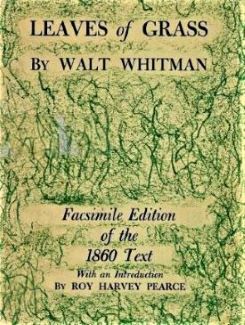
'Life and Adventures of Jack Engle' - cover.jpg

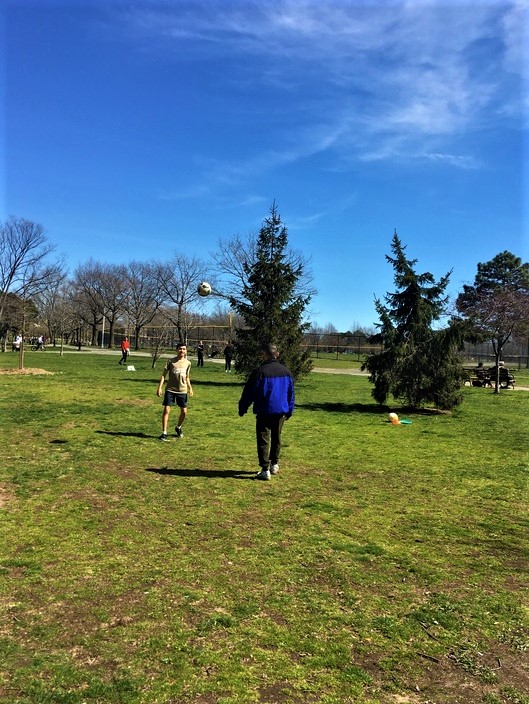
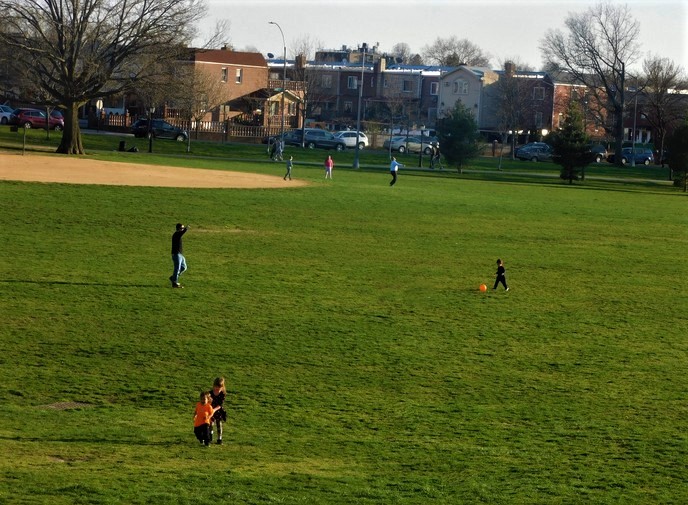
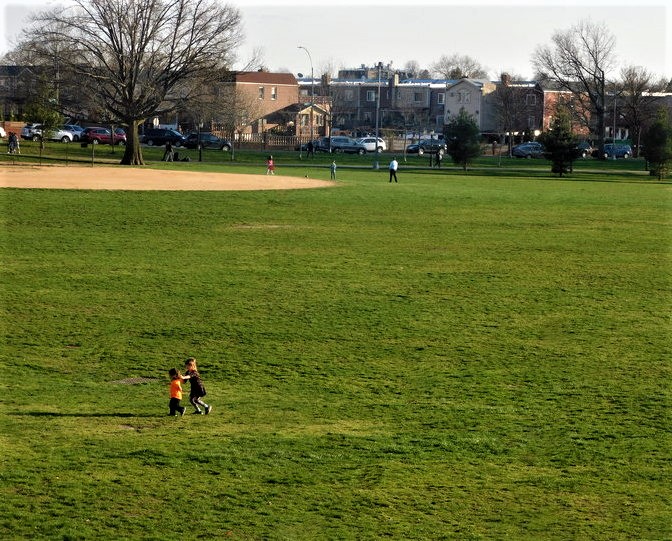
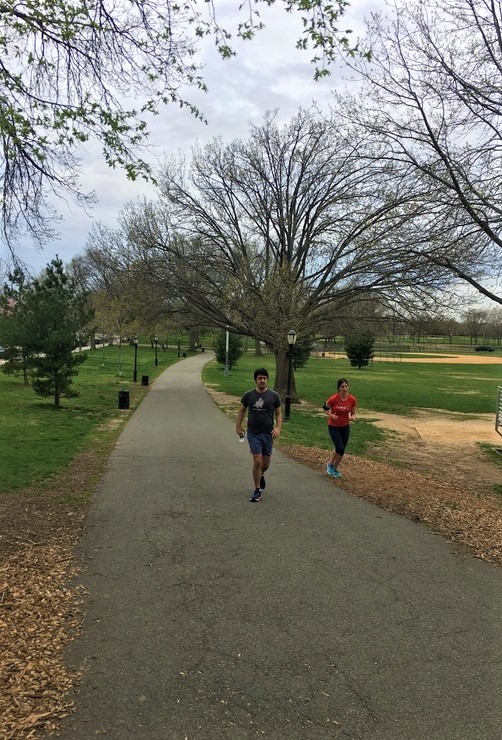
let them frolic!


“Sunday: we make it the dullest day in the week when it might be made the cheeriest. Will the people ever come to base ball, plays, concerts, yacht races, on Sundays? That would seem like clear weather after a rain. Why do you suppose people are so narrow-minded in their interpretation of the Sunday? If we read about Luther we find that he was not gloomy, not sad-devout, not sickly-religious: but a man full of blood who didn’t hesitate to outrage ascetic customs or play games if he felt like it on Sunday. The Catholic regards Sunday with a more nearly sane eye. It does seem as though the Puritan was responsible for our Sunday: the Puritan had his virtues but I for one owe him a grudge or two which I don’t hesitate to talk about loud enough to be heard.”

— Walt Whitman quoted by Horace Traubel, With Walt Whitman in Camden, Volume 2 (Sunday, September 2, 1888)


photographs by Roger W. Smith, April 2017

Juniper Valley Park 2-50 p.m. 4-9-2017

Juniper Valley Park 6-16 p.m. 4-12-2017 (2).jpg

Juniper Valley Park 6-16 p.m. 4-12-2017.jpg

Juniper Valley Park 10-22 a.m. 4-17-2017

Walt Whitman on autobiography


“What a gain it would be, if we could forgo some of the heavy tomes, the fruit of an age of toil and scientific study, for the simple easy truthful narrative of the existence and experience of a man of genius,—how his mind unfolded in his earliest years—the impressions things made upon him—how and where and when the religious sentiment dawned in him—what he thought of God before he was inoculated with books’ ideas—the development of his soul—when he first loved—the way circumstance imbued his nature, and did him good, or worked him ill—with the long train of occurrences, adventures, mental processes, exercises within, and trials without, which go to make up the man—for character is the man, after all.”

— Walt Whitman, review of The Autobiography of Goethe, Truth and Poetry: From My Life, The Brooklyn Daily Eagle, June 28, 1847