Tag Archives: Walt Whitman Life and Adventures of Jack Engle

They had to write entirely from their own perspectives.


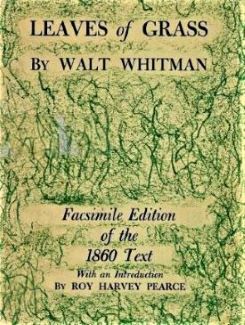
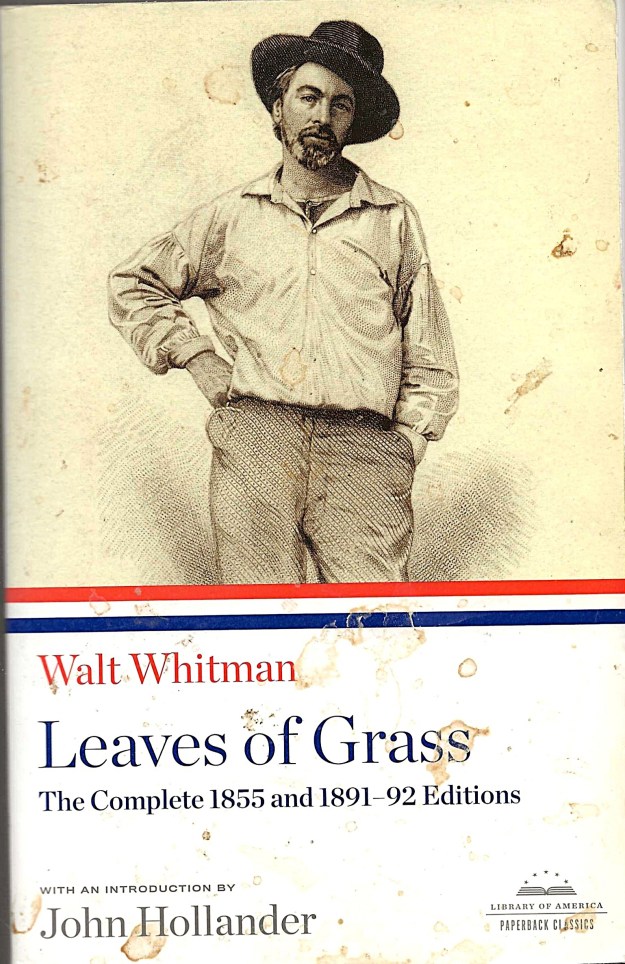
I CELEBRATE myself,
And what I assume you shall assume,
For every atom belonging to me as good belongs to you.

I loafe and invite my soul,
I lean and loafe at my ease . . . . observing a spear of summer grass.

Houses and rooms are full of perfumes . . . . the shelves are crowded with perfumes,
I breathe the fragrance myself, and know it and like it,
The distillation would intoxicate me also, but I shall not let it.

The atmosphere is not a perfume . . . . it has no taste of the distillation . . . . it is
odorless,
It is for my mouth forever . . . . I am in love with it,
I will go to the bank by the wood and become undisguised and naked,
I am mad for it to be in contact with me.

The smoke of my own breath,
Echos, ripples, and buzzed whispers . . . . loveroot, silkthread, crotch and vine,
My respiration and inspiration . . . . the beating of my heart . . . . the passing of blood  and air through my lungs,
The sniff of green leaves and dry leaves, and of the shore and darkcolored sea-  rocks, and of hay in the barn,
The sound of the belched words of my voice . . . . words loosed to the eddies of  the wind,
A few light kisses . . . . a few embraces . . . . a reaching around of arms,
The play of shine and shade on the trees as the supple boughs wag,
The delight alone or in the rush of the streets, or along the fields and hillsides,
The feeling of health . . . . the full-noon trill . . . . the song of me rising from bed
and meeting the sun.

— Walt Whitman, Leaves of Grass, 1855 edition


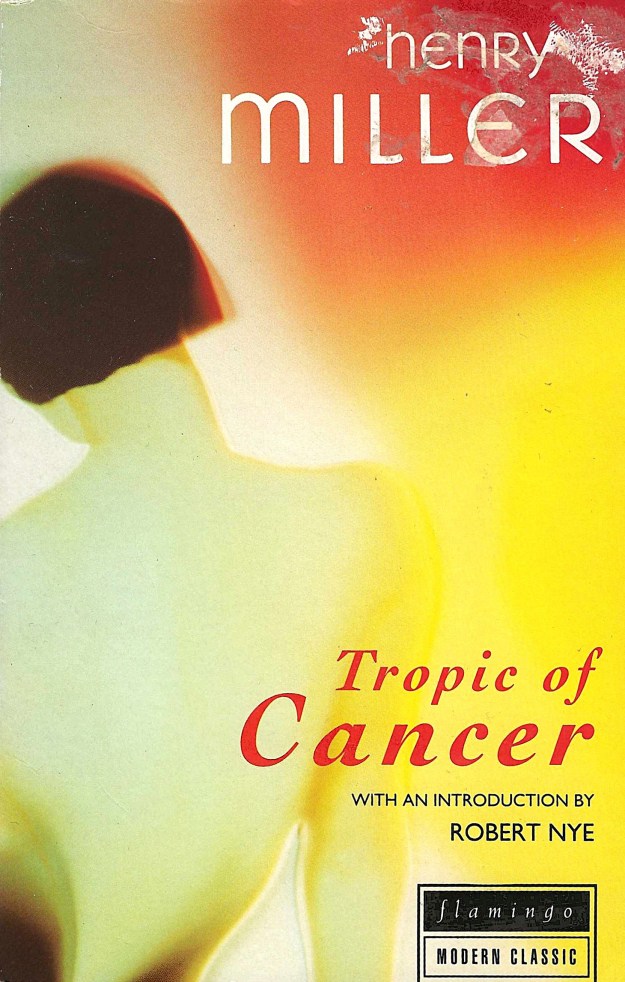
It is now the fall of my second year in Paris. I was sent here for a reason I have not yet been able to fathom.

I have no money, no resources, no hopes. I am the happiest man alive. A year ago, six months ago, I thought that I was an artist. I no longer think about it, I am. Everything that was literature has fallen from me. There are no more books to be written, thank God.

— Henry Miller, Tropic of Cancer (1934)


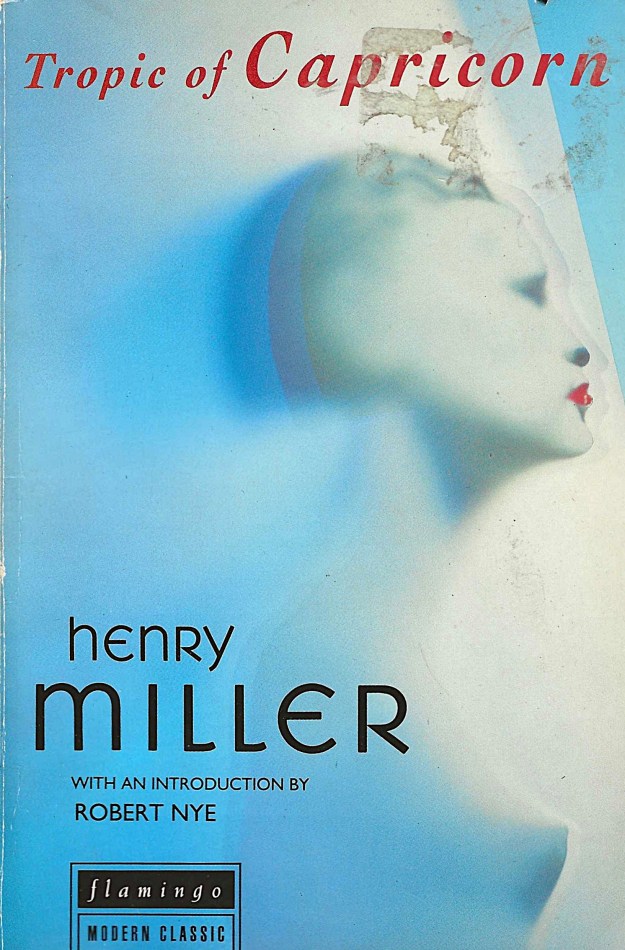
ONCE you have given up the ghost, everything follows with dead certainty, even in the midst of chaos. From the beginning it was never anything but chaos: it was a fluid which enveloped me, which I breathed in through the gills. In the sub-strata, where the moon shone steady and opaque, it was smooth and fecundating; above it was a jangle and a discord. In everything I quickly saw the opposite, the contradiction, and between the real and the unreal the irony, the paradox. I was my own worst enemy. There was nothing I wished to do which I could just as well not do. Even as a child, when I lacked for nothing, I wanted to die: I wanted to surrender be­ cause I saw no sense in struggling. I felt that nothing would be proved, substantiated, added or subtracted by continuing an existence which I bad not asked for. Everybody around me was a failure, or if not a failure, ridiculous. Especially the successful ones. The successful ones bored me to tears. I was sympathetic to a fault, but it was not sympathy that made me so. It was a purely negative quality, a weakness which blossomed at the mere sight of human misery. I never helped any one expecting that it would do any good; I helped because I was helpless to do otherwise. To want to change the condition of affairs the seemed futile to me; nothing would be altered, I was convinced, except by a change of heart, and who could change the hearts of men? Now and then a friend was converted; it was something to make me puke. I bad no more need of God than He had of me, and if there were one, I often said to myself, I would met him calmly and spit in His face.

— Henry Miller, Tropic of Capricorn (1939)


*****************************************************

Besides this site devoted to Whitman,  I have posted about Henry Miller at

Henry Miller


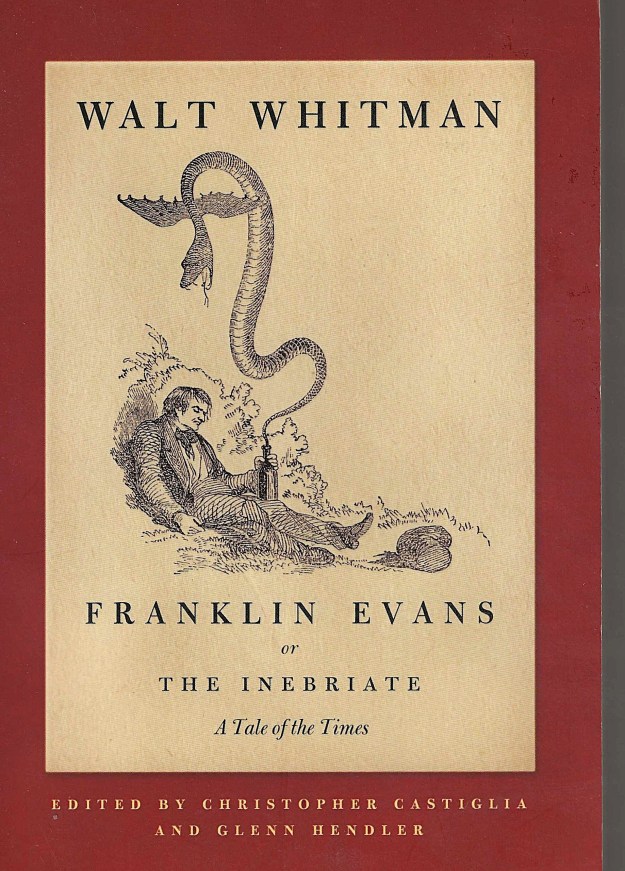
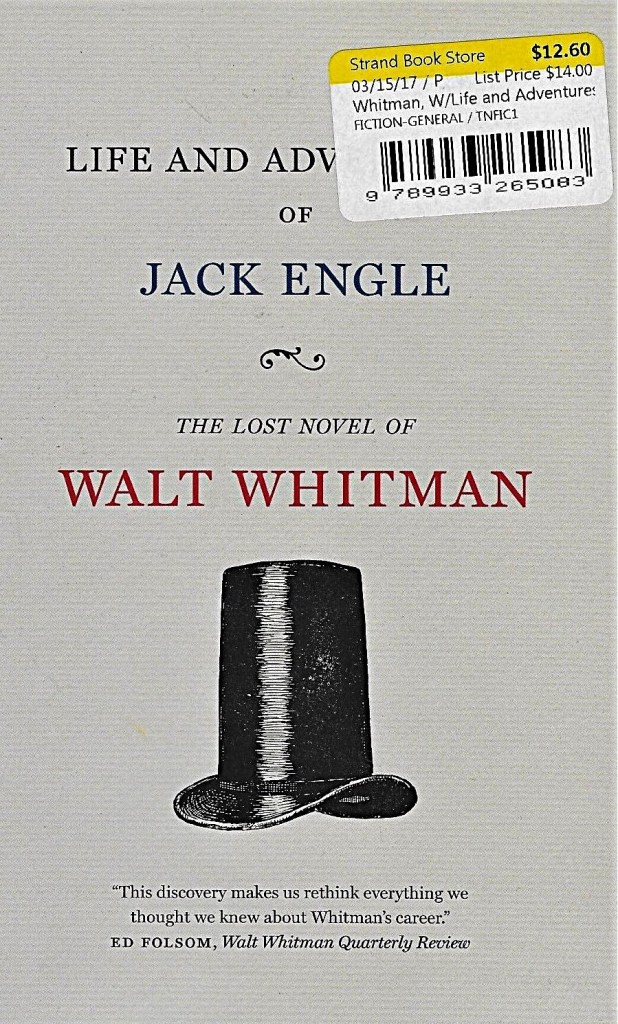
In early stages of their careens, the following novels were written by Whitman and Miller:

Whitman

Franklin Evans or The Inebriate: A Tale of the Times (1842)

Life and Adventures of Jack Engle (1852)

Miller

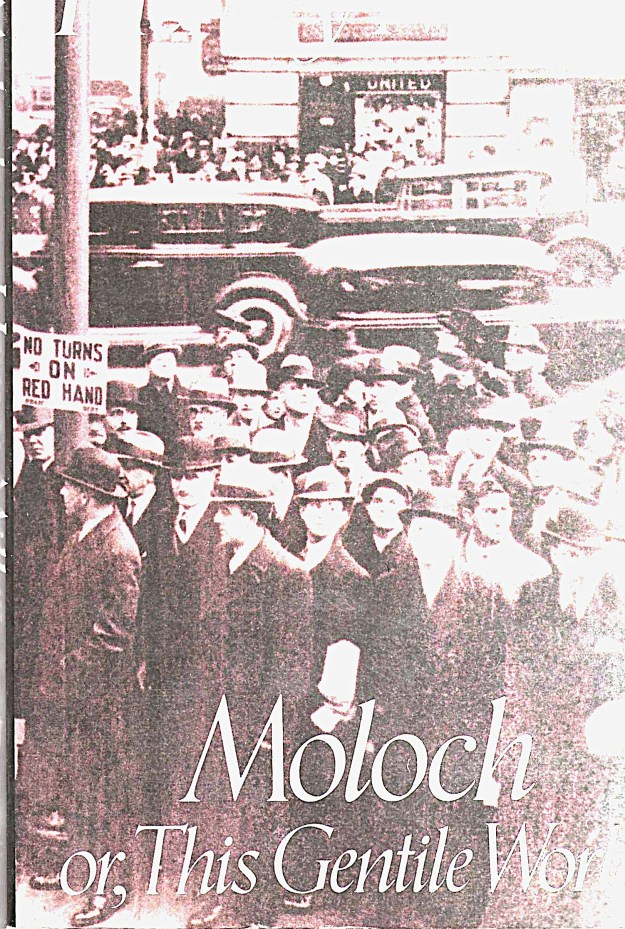
Moloch Or, This Gentle World (1927)

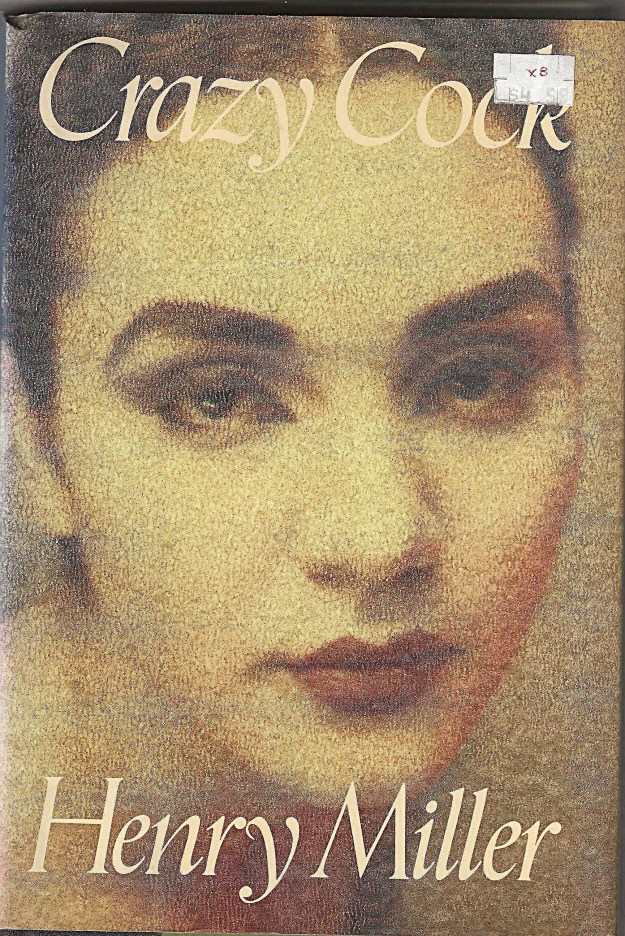
Crazy Cock (1928-1930)

These early works are of historical interest. One can learn about these two writers and their times from them.

But …

They are not CONVINCING, do not RESONATE. It takes some patience to read them.

Both writers had to find their own voices. It was not to be fiction the third person, narration per se, or description. They had to address the reader directly, talking about THEMSELVES.


— posted by Roger W. Smith

   April 2026


Walt Whitman … profoundly a New Yorker


In his sprawl, his vaunting ambition, and his humanity, Walt Whitman was profoundly a New Yorker. His poetry bore no little resemblance to the “mettlesome, mad, extravagant city” that he called home, and to the end of his life, he remained “a Manhattanese, free, friendly and proud.”

Whitman was born in the small community of West Hills in Suffolk County, and he returned often to the rural scenes of “fish-shape Paumanok,” as he called Long Island. But he grew up in Brooklyn, at a time when it was growing explosively, and proudly called himself a “Brooklyn boy.” Like his father, he found occasional work in carpentry and contracting, and that may have affected the way he thought about his poetry–with “the preparatory jointing, squaring, sawing, mortising, the hoist-up of beams the push of them in their places, laying them regular.”

New York’s expansion resembled Whitman’s own during the “seed-time years” that preceded Leaves of Grass. He later claimed that the poems “arose out of my life in Brooklyn and New York from 1838 to 1853, absorbing a million people, for fifteen years, with an intimacy, an eagerness, and an abandon, probably never equaled.” Although he moved to Washington during the Civil War and then to Camden, New Jersey, he never stopped revisiting the New York of his imagination. In a letter from 1868, he wrote, “I sometimes think I am the particular man who enjoys the shows of all these things in New York more than any other mortal–as if it was all got up just for me to observe and study.” [italics added]

– exhibit label, “Walt Whitman: Bard of Democracy”; exhibition at the Morgan Library, New York, NY


*****************************************************

CITY OF SHIPS.

CITY of ships!
(O the black ships! O the fierce ships!
O the beautiful sharp-bow’d steam-ships and sail-ships!)
City of the world! (for all races are here,
All the lands of the earth make contributions here;)
City of the sea! city of hurried and glittering tides!
City whose gleeful tides continually rush or recede, whirling in and out with eddies and foam!
City of wharves and stores—city of tall façades of marble and iron!
Proud and passionate city—mettlesome, mad, extravagant city!
Spring up O city—not for peace alone, but be indeed yourself, warlike!
Fear not—submit to no models but your own O city!
Behold me—incarnate me as I have incarnated you!
I have rejected nothing you offer’d me—whom you adopted I have adopted,
Good or bad I never question you— love all—I do not condemn any thing,
I chant and celebrate all that is yours—yet peace no more,
In peace I chanted peace, but now the drum of war is mine,
War, red war is my song through your streets, O city!

Leaves of Grass (1881-1882)


*****************************************************

But I was a Manhattanese, free, friendly, and proud
I was called by my nighest name by clear loud voices
of young men as they saw me approaching or passing,
Felt their arms on my neck as I stood, or the negligent leaning of their flesh against me as I sat,
Saw many I loved in the street, or ferry-boat, or public assembly, yet never told them a word,
Lived the same life with the rest, the same old laughing, gnawing, sleeping,
Played the part that still looks back on the actor or actress,
The same old rôle, the rôle that is what we make it, as great as we like,
Or as small as we like, or both great and small.

— Walt Whitman, “Crossing Brooklyn Ferry” (excerpt)\


*****************************************************

The house-builder at work in cities or anywhere,
The preparatory jointing, squaring, sawing, mortising,
The hoist-up of beams, the push of them in their places,
laying them regular

— Walt Whitman, “Song of the Broad-Axe” (excerpt)


*****************************************************

The exhibit label is vague about where Whitman actually lived during his years in what now comprises New York City. (Brooklyn and Manhattan were separate municipalities when Whitman lived there. Jamaica, Queens, where Whitman was a schoolteacher briefly, was then part of Long Island, where Whitman was born.) He grew up in Brooklyn; and, in the years of his adulthood prior to the Civil War, he resided in both Brooklyn and Manhattan at various times. When in Manhattan, he lived downtown in boarding houses in or near what is now the Financial District. When he was residing in Brooklyn, he often took the ferry to Manhattan. He was a regular at Pfaff’s beer cellar in Manhattan, which was located on Broadway near Bleecker Street.

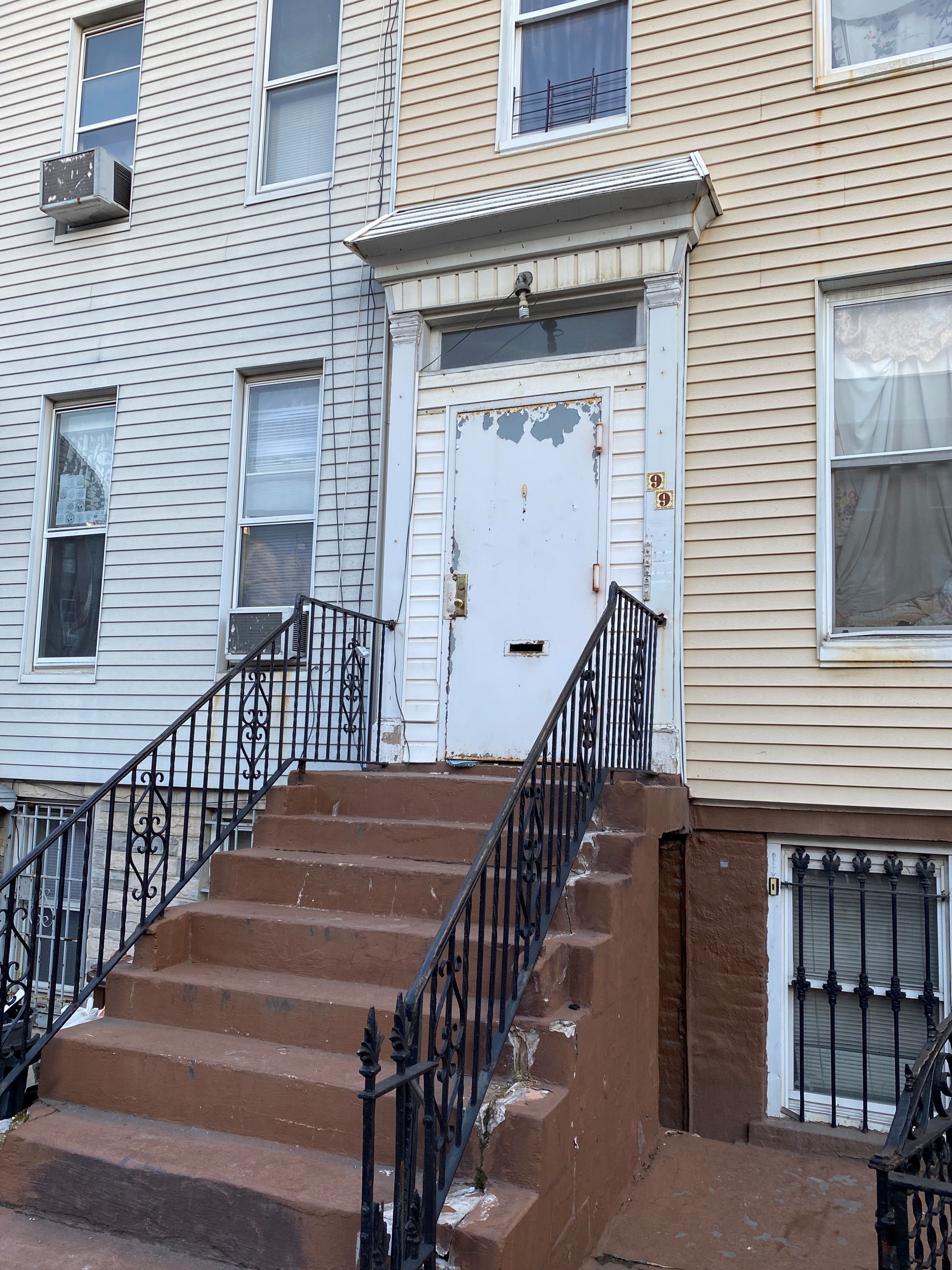
Whitman lived on Ryerson Street in Brooklyn in the 1850s.


*****************************************************

photos by Roger W. Smith

former Whitman home, 99 Ryerson Street, Brooklyn (Clinton Hill Section)

99 Ryerson Street

*****************************************************

See:

“Should Walt Whitman’s House Be Landmarked? It’s Complicated: The city does not think so, and the building’s owner agrees. Then there’s the matter of whether the poet should be honored in such a diverse neighborhood.,” By Jane Margolies,  The New York Times, December 24, 2019

‘Should Walt Whitman House Be Landmarked’ – NY Times 12-24-2019


— posted by Roger W. Smith


*****************************************************

Addendum:

In 2017, University of Iowa Press published a lost Whitman novel (its existence was unknown to scholars):  Life and Adventures of Jack Engle, which was originally published by Whitman in 1852 under a pseudonym and was serialized in a New York newspaper, the Sunday Dispatch. Zachary Turpin, who wrote an introduction to the 2017 edition, made this remarkable discovery.

If one reads the novel, which is set in Manhattan at around the time of Whitman’s boyhood — i.e., the early nineteenth century —  one can readily perceive Whitman’s familiarity with the City, which provides a setting and backdrop for the events and gives the story verisimilitude.