Tag Archives: Walt Whitman

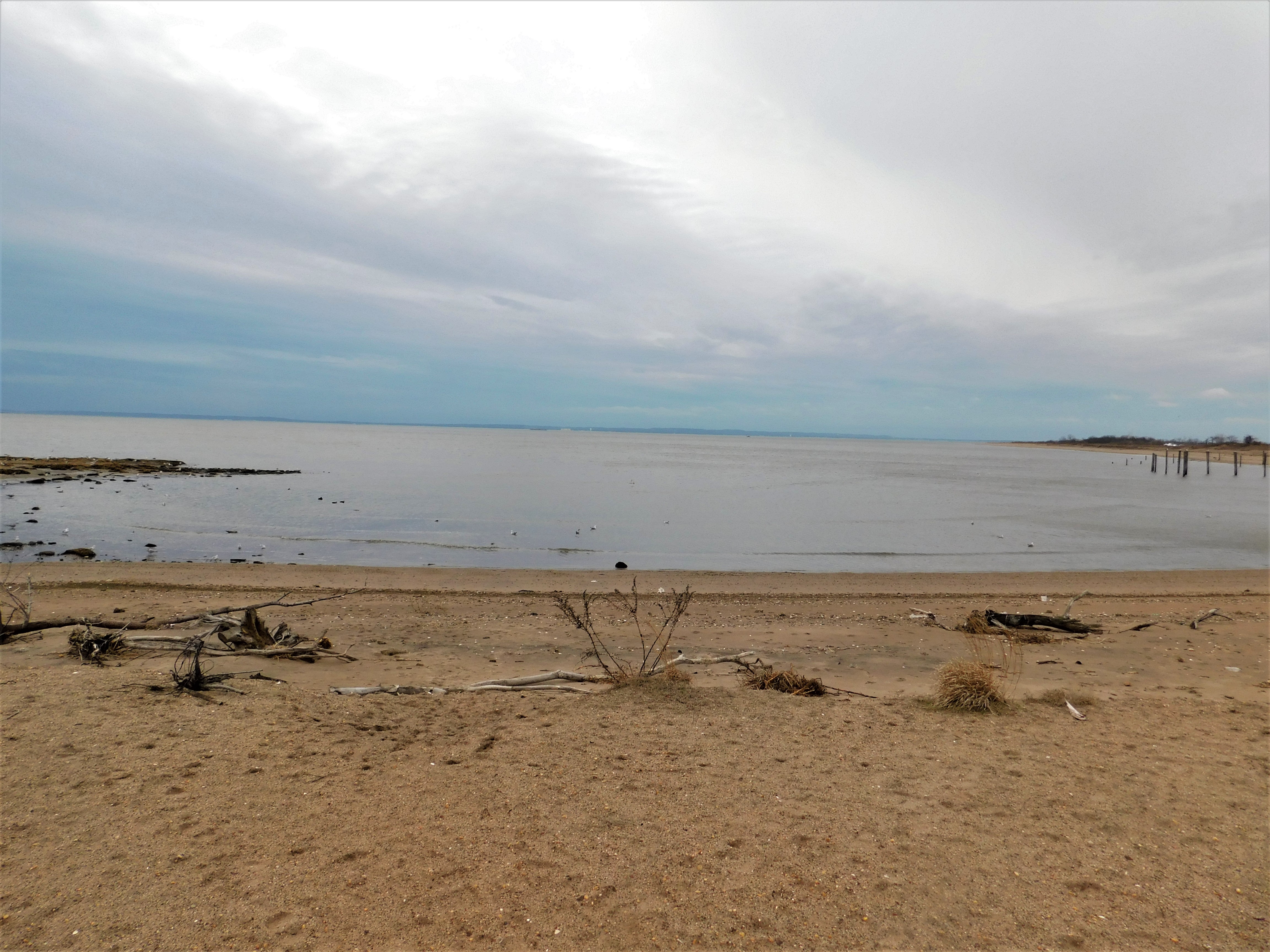
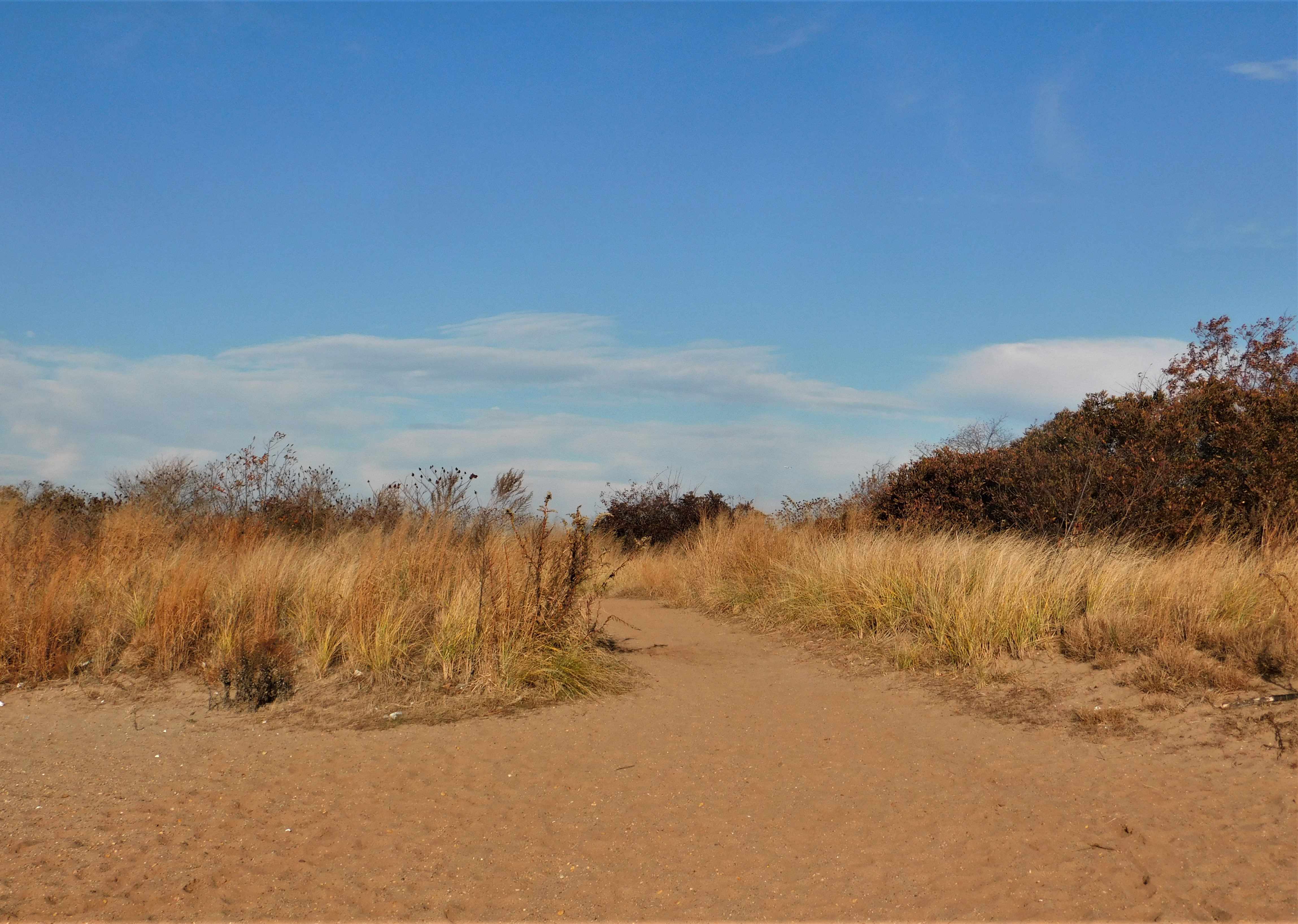
Staten Island beach walks


Sea-cabbage; salt hay; sea-rushes; ooze–sea-ooze; gluten–sea-gluten; sea­-scum; spawn; surf; beach; salt-perfume; mud; sound of walking barefoot ankle in the edge of the water by the sea. — Walt Whitman

Walt Whitman: Notebooks and Unpublished Prose Manuscripts, Volume IV: Notes, edited by Edward F. Grier (New York University Press 1984), pg. 1309


photographs of Midland Beach, Staten Island, by Roger W. Smith


— posted by Roger W. Smith

   February 2023


Walt Whitman, “Brooklyn Parks”


Walt Whitman, ‘Brooklyn Parks’

Posted here (Word document above):

Walt Whitman. “BROOKLYN PARKS”

Brooklyn Daily Times, April 17, 1858

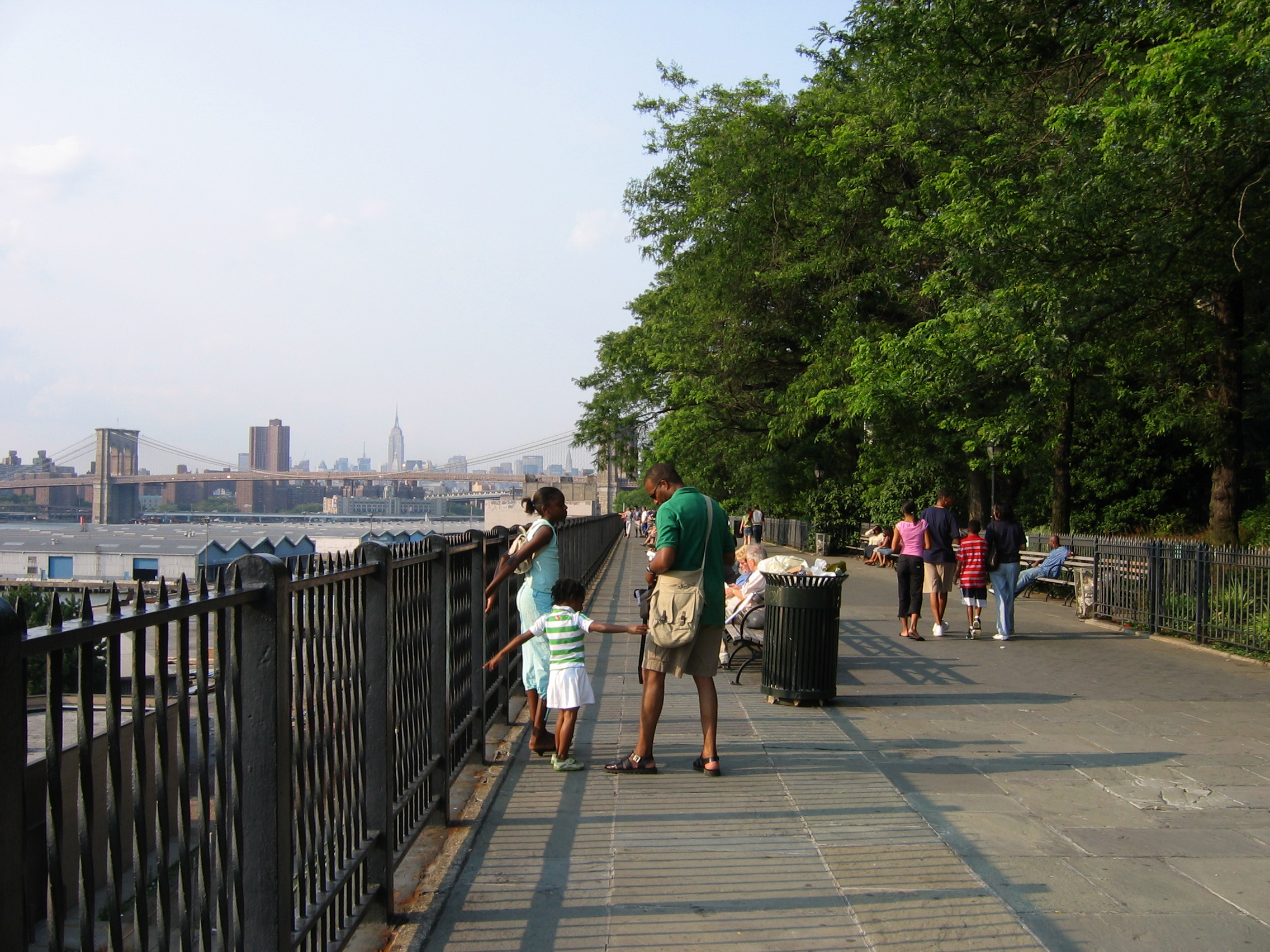
What intrigues me is Whitman’s mention of “a Park on the heights, over Montague ferry!,” whereby he refers to the neighborhood of Brooklyn Heights, from which there is a splendid view of Manhattan.


— posted by Roger W. Smith

   January 2023


Brooklyn Heights; photo by Roger W. Smith

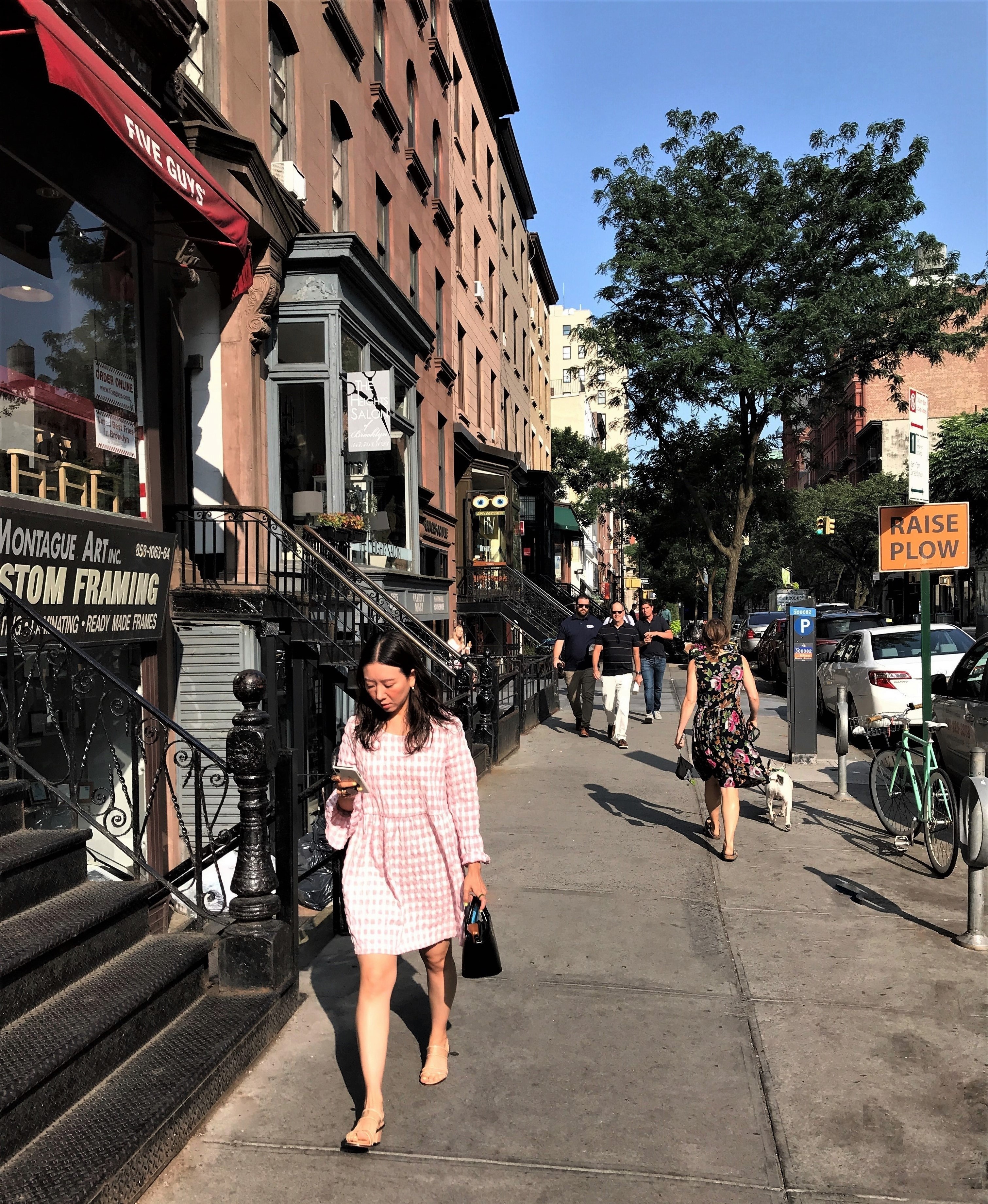
Brooklyn Heights; photo by Roger W. Smith


Walt Whitman, “Philosophy of Ferries”


Walt Whitman, ‘Philosophy of Ferries’

Posted here (Word document above):

Walt Whitman “Philosophy of Ferries,” Brooklyn Daily Eagle, August 11, 1947

IN The Uncollected Poetry and Prose of Walt Whitman; Much of Which Has Been But Recently Discovered, with Various Early Manuscripts; Now First Published; Collected and Edited by Emory Holloway, Volume One, pp. 168-171 (Gloucester, Mass. Peter Smith, 1972)


*****************************************************

Things haven’t changed much since Whitman’s day.


— posted by Roger W. Smith

   January 2023


photo by Roger W. Smith


*****************************************************

See also my post

the ferry

the ferry

Walt Whitman, “Broadway”


Walt Whitman, ‘Broadway’ (2)


Posted here (Word document above):

Wat Whitman, “BROADWAY”

Life Illustrated, August 9, 1856

an unsigned article attributed to Whitman, reprinted in

New York Dissected By Walt Whitman: A Sheaf of Recently Discovered Newspaper Articles by the Author of LEAVES OF GRASS; Introduction and Notes by Emory Holloway and Ralph Adimari (New York: Rufus Rockwell Wilson, Inc. 1936), pp. 119-124


*****************************************************

Whitman’s experiences and impressions in his pre-Civil War years are similar to my own in Manhattan jaunts. (I also love to take the ferry.) As noted by Emory Holloway and Ralph Adimari:

When Moncure D. Conway, at Emerson’s suggestion, called upon Whitman a month or so after the appearance of Leaves of Grass, in 1855, he took a walk with him through the city. “Nothing could surpass,” he says, “the blending of insouciance with active observation in his manner as we strolled along the streets”. … Whitman had been walking the streets, riding the omnibuses and crossing the ferries for many years. His memory was stored with so many such impressions that one of his early manuscripts describes his mind as a picture gallery. Perhaps it was from a desire to reconcile the contradictions in these multiform and inharmonious impressions that the poet sought escape in mystical rhapsody. The peculiar quality of Whitman’s elevated poetic mood, however, is due to the fact that instead of withdrawing his mind ascetically from experience, he sought rather to use definite concrete experiences to climb to a summit of vision which would embrace them all.


— posted by Roger W. Smith

January 2022


Walt Whitman, “The Great Army of the Sick”

Walt Whitman, ‘The Great Army of the Sick’ – NY Times 2-26-1863


Posted here:

Walt Whitman

“The Great Army of the Sick; Military Hospitals in Washington”

The New York Times

February 26, 1863


— Roger W. Smith

   January 2023

Vigil Strange I Kept on the Field one Night


Walt Whitman

Vigil Strange I Kept on the Field one Night

VIGIL strange I kept on the field one night;
When you my son and my comrade dropt at my side that day,
One look I but gave which your dear eyes return’d with a look I shall never forget,
One touch of your hand to mine O boy, reach’d up as you lay on the ground,
Then onward I sped in the battle, the even-contested battle,
Till late in the night reliev’d to the place at last again I made my way,
Found you in death so cold dear comrade, found your body son of responding kisses, (never again on earth responding,)
Bared your face in the starlight, curious the scene, cool blew the moderate night-wind,
Long there and then in vigil I stood, dimly around me the battle-field spreading,
Vigil wondrous and vigil sweet there in the fragrant silent night,
But not a tear fell, not even a long-drawn sigh, long, long I gazed,
Then on the earth partially reclining sat by your side leaning my chin in my hands,
Passing sweet hours, immortal and mystic hours with you dearest comrade—not a tear, not a word,
Vigil of silence, love and death, vigil for you my son and my soldier,
As onward silently stars aloft, eastward new ones upward stole,
Vigil final for you brave boy, (I could not save you, swift was your death,
I faithfully loved you and cared for you living, I think we shall surely meet again,)
Till at latest lingering of the night, indeed just as the dawn appear’d,
My comrade I wrapt in his blanket, envelop’d well his form,
Folded the blanket well, tucking it carefully over head and carefully under feet,
And there and then and bathed by the rising sun, my son in his grave, in his rude-dug grave I deposited,
Ending my vigil strange with that, vigil of night and battle-field dim,
Vigil for boy of responding kisses, (never again on earth responding,)
Vigil for comrade swiftly slain, vigil I never forget, how as day brighten’d,
I rose from the chill ground and folded my soldier well in his blanket,
And buried him where he fell.

— from Walt Whitman, Drum-Taps (1865)


*****************************************************

The absolute simplicity and avoidance of anything “literary,” giving the poem great expressive power.

The Biblical parallelism: “Folded the blanket well, tucking it carefully over head and carefully under feet,”


— posted by Roger W. Smith

  January 2023

‘You used to be very good to them, playing ” ‘tag’, and marbles with them.”


Some personal reminiscences from those who knew Walt Whitman personally and had ongoing contact with him informally.


ELLEN M. CALDER

Calder

“O’Connor,” Walt Whitman: An Encyclopedia, (New York: Garland Publishing, 1998), pp. 475-477

O’Connor – Walt Whitman Encyclopedia


MARY JORDAN

Jordan


Ralph Waldo Emerson, The Snow-Storm

snow-storm


Abraham Cowley (1618-1667) was an English poet and essayist born in the City of London late in 1618. He was one of the leading English poets of the 17th century.

Stephen Pearl Andrews (1812-1886) was an American libertarian socialist, individualist anarchist, linguist, political philosopher, outspoken abolitionist and author of several books on the labor movement and individualist anarchism.


— posted by Roger W. Smith

  January 2023

Edward Everett Hale review of Leaves of Grass (1856)


Edward Everett Hale review of Leaves of Grass – North American Review, January 1856


posted here (PDF file above):

review of Walt Whitman, Leaves of Grass

reviewed by Edward Everett Hale

North American Review

January 1856

An excellent early review. Edward Everett Hale got Whitman – verily – as few critics at that point in time did.


— posted by Roger W. Smith

   August 2022

Walt Whitman’s New York


Walt Whitman was born on May 31, 1819, in the farming community of West Hills, Long Island, in western Suffolk County. At the age of three, Whitman was moved to Brooklyn with his family, and it was there that he spent his childhood. While still in his teens, Whitman left the family home in Brooklyn, and spent some five years at several occupations at various locations on Long Island. He served as a school­teacher, and as writer, editor, and printer for newspapers. During this period he lived and worked in what are now the urban and suburban counties of Queens, Nassau, and Suffolk. At that time, however, this area was rural, with only small scattered villages.

While in his early twenties, Whitman returned to the city, living and working in both Manhattan and Brooklyn as writer, editor, and printer for various newspapers. This was to be his life for the next twenty years until the Civil War brought about his move to Washington, D.C. Probably his most famous post during this period-was his tenure as editor of the Brooklyn Eagle.

By the summer of 1855, Whitman had published the first edition of Leaves of Grass. A second edition appeared the following year, and, in 1860, a third edition. Whitman was forty-two years old and something of a local personage when, on June 8, 1861, the Brooklyn Standard published the first of an unsigned series of his articles to which the newspaper gave the title of Brooklyniana.” …

It is of interest, and useful, to review very briefly some of the major changes in geographical and governmental entities that have taken place since Whitman wrote this work. New York City then included only what are today the Borough of Manhattan and part of the Borough of the Bronx; and, in practice, when these articles were written, “New York City” or “Manhattan” meant lower Manhattan. Manhattan north of Forty-second Street was largely rural. When Whitman wrote these articles, Brooklyn was an independent city, consisting of what are today the Brooklyn Heights, downtown Brooklyn, South Brooklyn, and Williamsburg areas. Kings County—which today comprises New York City’s Borough of Brooklyn—was mostly rural, and, in addition to Brooklyn, contained other, independent communities such as Flatbush and Gravesend. What is today New York City’s Borough of Queens was also rural, with independent communities such as Jamaica and Flushing; and what is today suburban Nassau County did not even exist at that time; it was part of rural Queens County. Nassau County was formed later by splitting the original Queens County into two new counties.

Whitman, though a native of the New York area, loved it and wrote of it with the zeal and zest usually found only in those from elsewhere who have made New York their chosen home [italics added]. One of Whitman’s favorite pastimes was to stroll through the streets of Manhattan and Brooklyn, observing people, and making new friends. He became an enthusiastic devotee of the opera. And he also enjoyed the natural beauty to be found in the meadows and on the beaches of rural Long Island. In these very articles, Whitman writes with deep affection of both the urban Manhattan-Brooklyn area and of rural Long Island, which he preferred to call by its original Indian name of “Paumanok.”

Yet Whitman did not merely use the New York area for his own pleasure; he was active in civic life. Through his association with newspapers, he encouraged and participated in crusades for social and civic improvement. He fought municipal corruption, working to expose the graft that seemed to flourish continually in every municipal department and every municipal enterprise. He was in the forefront of those defending what has become New York City’s collection of beautiful parks, helping to fight off the real-estate speculators of the day. And hospitals were a special interest of Whitman’s; he made particular efforts to publicize the services and needs of worthy hospitals.

All these activities are, of course, generally of the conventional “good government” variety—but some of Whitman’s other civic views were less conventional. He was a strong critic of the law-enforcement, judicial, and penal systems as they were applied against the outcasts of society such as the prostitutes. It appalled Whitman to see the prostitutes of the city abused by brutal police and sanctimonious politicians who themselves were notoriously corrupt. Whitman also was a sharp critic of the hypocrisy he found among the clergy of the city.

Political activity of his day centered upon three parties—the Democrats, the Republicans, and the “Know-Nothings,” more formally referred to as the Native American Party. The Democratic Party was split into two factions. The “Old Hunkers” were conservative Democrats, strongly pro-business, and pro-slavery. They were opposed within the party by progressive Democrats who were anti-slavery and who advocated greater social and economic democracy. Whitman was an active member of this latter faction, even serving as an official delegate to various Democratic Party conventions and gatherings.

Indeed, Whitman was a very active citizen, serving his city in a variety of ways. And it should be kept in mind that when Whitman wrote this work—articles dealing with Manhattan, Brooklyn, and Long Island—he had spent his en­tire life in this region, excepting only a brief stay in New Orleans. Interestingly, his best journalism on the subject of New York regional history came just at the time that the approach of the Civil War already had begun to disrupt and transform the region and the entire nation. In regard to Whitman personally, it is perhaps ironic that, so soon after he sang the praises of the New York area in this work, he was destined to leave this region of his birth and youth.

Whitman went to the Washington, D.C., area in December of 1862 in search of a brother in the Union Army who had been reported as wounded in action. He found his brother, only slightly wounded, safe in one of the Union camps. Thereafter, Whitman turned to visiting the Washington hospitals, seeking out wounded soldiers from the New York area. Whitman was so affected by his experiences in Washington hospitals that he undertook volunteer, unpaid nursing service there. Remaining in Washington, Whitman accepted a clerkship in the Federal government, giving all his spare time to the hospitals and to his writing. He was to spend the next ten years in Washington, and his final twenty years in Camden, New Jersey, where he died on March 26, 1892, at the age of seventy-two.

Whitman’s New York years not only constituted his formative period but also comprised the greater part of his life. The first forty-two of Whitman’s seventy-two years were spent in the New York area. It was in this region that he formed his philosophy of life and art—in short, the ideas and the style that distinguish his writings. This work is tangible evidence of the deep affection with which Whitman regarded the New York area, and the significance he attached to its history and traditions.

Walt Whitman’s New York: From Manhattan to Montauk, edited by Henry M. Christman


— posted by Roger W. Smith

   May 2022
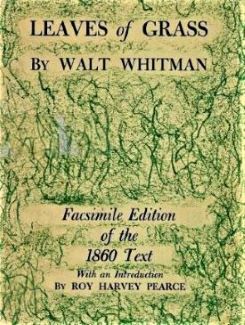
new post; Pitirim A. Sorokin, “The Bard of Life (Walt Whitman 1819-1892)”


On my Sorokin site, I have a new post: an early article that the sociologist and social philosopher Pitirim A. Sorokin wrote about Walt Whitman, which I have translated from the original Russian.

Posted at

Sorokin, “The Bard of Life” (Walt Whitman 1819-1892)


— Roger W. Smith