This site is devoted to Walt Whitman: his works, life, and my personal associaton with his works. Besides poetry, there are posts about music inspired by Whitman. Several posts focus on Whitman's New York.
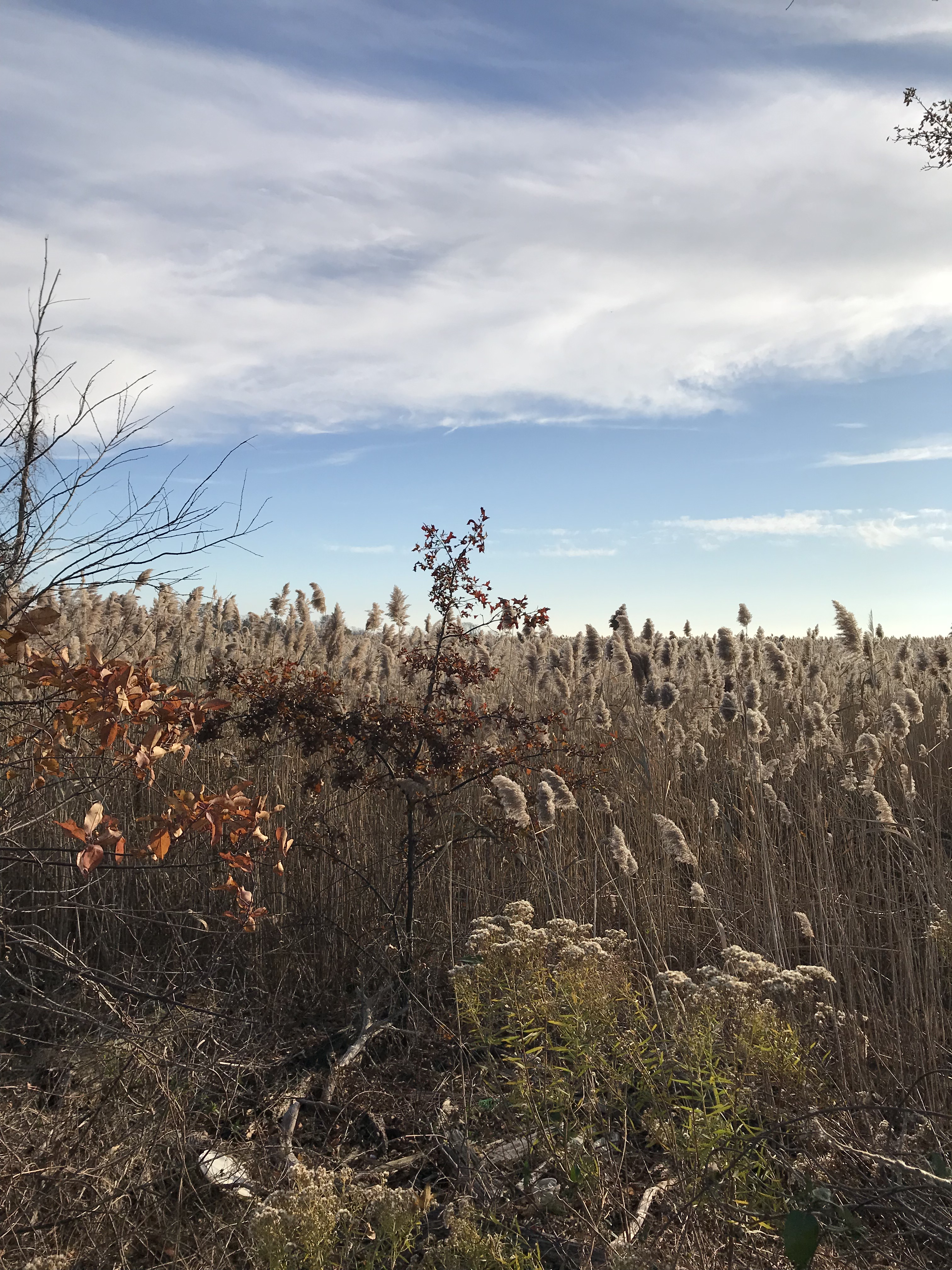
I am not sure how the last part of the assertions made by Whitman might apply to me. But, I felt the truth of what he says about God’s presence everywhere during a day long ramble yesterday on Staten Island.
On Monday, November 6, 2017, I attended a performance of A German Requiem, to Words of the Holy Scriptures (“Ein deutsches Requiem, nach Worten der heiligen Schrift”) by Johannes Brahms at Carnegie Hall in New York. The work was composed between 1865 and 1868 and consists of seven movements. The work is, as noted in a Wikipedia entry, “sacred but non-liturgical,” which can be seen in the fact that it is not in Latin and is not based on the Latin mass.
The program notes state:
Unlike the traditional Requiem, a prayer for the dead, Ein deutsches Requiem speaks to the mourners, comforting them and reminding them that the inevitability of death makes it a part of life. … Bypassing the traditional prayers for the dead, Brahms selected his text from the German Lutheran Bible and the Apocrypha. In so doing, he expressed his own feelings toward death, which were not governed by a formal sense of religion. Ein deutsches Requiem focuses on the needs of the living — Brahms had considered calling it a “human” requiem — on the brevity of life and the expectation of “evige Freude,” eternal joy.
This brought to mind other famous requiems, namely Mozart’s and Berlioz’s requiems. Both use the traditional liturgy and, what is most notable, both are masses for the DEAD. They are solemn, mournful — without, I would say, a hint of joy, and, in the case of the Berlioz requiem (which is a masterpiece), I would say, scary, almost terrifying.
I could not help thinking also about the parallels with Walt Whitman and his views of death. Below are some excerpts from the text of the Brahms requiem and some observations about Whitman’s views on death and excerpts from his poems.
Selig sind, die da Leid tragen, denn sie sollen getröstet werden. (Blessed are they that mourn; for they shall be comforted.) – Matthew 5:4
Die mit Tränen säen, werden mit Freuden ernten. Sie gehen hin und weinen und tragen edlen Samen, und kommen mit Freuden und bringen ihre Garben. (They that sow in tears shall reap in joy. He that goeth forth and weepeth, bearing precious seed, shall doubtless come again with rejoicing, bringing his sheaves with him.) – Psalm 126:5,6
Denn alles Fleisch ist wie Gras und alle Herrlichkeit des Menschen wie des Grases Blumen. Das Gras ist verdorret und die Blume abgefallen. (For all flesh is as grass, and all the glory of man as the flower of grass. The grass withereth, and the flower thereof falleth away.) – 1 Peter 1:24
Ihr habt nun Traurigkeit; aber ich will euch wieder sehen und euer Herz soll sich freuen und eure Freude soll neimand von euch nehmen. (And ye now therefore have sorrow; but I will see you again, and your heart shall rejoice, and your joy no man taketh from you.) – John 16:22
Ich will euch trösten, wie Einen seine Mutter tröstet. (As one whom his mother comforteth, so will I comfort you.) – Isaiah 66:13
Siehe, ich sage euch ein Geheimnis: Wir werden nicht alle entschlafen, wir werden aber alle verwandelt werden; und dasselbige plötzlich, in einem Augenblick, zu der Zeit der letzten Posaune. Denn es wird die Posaune schallen, und die Toten wervandelt werden. Dann wird erfüllet werden das Wort, das geschrieben steht: Der Tod is verschlungen in den Sieg. Tod, wo ist dein Stachel? Hölle, wo ist dein Sieg? (Behold, I shew you a mystery; We shall not all sleep, but we shall all be changed. In a moment, in the twinkling of an eye, at the last trump: for the trumpet shall sound, and the dead shall be raised incorruptible, and we shall be changed … then shall be brought to pass the saying that is written, Death is swallowed up in victory. O death, where is they sting? O grave, where is they victory?) – 1 Corinthians 15:51, 52, 54, 55
Walt Whitman is a great poet of the joys of life, but he is equally a great poet of death. Few poets have been immersed in the mystery of death or lived so close to death as he did. Fewer still have treated death with such an eloquent voice or created such an awesome persona. Death is a major component of the richness and variety of Leaves of Grass. …. Whitman’s poetry illustrates the universal truth that death is not only the most overwhelming and the least understood event of our existence but also the most intriguing. He realized from the outset of his poetic career that if his poetry were to reflect the essence and scope of our life experiences — and those of his own life — it must speak of death openly, imaginatively, and unswayed by clichés or established doctrines. He became a sensitive student of death and dying, familiar with disease, anguish, violence, and the displays of both fear and courage among the many dying persons he observed.
“Death is a vital part of [Whitman’s]s gospel of universal brotherhood and sisterhood, of his luminous vision of the progressive unfolding of the human race … and of his profound spirituality. And it is a vital element in the yearning for love that permeates the poems. … He viewed death as an eternal and benign mystery. … At times his poems treat death gladly, as if to embrace it; at times they treat it quizzically.
Throughout Leaves of Grass he proclaimed his faith that death was not a plunge into the terminal nada and was convinced that we can live our life fully only if we are prepared to welcome death as a transition in a continued, but still mysterious, process of spiritual evolution. Underlying this conviction was his belief that death promises some kind of future continuity for everyone—and particularly for himself. And, as the poems reveal, this belief did not come easily but was part of a trying personal and ideological struggle. Moreover, he felt that a profound respect for death was fundamental to his aesthetic and to all great art. … [Whitman’s] “Song of Myself” contains some of the most affecting death scenes in all poetry. — Harold Aspiz, So Long! Walt Whitman’s Poetry of Death (The University of Alabama Press, 2004)
Whitman had an intimate acquaintance of death as a volunteer nurse in Civil War hospitals. — Roger W. Smith
From the beginning Whitman seems to have recognized his ability to comfort the ailing immigrants and later the hospitalized horse-car drivers and injured firemen and soldiers by speaking with them in the humble manner that characterized his — and their — humble origins and by entering into their mode of thinking. — Harold Aspiz, So Long! Walt Whitman’s Poetry of Death
The grave—the grave—what foolish man calls it a dreadful place? It is a kind friend, whose arms shall compass us round about, and while we lay our heads upon his bosom, no care, temptation, nor corroding passion shall have power to disturb us. Then the weary spirit shall no more be weary; the aching head and aching heart will be strangers to pain; and the soul that has fretted and sorrowed away its little life on earth will sorrow not any more.
I do not dread the grave. There is many a time when I could lay down, and pass my immortal part through the valley of the shadow, as composedly as I quaff water after a tiresome walk. For what is there of terror in taking our rest? What is there here below to draw us with such fondness? Life is the running of a race—a most weary race, sometimes. Shall we fear the goal, merely because it is shrouded in a cloud?
– “The Tomb-Blossoms,” The United States Magazine and Democratic Review, January 1842
I wish I could translate the hints about the dead young men and women,
And the hints about old men and mothers, and the offspring taken soon out of their laps.
What do you think has become of the young and old men?
And what do you think has become of the women and children?
They are alive and well somewhere,
The smallest sprout shows there is really no death,
And if ever there was it led forward life, and does not wait at the end to arrest it,
And ceas’d the moment life appear’d.
All goes onward and outward, nothing collapses,
And to die is different from what any one supposed, and luckier.
— Leaves of Grass
I know I am deathless,
I know this orbit of mine cannot be swept by a carpenter’s
compass,
I know I shall not pass like a child’s carlacue cut with a burnt stick at night.
— Leaves of Grass
[A carlacue (variant of curlicue) is a fancifully curved or spiral figure.]
I bequeath myself to the dirt to grow from the grass I love,
If you want me again, look for me under your boot-soles.
You will hardly know who I am, or what I mean,
But I shall be good health to you nevertheless,
And filter and fibre your blood.
Failing to fetch me at first, keep encouraged,
Missing me one place, search another,
I stop somewhere waiting for you.
— Leaves of Grass
If all came but to ashes of dung,
If maggots and rats ended us, then Alarum! for we are betray’d,
Then indeed suspicion of death.
Do you suspect death? if I were to suspect death I should die now,
Do you think I could walk pleasantly and well-suited toward annihilation?
— Leaves of Grass
Great is Death—sure as Life holds all parts together, Death holds all parts together,
Death has just as much purport as Life has,
Do you enjoy what Life confers? you shall enjoy what Death confers,
I do not understand the realities of Death, but I know they are great,
I do not understand the least reality of Life—how then can I understand the realities of Death?
— Leaves of Grass
I do not know what follows the death of my body,
But I know well that whatever it is, it is best for me,
And I know well that what is really Me shall live just as much as before.
— Leaves of Grass
O the beautiful touch of Death, soothing and benumbing a few moments, for reasons;
O that of myself, discharging my excrementitious body, to be burned, or rendered to powder, or buried,
My real body doubtless left to me for other spheres,
My voided body, nothing more to me, returning to the purifications, further offices, eternal uses of the earth.
— Leaves of Grass
Whereto answering, the sea,
Delaying not, hurrying not,
Whisper’d me through the night, and very plainly before day-break,
Lisp’d to me the low and delicious [italic added] word death,
And again death, death, death, death,
Hissing melodious, neither like the bird nor like my arous’d child’s heart,
But edging near as privately for me rustling at my feet,
Creeping thence steadily up to my ears and laving me softly all over,
Death, death, death, death, death.
— “Out of the Cradle Endlessly Rocking.”
And if the memorials of the dead were put up indifferently everywhere, even in the room where I
eat or sleep, I should be satisfied,
And if the corpse of any one I love, or if my own corpse, be duly rendered to powder, and poured
in the sea, I shall be satisfied,
Or if it be distributed to the winds, I shall be satisfied.
— Leaves of Grass
Death is beautiful from you, (what indeed is finally beautiful except death and love?)
O I think it is not for life I am chanting here my chant of lovers, I think it must be for death,
For how calm, how solemn it grows to ascend to the atmosphere of lovers,
Death or life I am then indifferent, my soul declines to prefer,
(I am not sure but the high soul of lovers welcomes death most,)
Indeed O death, I think now these leaves mean precisely the same as you mean.
— Leaves of Grass
My dead absorb or South or North—my young men’s bodies absorb, and their precious precious blood,
Which holding in trust for me faithfully back again give me many a year hence,
In unseen essence and odor of surface and grass, centuries hence,
In blowing airs from the fields back again give me my darlings, give my immortal heroes,
Exhale me them centuries hence, breathe me their breath, let not an atom be lost,
O years and graves! O air and soil! O my dead, an aroma sweet!
Exhale them perennial sweet death, years, centuries hence.
— Leaves of Grass
I saw battle-corpses, myriads of them,
And the white skeletons of young men, I saw them,
I saw the debris and debris of all the slain soldiers of the war,
But I saw they were not as was thought,
They themselves were fully at rest, they suffer’d not,
The living remain’d and suffer’d, the mother suffer’d,
And the wife and the child and the musing comrade suffer’d,
And the armies that remain’d suffer’d.
– “When Lilacs Last in the Dooryard Bloom’d”
I make a scene, a song, brief (not fear of thee,
Nor gloom’s ravines, nor bleak, nor dark—for I do not fear thee,
Nor celebrate the struggle, or contortion, or hard-tied knot),
Of the broad blessed light and perfect air, with meadows, rippling tides, and trees
and flowers and grass,
And the low hum of living breeze—and in the midst God’s beautiful eternal right hand,
Thee, holiest minister of Heaven—thee, envoy, usherer, guide at last of all,
Rich, florid, loosener of the stricture-knot call’d life,
Sweet, peaceful, welcome Death.
“Death’s Valley” (published in Harper’s Monthly Magazine, April 1892):
Selig sind, die da Leid tragen (Blessed are they who bear suffering)
the opening of Ein deutsches Requiem
Denn alles Fleisch, es ist wie Gras (For all flesh, it is as grass)
the second movement of Ein deutsches Requiem
This extraordinarily powerful, lyrical movement never fails to move me. I had long thought that the lyrics must mean something like: Let’s face it, everyone is going to die; death and decay are inevitable. But the words from scripture are actually consoling:
Denn alles Fleisch ist wie Gras und alle Herrlichkeit des Menschen wie des Grases Blumen. Das Gras ist verdorret und die Blume abgefallen.
So seid nun geduldig, lieben Brüder, bis auf die Zukunft des Herrn. Siehe, ein Ackermann wartet auf die köstliche Frucht der Erde und is geduldig darüber, bis er empfahe den Morgenregen und Abendregen.
Aber des Herrn Wort bleibet in Ewigkeit.
Die Erlöseten des Herrn werden wieder kommen, und gen Zion kommen mit Jauchzen; ewige Freude wird über ihrem Haupte sein; Freude und Wonne werden sie ergreifen und Schmerz und Seufzen wird weg müssen.
(For all flesh is as grass, and all the glory of man as the flower of grass. The grass withereth, and the flower thereof falleth away.
Be patient therefore, brethren, unto the coming of the Lord. Behold, the husbandmen waiteth for the precious fruit of the earth, and hath long patience for it, until he receive the early and latter rain.
But the word of the Lord endureth for ever.
Those whom the Lord delivers shall return, and come to Zion with songs and everlasting joy upon their heads: they shall obtain joy and gladness, and sorrow and sighing shall flee away.)
The music perfectly matches these sentiments.
Introitus
from Mozart, Requiem in D minor, K. 626
Requiem aeternam and Kyrie
from Berlioz, Grande Messe des morts (or Requiem), Op. 5
Pie Jesu
from Gabriel Fauré, Requiem in D minor, Op. 48
The focus of this “choral-orchestral setting of the shortened Catholic Mass for the Dead in Latin … is on eternal rest and consolation. … Fauré wrote of the work, ‘Everything I managed to entertain by way of religious illusion I put into my Requiem, which moreover is dominated from beginning to end by a very human feeling of faith in eternal rest.’ … He told an interviewer: ‘It has been said that my Requiem does not express the fear of death and someone has called it a lullaby of death. But it is thus that I see death: as a happy deliverance, an aspiration towards happiness above, rather than as a painful experience.’ (Wikipedia)
“Every soul has its own individual language, often unspoken, or lamely feebly haltingly spoken; but a true fit for that man, and perfectly adapted to his use.—The truths I tell to you or any other may not be plain to you, because I do not translate them fully from my idiom into yours.—If I could do so, and do it well, they would be as apparent to you as they are to me; for they are truths.—No two have exactly the same language, and the great translator and joiner of the whole is the poet, He has the divine grammar of all tongues, and says indifferently and alike How are you friend? to the President in the midst of his cabinet, and Good day my brother, to Sambo, among the hoes of the sugar field and both understand him and know that his speech is right.—”
— Walt Whitman, Notebooks and Unpublished Prose Manuscripts (New York University Press, 1984), vol. 1, pp. 60-61
This is characteristic Whitmanesque language. So bracing. So original. So simple and straightforward. Utterly sincere and spontaneous. Utterly unaffected. It feels like language made anew in the workshop of the consciousness. It is almost childlike in its simplicity yet profound in its implications. If feels as if not only were a new poetic language and grammar being invented, but as if the world were being seen anew with fresh eyes. Yet, not pompously from on high, but from the level of a friend of yours or mine — of the president or a slave — who can be so greeted without ceremony.
June 20th.—ON the “Mary Powell,” enjoy’d everything beyond precedent. The delicious tender summer day, just warm enough—the constantly changing but ever beautiful panorama on both sides of the river—(went up near a hundred miles)—the high straight walls of the stony Palisades—beautiful Yonkers, and beautiful Irvington—the never-ending hills, mostly in rounded lines, swathed with verdure,—the distant turns, like great shoulders in blue veils—the frequent gray and brown of the tall-rising rocks—the river itself, now narrowing, now expanding—the white sails of the many sloops, yachts, &c., some near, some in the distance—the rapid succession of handsome villages and cities, (our boat is a swift traveler, and makes few stops)—the Race—picturesque West Point, and indeed all along—the costly and often turreted mansions forever showing in some cheery light color, through the woods—make up the scene.
This is vintage, typical Whitman. A man who loved every minute of his life — savored it. Reminds one of this as it applies to our own lives. Knew how to express this beautifully. Felt and appreciated things keenly as few do.
jaunt (noun) — a short excursion or journey for pleasure
In his [Ralph Waldo Emerson’s] view the material creation is but an emblem of spiritual life. … To trace the operations of a subtle divine Presence in the mysteries of being—to ascend from the visible phenomena to universal laws—to embody the absolute, the unchanging, the perfect in the expressive forms of poetry—these are the problems which have challenged his warmest interest, and made him a retired and meditative sage, instead of a man of affairs. … Relying on certain mystic revelations to the soul of the individual, he shows scarcely any trace of logical faculty. … You look in vain for any consecutive order in the array of his thoughts. … Mr. Emerson’s predominant individualism leads him to ignore the past, and live in the present. … He believes in the perennial influence of inspiration. … The individual soul now conceals the elements of poetry, and prophecy, and the vision of God, as in the days of yore. … With this faith, Mr. Emerson attaches no importance to traditional opinion. … No school of philosophy or religion can hold this broad, untrammeled thinker within its walls. Even the great teachers of humanity do not win his fealty. Hints and monitions he may receive from their works, but authority never. … Mr. Emerson, although a rigid observer of the conventional proprieties of life, has little respect for a formal, imitative, stereotyped virtue. The stamp of nature and originality, in his view, would sanction almost any episode from the regular highway of ethics. He judges of character not by its accordance with any artificial code, but by the test of genuineness and native individuality. He rejects no coin that has the true ring, for want of the sign of some approved mint. An idealist in theory … he cherishes a most persistent and unrelenting attachment to reality. … He unites the dreamy mystical contemplation of an Oriental sage with the hard, robust, practical sense of a Yankee adventurer.
— anonymous, “Ralph Waldo Emerson. Phrenology, Physiology, Biography, and Portrait.,” Phrenological Journal, March 1854, quoted in Floyd Stovall, The Foreground of Leaves of Grass (University Press of Virginia, 1974), pp. 292-293
[Whitman] is the poet of our climate, never to be replaced, unlikely ever to be matched. Only a few poets in the language have surpassed “When Lilacs Last in the Dooryard Bloom’d”: Shakespeare, Milton, perhaps one or two others. Whether even Shakespeare and Milton have achieved a more poignant pathos and a darker eloquence than Whitman’s “Lilacs,” I am not always certain. The great scene between the mad Lear and the blind Gloucester; the speeches of Satan after he has rallied his fallen legions—these epitomize the agonistic Sublime. And so does this, but with preternatural quietness:
In the dooryard fronting an old farm-house near the white-wash’d palings,
Stands the lilac-bush tall-growing with heart-shaped leaves of rich green,
With many a pointed blossom rising delicate, with the perfume strong I love,
With every leaf a miracle—and from this bush in the dooryard,
With delicate-color’d blossoms and heart-shaped leaves of rich green,
A sprig with its flower I break. [from “When Lilacs Last in the Dooryard Bloom’d,” section 3]
— Harold Bloom, The Western Canon: The Books and School of the Ages (New York: Riverhead Books, 1994), pp. 270-271
Walt Whitman. Concluded formal schooling at age eleven. Subsequently worked as an office boy, printer’s devil (apprentice), compositor (typesetter), schoolteacher, pressman, journalist, and editor. Began writing what would become Leaves of Grass in his early thirties. Published the first edition of Leaves of Grass in 1855 when he was age 36. A remarkable ontogenesis.
“Sunday: we make it the dullest day in the week when it might be made the cheeriest. Will the people ever come to base ball, plays, concerts, yacht races, on Sundays? That would seem like clear weather after a rain. Why do you suppose people are so narrow-minded in their interpretation of the Sunday? If we read about Luther we find that he was not gloomy, not sad-devout, not sickly-religious: but a man full of blood who didn’t hesitate to outrage ascetic customs or play games if he felt like it on Sunday. The Catholic regards Sunday with a more nearly sane eye. It does seem as though the Puritan was responsible for our Sunday: the Puritan had his virtues but I for one owe him a grudge or two which I don’t hesitate to talk about loud enough to be heard.”
— Walt Whitman quoted by Horace Traubel, With Walt Whitman in Camden, Volume 2 (Sunday, September 2, 1888)
“What a gain it would be, if we could forgo some of the heavy tomes, the fruit of an age of toil and scientific study, for the simple easy truthful narrative of the existence and experience of a man of genius,—how his mind unfolded in his earliest years—the impressions things made upon him—how and where and when the religious sentiment dawned in him—what he thought of God before he was inoculated with books’ ideas—the development of his soul—when he first loved—the way circumstance imbued his nature, and did him good, or worked him ill—with the long train of occurrences, adventures, mental processes, exercises within, and trials without, which go to make up the man—for character is the man, after all.”
— Walt Whitman, review of The Autobiography of Goethe, Truth and Poetry: From My Life, The Brooklyn Daily Eagle, June 28, 1847
Pfaff’s beer cellar, a bohemian watering hole and a center of literary life in Manhattan in the mid-nineteenth century, was located at 647 Broadway in what is now called Lower Manhattan. (At the time, most of Manhattan was below 14th Street.)
The building in which Pfaff’s was located still stands. It is now occupied by a deli (see photograph below) and is on Broadway between Bleecker and Bond Streets. Access to the cramped cellar where Pfaff’s was located is still possible.
— Roger W. Smith
February 2017; updated June 2019
*************************************************
–The vault at Pfaffs where the drinkers and laughers meet to eat and drink and carouse
While on the walk immediately overhead pass the myriad feet of Broadway
As the dead in their graves are underfoot hidden
And the living pass over them, recking not of them,
Laugh on laughers!
Drink on drinkers!
Bandy the jest!
Toss the theme from one to another!
Beam up–Brighten up, bright eyes of beautiful young men!
Eat what you, having ordered, are pleased to see placed before you–after the work of the day, now, with appetite eat,
Drink wine–drink beer–raise your voice,
Behold! your friend, as he arrives–Welcome him, where, from the upper step, he looks down upon you with a cheerful look
Overhead rolls Broadway–the myriad rushing Broadway
The lamps are lit–the shops blaze–the fabrics vividly are seen through the plate glass windows
The strong lights from above pour down upon them and are shed outside,
The thick crowds, well-dressed–the continual crowds as if they would never end
The curious appearance of the faces–the glimpse just caught of the eyes and expressions, as they flit along,
(You phantoms! oft I pause, yearning, to arrest some one of you!
Oft I doubt your reality–whether you are real–I suspect all is but a pageant.)
The lights beam in the first vault–but the other is entirely dark
In the first
— “The Two Vaults,” unpublished poem by Walt Whitman
*************************************************
A GLIMPSE through an interstice caught,
Of a crowd of workmen and drivers in a bar-room around the
stove late of a winter night, and I unremark’d seated in a
corner,
Of a youth who loves me and whom I love, silently approaching
and seating himself near, that he may hold me by the hand,
A long while amid the noises of coming and going, of drinking
and oath and smutty jest,
There we two, content, happy in being together, speaking little,
perhaps not a word.
I am glad to see you are engaged in such good work at Washington. It must be even more refreshing than to sit by Pfaff’s privy and eat sweet-breads and drink coffee, and listen to the intolerable wit of the crack-brains. I happened in there the other night, and the place smelt as atrociously as ever. Pfaff looked as of yore
“After the publication of “Leaves of Grass” Mr. Whitman became acquainted with most all of the younger generation of literary men across the river in New York, and especially with those who eventually enrolled themselves under the good fellowship of old Henry Clapp, who had been living a free and easy life in Paris and longed to establish a Bohemia in New York like Henry Murger’s “Vie de Boheme” in Paris. The headquarters — still well remembered — was at Pfaff’s restaurant in Broadway, near Bond st.
“I used to go to Pfaff’s nearly every night,” Mr. Whitman went on. “It used to be a pleasant place to go in the evening after taking a bath and finishing the work of the day. When it began to grow dark Pfaff would politely invite everybody who happened to be sitting in the cave he had under the sidewalk to some other part of the restaurant. There was a long table extending the length of this cave; and as soon as the Bohemians put in an appearance Henry Clapp would take a seat at the head of this table. I think there was as good talk around that table as took place anywhere in the world. Clapp was a very witty man. Fitz James O’Brien was very bright. Ned Wilkins, who used to be the dramatic critic of the Herald, was another bright man. There were between twenty-five and thirty journalists, authors, artists and actors who made up the company that took possession of the cave under the sidewalk. Pfaff himself I took a dislike to the first time I ever saw him. But my subsequent acquaintance with him taught me not to be too hasty in making up my mind about people on first sight. He turned out to be a very agreeable, kindly man in many ways. He was always kind to beggars and gave them food freely. Then he was easily moved to sympathise with any one who was in trouble and was generous with his money. I believe he was at that time the best judge of wine of anybody in this country.”
— interview with Walt Whitman by F.B.S., Brooklyn Eagle, July 11, 1886
Walt Whitman’s health manual, “Manly Health and Training” (1858) has recently been published. It was discovered in 2012 by a graduate student at the University of Houston, Zachary Turpin.
“Manly Health and Training,” written under the pseudonym Mose Velsor, was published in installments in the New York Atlas in 1858. (Van Velsor was the maiden name of Whitman’s mother.)
Whitman’s health manifesto contains advice and musings on topics such as diet, exercise, grooming, alcohol, dancing, sports, and even sex.
The following are some quoted passages from the book on topics addressed by Whitman where his views are in accord with my own. I was surprised to find how often this was the case.
— Roger W. Smith
February 2017
************************************************
To spring up in the morning with light feelings, and the disposition to raise the voice in some cheerful song—to feel a pleasure in going forth into the open air, and in breathing it—to sit down to your food with a keen relish for it—to pass forth, in business or occupation, among men, without distrusting them, but with a friendly feeling toward all, and finding the same feeling returned to you—to be buoyant in all your limbs and movements by the curious result of perfect digestion, (a feeling as if you could almost fly, you are so light,)—to have perfect command of your arms, legs, &c., able to strike out, if occasion demand, or to walk long distances, or to endure great labor without exhaustion—to have year after year pass on and on, and still the same calm and equable state of all the organs, and of the temper and mentality—no wrenching pains of the nerves or joints—no pangs, returning again and again, through the sensitive head, or any of its parts—no blotched and disfigured complexion—no prematurely lame and halting gait—no tremulous shaking of the hand, unable to carry a glass of water to the mouth without spilling it—no film and bleared-red about the eyes, nor bad taste in the mouth, nor tainted breath from the stomach or gums—none of that dreary, sickening, unmanly lassitude, that, to so many men, fills up and curses what ought to be the best years of their lives, without good works to show for the same—but instead of such a living death, which, (to make a terrible but true confession,) so many lead, uncomfortably realizing, through their middle age, more than the distresses and bleak impressions of death, stretched out year after year, the result of early ignorance, imprudence, and want of wholesome training—instead of that, to find life one long holiday, labor a pleasure, the body a heaven, the earth a paradise, all the commonest habits ministering to delight—and to have this continued year after year, and old age even, when it arrives, bringing no change to the capacity for a high state of manly enjoyment—these are what we would put before you, reader, as a true picture, illustrating the whole drift of our remarks. ….
************************************************
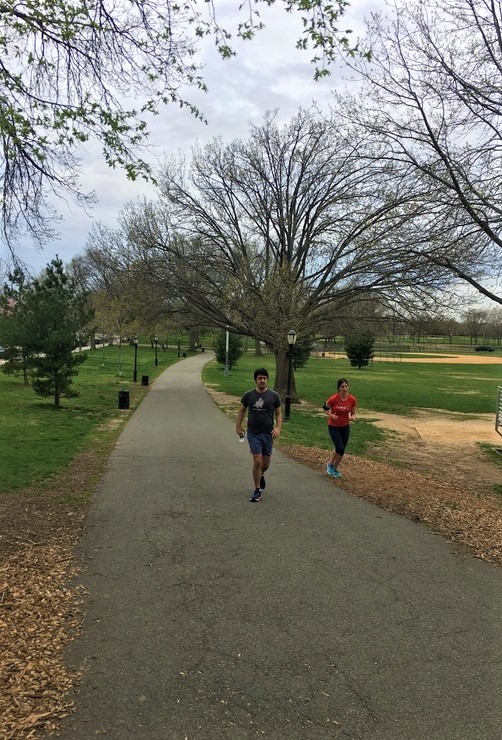
Walking, or some form of it, is nature’s great exercise—so far ahead of all others as to make them of no account in comparison. In modern times, and among all classes of people, the cheap and rapid methods of traveling almost everywhere in vogue, have certainly made a sad depreciation in the locomotive powers of the race.
We have elsewhere mentioned the formation of the habit of walking; this is to be one of the main dependencies of the in-door employee. It does not tire, like other exercises—but, with practice, may be continued almost without limit.
************************************************
OUT-DOORS.
In that word is the great antiseptic—the true medicine of humanity … there is no withstanding the modern requirements of life, which compel myriads of men to pass a great portion of the time employed in confined places, factories and the like; and that, this being accepted, the health and vigor of the body must be carried to a high pitch, and can be. Still, it is to be understood that, as a counterweight to the effects of confined air and employment, much, very much reliance is to be placed on inhaling the air, and in walking, or otherwise gently exercising, as much as possible out-doors.
Few know what virtue there is in the open air. Beyond all charms or medications, it is what renews vitality, and, as much as the nightly sleep, keeps the system from wearing out and stagnating upon itself.
************************************************
NIGHT-EATING.
A gentle and moderate refreshment at night is admissible enough; and, indeed, if accompanied with the convivial pleasure of friends, the cheerful song, or the excitement of company, and the wholesome stimulus of surrounding good fellowship, is every way to be commended.
But it must be borne in mind that, as a general thing, the stomach needs rest as much as the other parts of the system—as much as the brain, the hands, or the feet. The arrangements of every individual, for his eating, ought to be so prepared, if possible, as to make his appetite always possess keenness and readiness in the morning. There is not a surer sign that things are going wrong than that which is indicated by no want or relish for food, soon after rising, or in the early part of the day.
Portions of heavy food, or large quantities of any kind, taken at evening, or any time during the night, attract an undue amount of the nervous energy to the stomach, and give an overaction to the feelings and powers, which is sure to be followed the next day by more or less bad reactionary consequences; and, if persevered in, must be a strong constitution indeed which does not break down.
************************************************
The drink we recommend, and– not too much of that, is water only.
************************************************
In by far the vast majority of cases, … medicines do a great deal more hurt than good … indeed, they often lay the foundation for a permanent derangement of health, destroy comfort, and shorten life.… to state the matter in plain terms, there can be very little, if any, wholesome effect produced upon almost any case of disease … from the mere taking of some more or less powerful drug into the stomach, to have whatever effect it may produce upon the bowels, blood, nerves, brain, &c. The more powerful it is, the worse it is.
************************************************
EARLY RISING.
The habit of rising early is not only of priceless value in itself, as a means toward, and concomitant of health, but is of equal importance from what the habit carries with it, apart from itself. … Summer and winter, he who intends to have his physique in good condition must rise early.
This is an immutable law. It is one of the most important points of thorough training, and is to be relied on as much as anything else.
************************************************
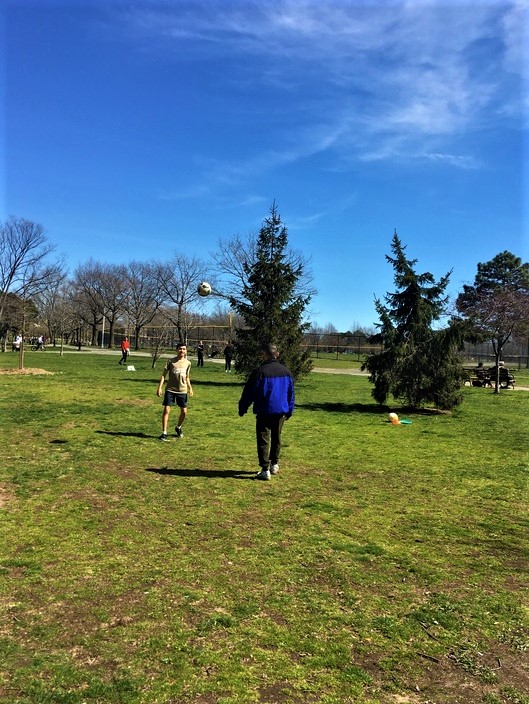
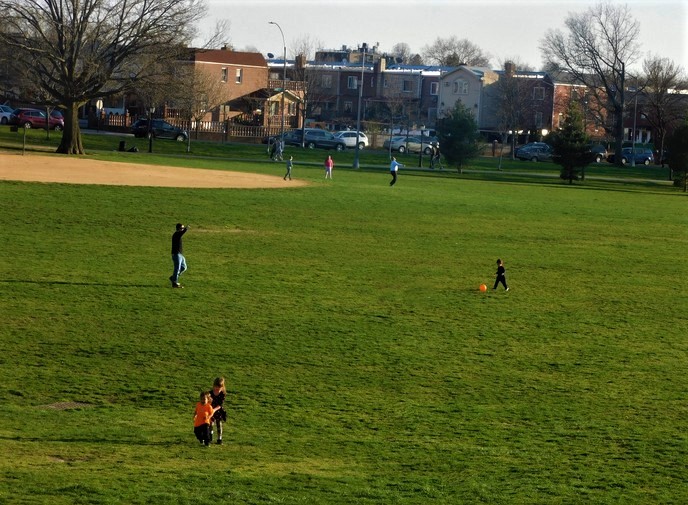
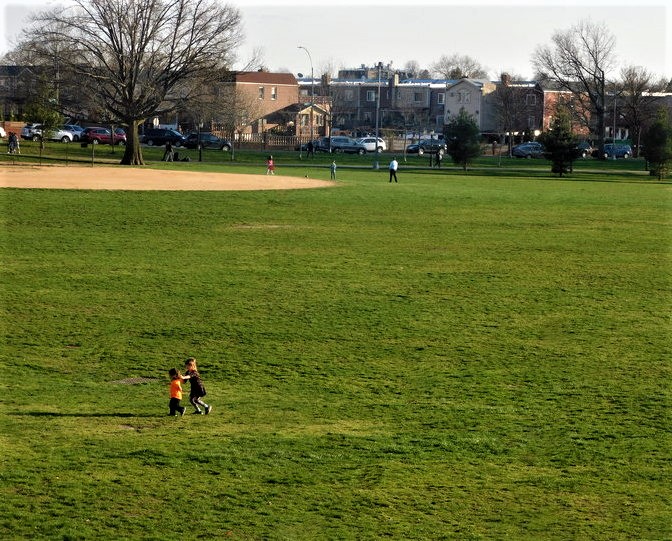
The game of Base-Ball, now very generally practiced, is one of the very best of out-door exercises; the same may be said of cricket—and, in short, of all games which involve the using of the arms and legs.





 Roger W. Smith's Walt Whitman site