Tag Archives: Walt Whitman

Walt Whitman, “Jaunt up the Hudson”


“Jaunt up the Hudson”

June 20th.—ON the “Mary Powell,” enjoy’d everything beyond precedent. The delicious tender summer day, just warm enough—the constantly changing but ever beautiful panorama on both sides of the river—(went up near a hundred miles)—the high straight walls of the stony Palisades—beautiful Yonkers, and beautiful Irvington—the never-ending hills, mostly in rounded lines, swathed with verdure,—the distant turns, like great shoulders in blue veils—the frequent gray and brown of the tall-rising rocks—the river itself, now narrowing, now expanding—the white sails of the many sloops, yachts, &c., some near, some in the distance—the rapid succession of handsome villages and cities, (our boat is a swift traveler, and makes few stops)—the Race—picturesque West Point, and indeed all along—the costly and often turreted mansions forever showing in some cheery light color, through the woods—make up the scene.

— Walt Whitman, Specimen Days


*****************************************************

This is vintage, typical Whitman. A man who loved every minute of his life — savored it. Reminds one of this as it applies to our own lives. Knew how to express this beautifully. Felt and appreciated things keenly as few do.

jaunt (noun) — a short excursion or journey for pleasure


— Roger W. Smith

   August 2017

Emerson and Whitman


In his [Ralph Waldo Emerson’s] view the material creation is but an emblem of spiritual life. … To trace the operations of a subtle divine Presence in the mysteries of being—to ascend from the visible phenomena to universal laws—to embody the absolute, the unchanging, the perfect in the expressive forms of poetry—these are the problems which have challenged his warmest interest, and made him a retired and meditative sage, instead of a man of affairs. … Relying on certain mystic revelations to the soul of the individual, he shows scarcely any trace of logical faculty. … You look in vain for any consecutive order in the array of his thoughts. … Mr. Emerson’s predominant individualism leads him to ignore the past, and live in the present. … He believes in the perennial influence of inspiration. … The individual soul now conceals the elements of poetry, and prophecy, and the vision of God, as in the days of yore. … With this faith, Mr. Emerson attaches no importance to traditional opinion. … No school of philosophy or religion can hold this broad, untrammeled thinker within its walls. Even the great teachers of humanity do not win his fealty. Hints and monitions he may receive from their works, but authority never. … Mr. Emerson, although a rigid observer of the conventional proprieties of life, has little respect for a formal, imitative, stereotyped virtue. The stamp of nature and originality, in his view, would sanction almost any episode from the regular highway of ethics. He judges of character not by its accordance with any artificial code, but by the test of genuineness and native individuality. He rejects no coin that has the true ring, for want of the sign of some approved mint. An idealist in theory … he cherishes a most persistent and unrelenting attachment to reality. … He unites the dreamy mystical contemplation of an Oriental sage with the hard, robust, practical sense of a Yankee adventurer.

— anonymous, “Ralph Waldo Emerson. Phrenology, Physiology, Biography, and Portrait.,” Phrenological Journal, March 1854, quoted in Floyd Stovall, The Foreground of Leaves of Grass (University Press of Virginia, 1974), pp. 292-293


*****************************************************

It is quite possible — indeed probable — that Walt Whitman read this article. What is said about Emerson seems to apply also to him.


*****************************************************

I admire such thinkers. I would be pleased if such words were used to describe my outlook on life.


— Roger W. Smith

   July 2017

let them frolic!


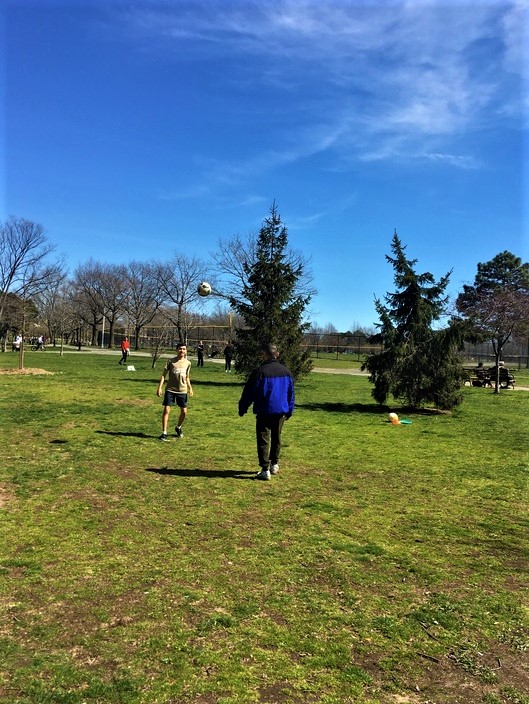
“Sunday: we make it the dullest day in the week when it might be made the cheeriest. Will the people ever come to base ball, plays, concerts, yacht races, on Sundays? That would seem like clear weather after a rain. Why do you suppose people are so narrow-minded in their interpretation of the Sunday? If we read about Luther we find that he was not gloomy, not sad-devout, not sickly-religious: but a man full of blood who didn’t hesitate to outrage ascetic customs or play games if he felt like it on Sunday. The Catholic regards Sunday with a more nearly sane eye. It does seem as though the Puritan was responsible for our Sunday: the Puritan had his virtues but I for one owe him a grudge or two which I don’t hesitate to talk about loud enough to be heard.”

— Walt Whitman quoted by Horace Traubel, With Walt Whitman in Camden, Volume 2 (Sunday, September 2, 1888)


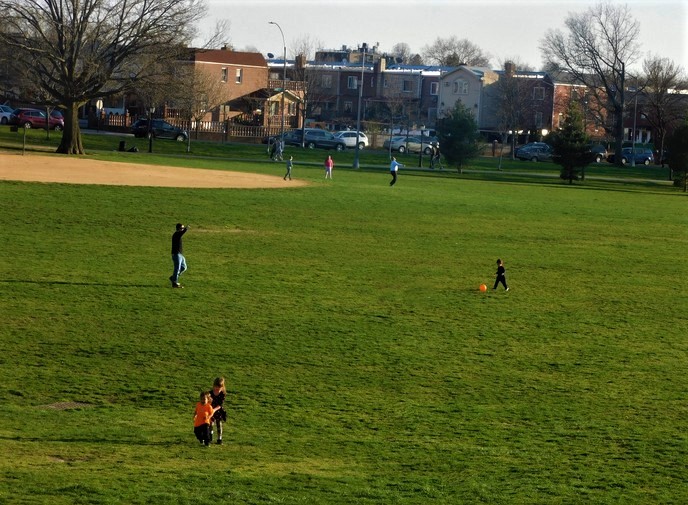
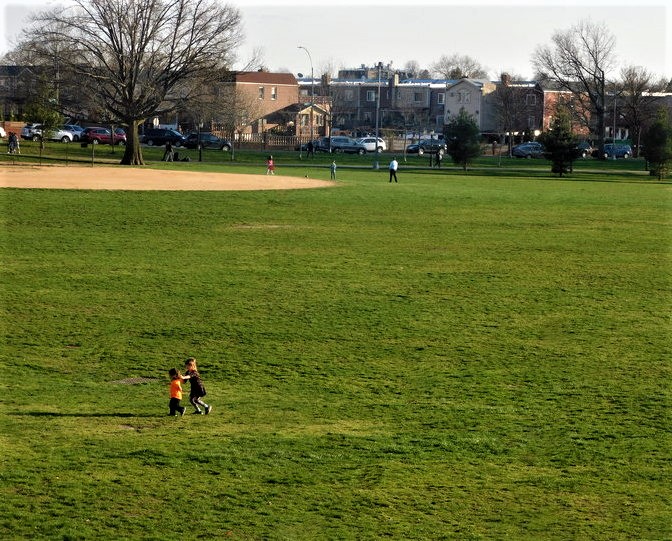
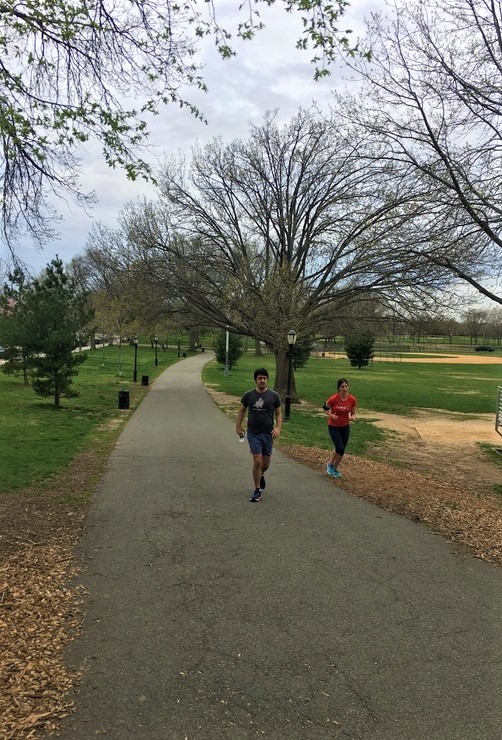
photographs by Roger W. Smith, April 2017

Juniper Valley Park 2-50 p.m. 4-9-2017

Juniper Valley Park 6-16 p.m. 4-12-2017 (2).jpg

Juniper Valley Park 6-16 p.m. 4-12-2017.jpg

Juniper Valley Park 10-22 a.m. 4-17-2017

Walt Whitman on autobiography


“What a gain it would be, if we could forgo some of the heavy tomes, the fruit of an age of toil and scientific study, for the simple easy truthful narrative of the existence and experience of a man of genius,—how his mind unfolded in his earliest years—the impressions things made upon him—how and where and when the religious sentiment dawned in him—what he thought of God before he was inoculated with books’ ideas—the development of his soul—when he first loved—the way circumstance imbued his nature, and did him good, or worked him ill—with the long train of occurrences, adventures, mental processes, exercises within, and trials without, which go to make up the man—for character is the man, after all.”

— Walt Whitman, review of The Autobiography of Goethe, Truth and Poetry: From My Life, The Brooklyn Daily Eagle, June 28, 1847

Walt Whitman’s watering hole

whitman-in-pfaffs
Pfaff’s beer cellar, a bohemian watering hole and a center of literary life in Manhattan in the mid-nineteenth century, was located at 647 Broadway in what is now called Lower Manhattan.  (At the time, most of Manhattan was below 14th Street.)

The building in which Pfaff’s was located still stands. It is now occupied by a deli (see photograph below) and is on Broadway between Bleecker and Bond Streets.  Access to the cramped cellar where Pfaff’s was located is still possible.


— Roger W. Smith

   February 2017; updated June 2019


*************************************************

–The vault at Pfaffs where the drinkers and laughers meet to eat and drink and carouse
While on the walk immediately overhead pass the myriad feet of Broadway
As the dead in their graves are underfoot hidden
And the living pass over them, recking not of them,
Laugh on laughers!
Drink on drinkers!
Bandy the jest!
Toss the theme from one to another!
Beam up–Brighten up, bright eyes of beautiful young men!
Eat what you, having ordered, are pleased to see placed before you–after the work of the day, now, with appetite eat,
Drink wine–drink beer–raise your voice,
Behold! your friend, as he arrives–Welcome him, where, from the upper step, he looks down upon you with a cheerful look
Overhead rolls Broadway–the myriad rushing Broadway
The lamps are lit–the shops blaze–the fabrics vividly are seen through the plate glass windows
The strong lights from above pour down upon them and are shed outside,
The thick crowds, well-dressed–the continual crowds as if they would never end
The curious appearance of the faces–the glimpse just caught of the eyes and expressions, as they flit along,
(You phantoms! oft I pause, yearning, to arrest some one of you!
Oft I doubt your reality–whether you are real–I suspect all is but a pageant.)
The lights beam in the first vault–but the other is entirely dark
In the first

— “The Two Vaults,” unpublished poem by Walt Whitman


*************************************************

A GLIMPSE through an interstice caught,
Of a crowd of workmen and drivers in a bar-room around the
stove late of a winter night, and I unremark’d seated in a
corner,
Of a youth who loves me and whom I love, silently approaching
and seating himself near, that he may hold me by the hand,
A long while amid the noises of coming and going, of drinking
and oath and smutty jest,
There we two, content, happy in being together, speaking little,
perhaps not a word.

— Walt Whitman, “A Glimpse”


*****************************************************

I am glad to see you are engaged in such good work at Washington. It must be even more refreshing than to sit by Pfaff’s privy and eat sweet-breads and drink coffee, and listen to the intolerable wit of the crack-brains. I happened in there the other night, and the place smelt as atrociously as ever. Pfaff looked as of yore

— John Swinton to Walt Whitman, February 25, 1863


*****************************************************

“After the publication of “Leaves of Grass” Mr. Whitman became acquainted with most all of the younger generation of literary men across the river in New York, and especially with those who eventually enrolled themselves under the good fellowship of old Henry Clapp, who had been living a free and easy life in Paris and longed to establish a Bohemia in New York like Henry Murger’s “Vie de Boheme” in Paris. The headquarters — still well remembered — was at Pfaff’s restaurant in Broadway, near Bond st.

“I used to go to Pfaff’s nearly every night,” Mr. Whitman went on. “It used to be a pleasant place to go in the evening after taking a bath and finishing the work of the day. When it began to grow dark Pfaff would politely invite everybody who happened to be sitting in the cave he had under the sidewalk to some other part of the restaurant. There was a long table extending the length of this cave; and as soon as the Bohemians put in an appearance Henry Clapp would take a seat at the head of this table. I think there was as good talk around that table as took place anywhere in the world. Clapp was a very witty man. Fitz James O’Brien was very bright. Ned Wilkins, who used to be the dramatic critic of the Herald, was another bright man. There were between twenty-five and thirty journalists, authors, artists and actors who made up the company that took possession of the cave under the sidewalk. Pfaff himself I took a dislike to the first time I ever saw him. But my subsequent acquaintance with him taught me not to be too hasty in making up my mind about people on first sight. He turned out to be a very agreeable, kindly man in many ways. He was always kind to beggars and gave them food freely. Then he was easily moved to sympathise with any one who was in trouble and was generous with his money. I believe he was at that time the best judge of wine of anybody in this country.”

— interview with Walt Whitman by F.B.S., Brooklyn Eagle, July 11, 1886


*****************************************************

hans-deli-grocery-july-2016 (3)

The former Pfaff’s was located in this deli on Broadway near Bleecker Street. Photo by Roger W. Smith.

Han’s Deli Grocery, 645 Broadway,  New York, NY, through within which one can can gain access to the former beer cellar (photograph by Roger W. Smith).

Walt Whitman’s prescriptions for healthy living


Walt Whitman’s health manual, “Manly Health and Training” (1858) has recently been published. It was discovered in 2012 by a graduate student at the University of Houston, Zachary Turpin.

“Manly Health and Training,” written under the pseudonym Mose Velsor, was published in installments in the New York Atlas in 1858. (Van Velsor was the maiden name of Whitman’s mother.)

Whitman’s health manifesto contains advice and musings on topics such as diet, exercise, grooming, alcohol, dancing, sports, and even sex.

“[S]ome of the advice, like the poetry, can often sound particularly modern, while at the same time preserving the quaintness of its age.” (http://www.openculture.com/2016/05/walt-whitmans-unearthed-health-manual-manly-health-training.html)

The following are some quoted passages from the book on topics addressed by Whitman where his views are in accord with my own. I was surprised to find how often this was the case.


— Roger W. Smith

   February 2017


************************************************

To spring up in the morning with light feelings, and the disposition to raise the voice in some cheerful song—to feel a pleasure in going forth into the open air, and in breathing it—to sit down to your food with a keen relish for it—to pass forth, in business or occupation, among men, without distrusting them, but with a friendly feeling toward all, and finding the same feeling returned to you—to be buoyant in all your limbs and movements by the curious result of perfect digestion, (a feeling as if you could almost fly, you are so light,)—to have perfect command of your arms, legs, &c., able to strike out, if occasion demand, or to walk long distances, or to endure great labor without exhaustion—to have year after year pass on and on, and still the same calm and equable state of all the organs, and of the temper and mentality—no wrenching pains of the nerves or joints—no pangs, returning again and again, through the sensitive head, or any of its parts—no blotched and disfigured complexion—no prematurely lame and halting gait—no tremulous shaking of the hand, unable to carry a glass of water to the mouth without spilling it—no film and bleared-red about the eyes, nor bad taste in the mouth, nor tainted breath from the stomach or gums—none of that dreary, sickening, unmanly lassitude, that, to so many men, fills up and curses what ought to be the best years of their lives, without good works to show for the same—but instead of such a living death, which, (to make a terrible but true confession,) so many lead, uncomfortably realizing, through their middle age, more than the distresses and bleak impressions of death, stretched out year after year, the result of early ignorance, imprudence, and want of wholesome training—instead of that, to find life one long holiday, labor a pleasure, the body a heaven, the earth a paradise, all the commonest habits ministering to delight—and to have this continued year after year, and old age even, when it arrives, bringing no change to the capacity for a high state of manly enjoyment—these are what we would put before you, reader, as a true picture, illustrating the whole drift of our remarks. ….


************************************************

Walking, or some form of it, is nature’s great exercise—so far ahead of all others as to make them of no account in comparison. In modern times, and among all classes of people, the cheap and rapid methods of traveling almost everywhere in vogue, have certainly made a sad depreciation in the locomotive powers of the race.

We have elsewhere mentioned the formation of the habit of walking; this is to be one of the main dependencies of the in-door employee. It does not tire, like other exercises—but, with practice, may be continued almost without limit.


************************************************

OUT-DOORS.

In that word is the great antiseptic—the true medicine of humanity … there is no withstanding the modern requirements of life, which compel myriads of men to pass a great portion of the time employed in confined places, factories and the like; and that, this being accepted, the health and vigor of the body must be carried to a high pitch, and can be. Still, it is to be understood that, as a counterweight to the effects of confined air and employment, much, very much reliance is to be placed on inhaling the air, and in walking, or otherwise gently exercising, as much as possible out-doors.

Few know what virtue there is in the open air. Beyond all charms or medications, it is what renews vitality, and, as much as the nightly sleep, keeps the system from wearing out and stagnating upon itself.


************************************************

NIGHT-EATING.

A gentle and moderate refreshment at night is admissible enough; and, indeed, if accompanied with the convivial pleasure of friends, the cheerful song, or the excitement of company, and the wholesome stimulus of surrounding good fellowship, is every way to be commended.

But it must be borne in mind that, as a general thing, the stomach needs rest as much as the other parts of the system—as much as the brain, the hands, or the feet. The arrangements of every individual, for his eating, ought to be so prepared, if possible, as to make his appetite always possess keenness and readiness in the morning. There is not a surer sign that things are going wrong than that which is indicated by no want or relish for food, soon after rising, or in the early part of the day.

Portions of heavy food, or large quantities of any kind, taken at evening, or any time during the night, attract an undue amount of the nervous energy to the stomach, and give an overaction to the feelings and powers, which is sure to be followed the next day by more or less bad reactionary consequences; and, if persevered in, must be a strong constitution indeed which does not break down.


************************************************

The drink we recommend, and– not too much of that, is water only.


************************************************

In by far the vast majority of cases, … medicines do a great deal more hurt than good … indeed, they often lay the foundation for a permanent derangement of health, destroy comfort, and shorten life.… to state the matter in plain terms, there can be very little, if any, wholesome effect produced upon almost any case of disease … from the mere taking of some more or less powerful drug into the stomach, to have whatever effect it may produce upon the bowels, blood, nerves, brain, &c. The more powerful it is, the worse it is.


************************************************

EARLY RISING.

The habit of rising early is not only of priceless value in itself, as a means toward, and concomitant of health, but is of equal importance from what the habit carries with it, apart from itself. … Summer and winter, he who intends to have his physique in good condition must rise early.

This is an immutable law. It is one of the most important points of thorough training, and is to be relied on as much as anything else.


************************************************

The game of Base-Ball, now very generally practiced, is one of the very best of out-door exercises; the same may be said of cricket—and, in short, of all games which involve the using of the arms and legs.
Is it okay to associate with disreputable people?


is it okay

And passing on from there Jesus saw a man named Matthew sitting at the tax-collection house, and says to him, “Follow me.” And rising he followed him. And it happened that, as he was reclining at table in the house, look: Many tax-collectors and sinners came and reclined at table with Jesus and his disciples. And, seeing this, the Pharisees said to his disciples, “Why does your teacher eat with tax-collectors and sinners?” But he heard them and said, “The hale do not have need of a physician, but rather those who are ill. Go then and learn what this means: ‘I desire mercy and not sacrifice’; for I come to call not the upright, but sinners.”.

Matthew 9:10-13

Now a certain one of the Pharisees requested him to dine with him, and entering the Pharisee’s house he reclined at table. And look: There was a woman in the city who was a sinner, and knowing that he is reclining in the home of the Pharisee, and bringing an alabaster phial of unguent. And standing behind, weeping at his feet, she began to make his feet wet with her tears, and she wiped them off with the hair of her head, and fervently kissed his feet and anointed them with unguent. But, seeing this, the Pharisee who had invited him talked to himself, saying, “This man, if he were a prophet, would have known who and of what sort this woman who touches him is, for she is a sinner.” And in reply Jesus said to him, “Simon, I have something to say to you.” … And turning to the woman he said to Simon, “Do you see this woman? I entered your home, you did not give me water for my feet; but she washed my feet with her tears and wiped them off with her hair. You gave me no kiss of friendship, but she from the time I entered has not ceased fervently kissing my feet. You did not anoint my head with oil; but she anointed my feet with unguent. By virtue of which, I tell you, her sins—which are many—have be forgiven, because she loved much; but one to whom little is forgiven loves little.” And he said to her, “Your sins have been forgiven.” And those reclining at table with him began to say among themselves, “Who is this, who even forgives sins?” And he said to the woman: “Your faith has saved you, go in peace.” thee; go in peace.

Luke 7:37-50

The New Testament: A Translation, by David Bentley Hart


This is the meal equally set—this is the meat for
natural hunger;
It is for the wicked just the same as the righteous—I
make appointments with all;
I will not have a single person slighted or left away;
The kept-woman, sponger, thief, are hereby invited;
The heavy-lipp’d slave is invited—the venerealee is invited:
There shall be no difference between them and the rest.

— Walt Whitman, Leaves of Grass


If you become degraded, criminal, ill, then I become so for your
sake,
If you remember your foolish and outlaw’d deeds, do you think
I cannot remember my own foolish and outlaw’d deeds?
If you carouse at the table I carouse at the opposite side of the
table,
If you meet some stranger in the streets and love him or her, why
I often meet strangers in the street and love them.

Why what have you thought of yourself?
Is it you then that thought yourself less?
Is it you that thought the President greater than you?
Or the rich better off than you? or the educated wiser than you?

(Because you are greasy or pimpled, or were once drunk, or a
thief,
Or that you are diseas’d, or rheumatic, or a prostitute,
Or from frivolity or impotence, or that you are no scholar and
never saw your name in print,
Do you give in that you are any less immortal?)

Walt Whitman, “A Song for Occupations”


Recall Christ, brother of rejected persons—brother of
slaves, felons, idiots, and of insane and diseas’d
persons.

Walt Whitman, “Think of the Soul”


***************************************************

Commentary:

In my senior year in high school, I took an IQ test administered by a graduate student at Boston University. A question on the test, which he administered orally, was why should one not associate with disreputable people? I answered that I did not agree with the premise.

Some fifty years later, I still feel the same way.

I have learned a great deal from, and my life has been enriched by, people of all levels of intelligence, backgrounds, occupations, persuasions, personality types, idiosyncracies, and life situations.

I have given rides and handouts to just released ex-convicts; associated with people whose opinions and/or behavior could be considered immoral, criminal, improper, antisocial, deviant, clueless, or odd by others; have never chosen my friends according to their political or religious views.

The driving force, in my own experience, behind making acquaintances and forming friendships has been: how is that person disposed towards ME? Do they wish to associate and communicate; do they desire or need human contact? Then, I find that it behooves me to respond affirmatively. I am a priori willing to accept anyone as a friend.

I have benefited, immeasurably, from such associations.   These people have taught me so much or, to put it the other way around, I have learned so much from them.

I see no reason to change.

And, I am amazed and gladdened by the innate goodness and sincerity of so many people who are prone to neglect and sometimes scorn or to being rejected by polite society.


Roger W. Smith

   January 2017

my personal library of works by Walt Whitman, and books about him


my Walt Whitman books


The above downloadable Word document contains an inventory of books by and about Walt Whitman and his associates — including Whitman’s works, literary criticism, and material of biographical interest — in my personal home library.


— Roger W. Smith

   October 2025


Walt Whitman, “A Carol Closing Sixty-Nine”


A CAROL CLOSING SIXTY-NINE.

A carol closing sixty-nine—a résumé—a repetition,
My lines in joy and hope continuing on the same,
Of ye, O God, Life, Nature, Freedom, Poetry;
Of you, my Land—your rivers, prairies, States—you, mottled
Flag I love,
Your aggregate retain’d entire—Of north, south, east and west,
your items all;
Of me myself—the jocund heart yet beating in my breast,
The body wreck’d, old, poor and paralyzed—the strange inertia
falling pall-like round me,
The burning fires down in my sluggish blood not yet extinct,
The undiminish’d faith—the groups of loving friends.

— Walt Whitman, Leaves of Grass, The Deathbed Edition, 1892


— posted by Roger W. Smith

   May 2016

Walt Whitman portrait


portrait of Walt Whitman by Herbert Herlakenden Gilchrist, 1887


*******************************************************

The artist Herbert Gilchrist (1857-1914) was the son of Alexander Gilchrist (1828-1861) and Anne (Burrows) Gilchrist (1828-1885).

Alexander Gilchrist was the first biographer of William Blake.

Anne Gilchrist was a fervent admirer and would be lover of Walt Whitman and a writer and critic who was one of the first perceptive critics of Whitman’s poetry.


posted by Roger W. Smith

   May 2016