Category Archives: writings by Whitman

This is what you shall do …


This is what you shall do: Love the earth and sun and the ani­mals, despise riches, give alms to every one that asks, stand up for the stupid and crazy, devote your income and labor to others, hate tyrants, argue not concerning God, have patience and indul­gence toward the people, take off your hat to nothing known or unknown or to any man or number of men, go freely with pow­erful uneducated persons and with the young and with the moth­ers of families, read these leaves in the open air every season of every year of your life, re-examine all you have been told at school or church or in any book, dismiss whatever insults your own soul, and your very flesh shall be a great poem and have the richest fluency not only in words but in the silent lines of its lips and face and between the lashes of your eyes and in every motion and joint of your body.

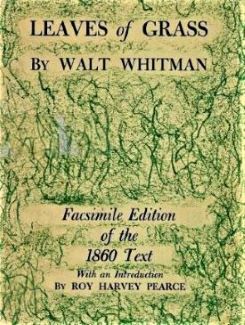
Walt Whitman, Leaves of Grass, Preface to the first (1855) edition


— posted by Roger W. Smith

  March 2023

Walt Whitman, “I Sit and Look Out”


Walt Whitman, ‘I Sit and Look Out’


This poem almost needs no commentary. But I would say that its simplicity and lack of affectation – and its directness – are notable..

And that Whitman speaks to me. Personally. To my personal thoughts and observations.

I find myself observing unhappiness and worse in the course of the days and passing time. . Human suffering and degradation that one hears or reads about; and situations that produce such feelings in persons of my acquaintance. And besides suffering, regrets and remorse.

— Roger W. Smith

   January 2022

Vigil Strange I Kept on the Field one Night


Walt Whitman

Vigil Strange I Kept on the Field one Night

VIGIL strange I kept on the field one night;
When you my son and my comrade dropt at my side that day,
One look I but gave which your dear eyes return’d with a look I shall never forget,
One touch of your hand to mine O boy, reach’d up as you lay on the ground,
Then onward I sped in the battle, the even-contested battle,
Till late in the night reliev’d to the place at last again I made my way,
Found you in death so cold dear comrade, found your body son of responding kisses, (never again on earth responding,)
Bared your face in the starlight, curious the scene, cool blew the moderate night-wind,
Long there and then in vigil I stood, dimly around me the battle-field spreading,
Vigil wondrous and vigil sweet there in the fragrant silent night,
But not a tear fell, not even a long-drawn sigh, long, long I gazed,
Then on the earth partially reclining sat by your side leaning my chin in my hands,
Passing sweet hours, immortal and mystic hours with you dearest comrade—not a tear, not a word,
Vigil of silence, love and death, vigil for you my son and my soldier,
As onward silently stars aloft, eastward new ones upward stole,
Vigil final for you brave boy, (I could not save you, swift was your death,
I faithfully loved you and cared for you living, I think we shall surely meet again,)
Till at latest lingering of the night, indeed just as the dawn appear’d,
My comrade I wrapt in his blanket, envelop’d well his form,
Folded the blanket well, tucking it carefully over head and carefully under feet,
And there and then and bathed by the rising sun, my son in his grave, in his rude-dug grave I deposited,
Ending my vigil strange with that, vigil of night and battle-field dim,
Vigil for boy of responding kisses, (never again on earth responding,)
Vigil for comrade swiftly slain, vigil I never forget, how as day brighten’d,
I rose from the chill ground and folded my soldier well in his blanket,
And buried him where he fell.

— from Walt Whitman, Drum-Taps (1865)


*****************************************************

The absolute simplicity and avoidance of anything “literary,” giving the poem great expressive power.

The Biblical parallelism: “Folded the blanket well, tucking it carefully over head and carefully under feet,”


— posted by Roger W. Smith

  January 2023

“See, in my poems” (Walt Whitman)


excerpt 2 from ‘Starting from Paumanok’


See! steamers steaming through my poems!
See, in my poems immigrants continually coming and landing;
See, in arriere, the wigwam, the trail, the hunter’s hut, the flat-
boat, the maize-leaf, the claim, the rude fence, and the
backwoods village;
See, on the one side the Western Sea, and on the other the Eastern Sea, how they advance and
retreat upon my poems,
as upon their own shores;
See, pastures and forests in my poems—see, animals, wild and
tame—See, beyond the Kanzas, countless herds of buffalo,
feeding on short curly grass;
See, in my poems, cities, solid, vast, inland, with paved streets,
with iron and stone edifices, ceaseless vehicles, and
commerce;
See, the many-cylinder’d steam printing-press—see, the electric
telegraph, stretching across the continent, from the Western Sea
to Manhattan;
See, through Atlantica’s depths, pulses American, Europe
reaching—pulses of Europe, duly return’d,
See, the strong and quick locomotive, as it departs, panting,
blowing the steam-whistle;
See, ploughmen, ploughing farms—See, miners, digging mines—
see, the numberless factories;
See, mechanics, busy at their benches, with tools—see from
among them, superior judges, philosophs, Presidents, emerge,
drest in working dresses;
See, lounging through the shops and fields of The States, me,
well-belov’d, close-held by day and night;
Hear the loud echoes of my songs there! Read the hints come at
last.

Walt Whitman,. “Starting from Paumanok.” (excerpt)


– posted by Roger W. Smith

   August 2020

Walt Whitman (again)


from ‘There was a child went forth’


The streets themselves and the facades of houses, and goods in
the windows,
Vehicles, teams, the heavy-plank’d wharves, the huge crossing
at the ferries,
The village on the highland seen from afar at sunset, the river
between,
Shadows, aureola and mist, the light falling on roofs and gables
of white or brown two miles off,
The schooner near by sleepily dropping down the tide, the little
boat slack-tow’ d astern,
The hurrying tumbling waves, quick-broken crests, slapping,
The strata of color’d clouds, the long bar of maroon-tint away
solitary by itself, the spread of purity it lies motionless in,
The horizon’s edge, the flying sea- crow, the fragrance of salt
marsh and shore mud,
These became part of that child who went forth every day, and
who now goes, and will always go forth every day.

— from Walt Whitman, “There Was a Child Went Forth” (1855)


*****************************************************

As noted by James Perrin Warren in his monograph Walt Whitman’s Language Experiment, “This passage catalogues the scenes of New York and Brooklyn, scenes that will become central to later poems like ‘Crossing Brooklyn Ferry;’ ‘Out of the Cradle Endlessly Rocking;’ and ‘As I Ebb’d with the Ocean of Life.’ ”

The beautiful passage evokes images and thoughts of New York City which I can relate to.


Roger W. Smith

   August 2020

the poet (Walt Whitman)


Walt Whtiman, from ‘Song of the Broad Axe’


His shape arises!
Arrogant, masculine, naive, rowdyish,
Laugher, weeper, worker, idler, citizen, country-man,
Saunterer of woods, stander upon hills, summer swimmer in
rivers or by the sea,
Of pure American breed, of reckless health, his body perfect,
free from taint from top to toe, free forever from headache
and dyspepsia, clean-breathed,
Ample-limbed, a good feeder, weight a hundred and eighty
pounds, full-blooded, six feet high, forty Inches round the
breast and back,
Countenance sun-burnt, bearded, calm, unrefined,
Reminder of animals, meeter of savage and gentleman on equal
terms,
Attitudes lithe and erect, costume free, neck open, of slow
movement on foot,
Passer of his right arm round the shoulders of his friends,
companion of the street,
Persuader always of people to give him their sweetest touches,
and never their meanest,
A Manhattanese bred, fond of Brooklyn, fond of Broadway, fond
of the life of the wharves and the great ferries,
Enterer everywhere, welcomed everywhere, easily understood
after all,
Never offering others, always offering himself, corroborating his
phrenology,
Voluptuous, inhabitive, combative, conscientious, alimentive,
intuitive, of copious friendship, sublimity, firmness, self-
esteem, comparison, individuality, form, locality, eventuality,
Avowing by life, manners, works, to contribute illustrations of
results of The States,
Teacher of the unquenchable creed, namely, egotism,
Inviter of others continually henceforth to try their strength
against his.

— Walt Whitman, “Song of the Broad-Axe” (1856 version)


*****************************************************

For a discussion of this passage — and of Whitman’s brilliant use of –er nouns, formed from adding suffixes to verbs — see James Perrin Warren, Walt Whitman’s Language Experiment (The Pennsylvania State University Press, 1990), pp. 56-57,

Note Whitman’s genius in creating his own “grammar” in which the repetition of these nouns functions to create what the Whitman scholar Gay Wilson Allen* (drawing upon the work of the Italian scholar Pasquale Jannaccone, in his La Poesìa di Walt Whitman e L’Evoluzione delle Forme Ritmìche) calls “grammatical and logical rime.”


*Gay Wilson Allen, Walt Whitman Handbook (Packard and Company, 1946), pg. 408


*****************************************************

My former therapist, Dr. Ralph Colp. Jr. said, exclaimed, to me once, that Walt Whitman was a wonderful, a marvelous, PERSON. How true. How much I would like to be able to say I partook of some of these personal qualities.

— Roger W. Smith

   August 2020
house-building


The house-builder at work in cities or anywhere,
The preparatory jointing, squaring, sawing, mortising,
The hoist-up of beams, the push of them in their places, laying them regular,
Setting the studs by their tenons in the mortises according as they were prepared,
The blows of mallets and hammers, the attitudes of the men, their curv’d limbs,
Bending, standing, astride the beams, driving in pins, holding on by posts and braces,
The hook’d arm over the plate, the other arm wielding the axe,
The floor-men forcing the planks close to be nail’d,
Their postures bringing their weapons downward on the bearers,
The echoes resounding through the vacant building;
The huge storehouse carried up in the city well under way,
The six framing-men, two in the middle and two at each end,
carefully bearing on their shoulders a heavy stick for a
cross-beam,
The crowded line of masons with trowels in their right hands
rapidly laying the long side-wall, two hundred feet from front to rear,
The flexible rise and fall of backs, the continual click of the trowels striking the bricks,
The bricks one after another each laid so workmanlike in its place, and set with a knock of the trowel-handle,
The piles of materials, the mortar on the mortar-boards, and the steady replenishing by the hod-men;

— Walt Whitman, “Song of the Broad-Axe”


*****************************************************

As I told my students when I was teaching at St. John’s University, Walt Whitman the poet used the simplest words, images, and tropes he could find. He built his poems out of all-original materials that were, so to speak, close at hand (sort of like a bird using twigs on the ground to build a nest) — nothing was “literary” or derived.

Here we see minute observation.

The particular made universal. The concrete, the here and now, timeless.

Wonderful.

Whitman had a genius for using so called deverbal nouns, as is explained by James Perrin Warren in a fascinating book I have been reading: Walt Whitman’s Language Experiment (The Pennsylvania State University Press, 1990).


*****************************************************

Walt Whitman’s father, Walter Whitman, was a carpenter and house builder. Whitman was living in Brooklyn when Leaves of Grass was first published. His father was making a living then as a house builder. It was there that Ralph Waldo Emerson called in the year 1855 upon the poet, who in the frontispiece to the first edition of Leaves of Grass was pictured as a common working man, a Christlike carpenter-poet.


— Roger W. Smith

   July 2018

“What is the grass?”


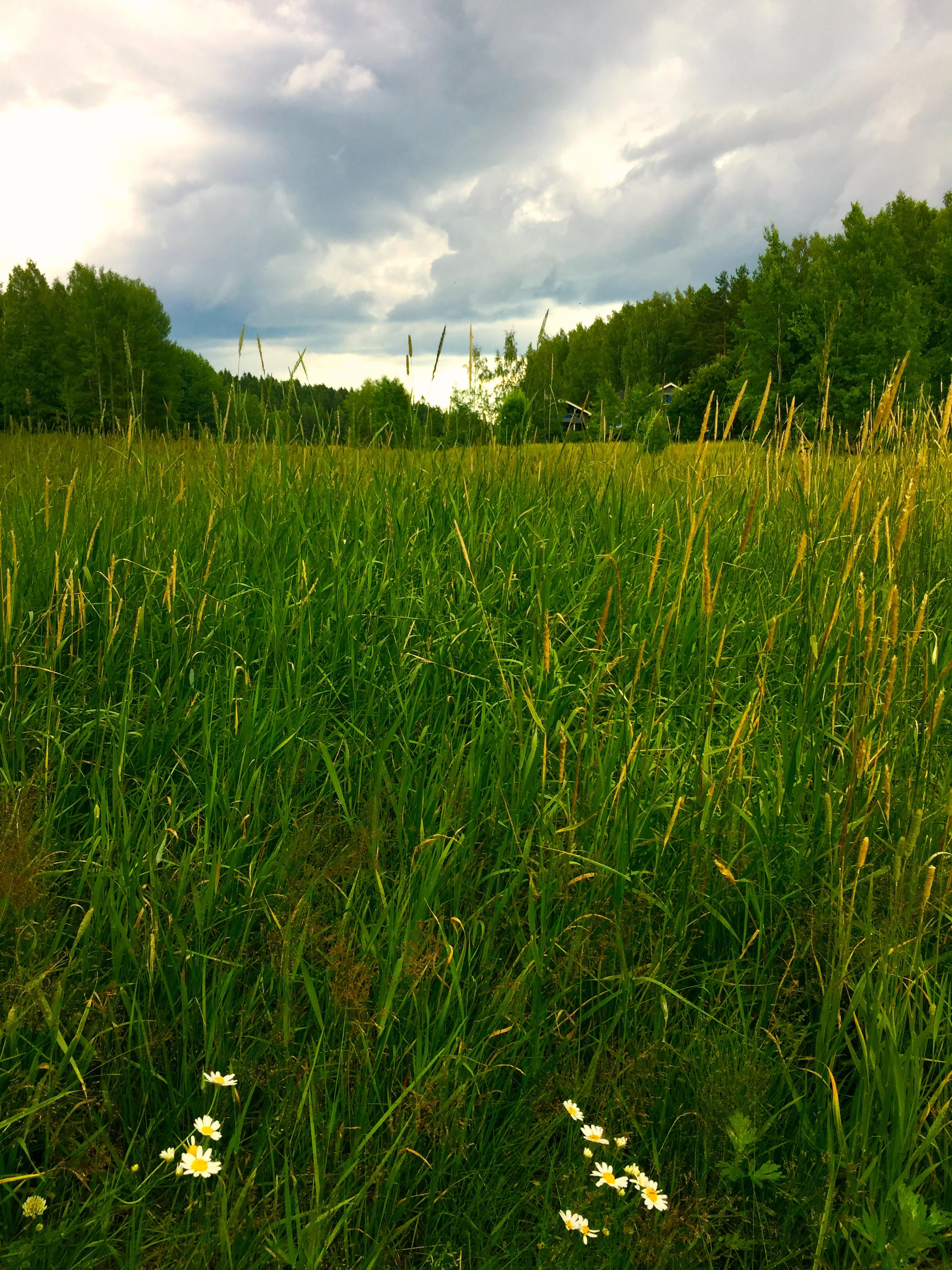
1 Finland.jpg

countryside near Helsinki, Finland; photograph by Elisabeth van der Meer

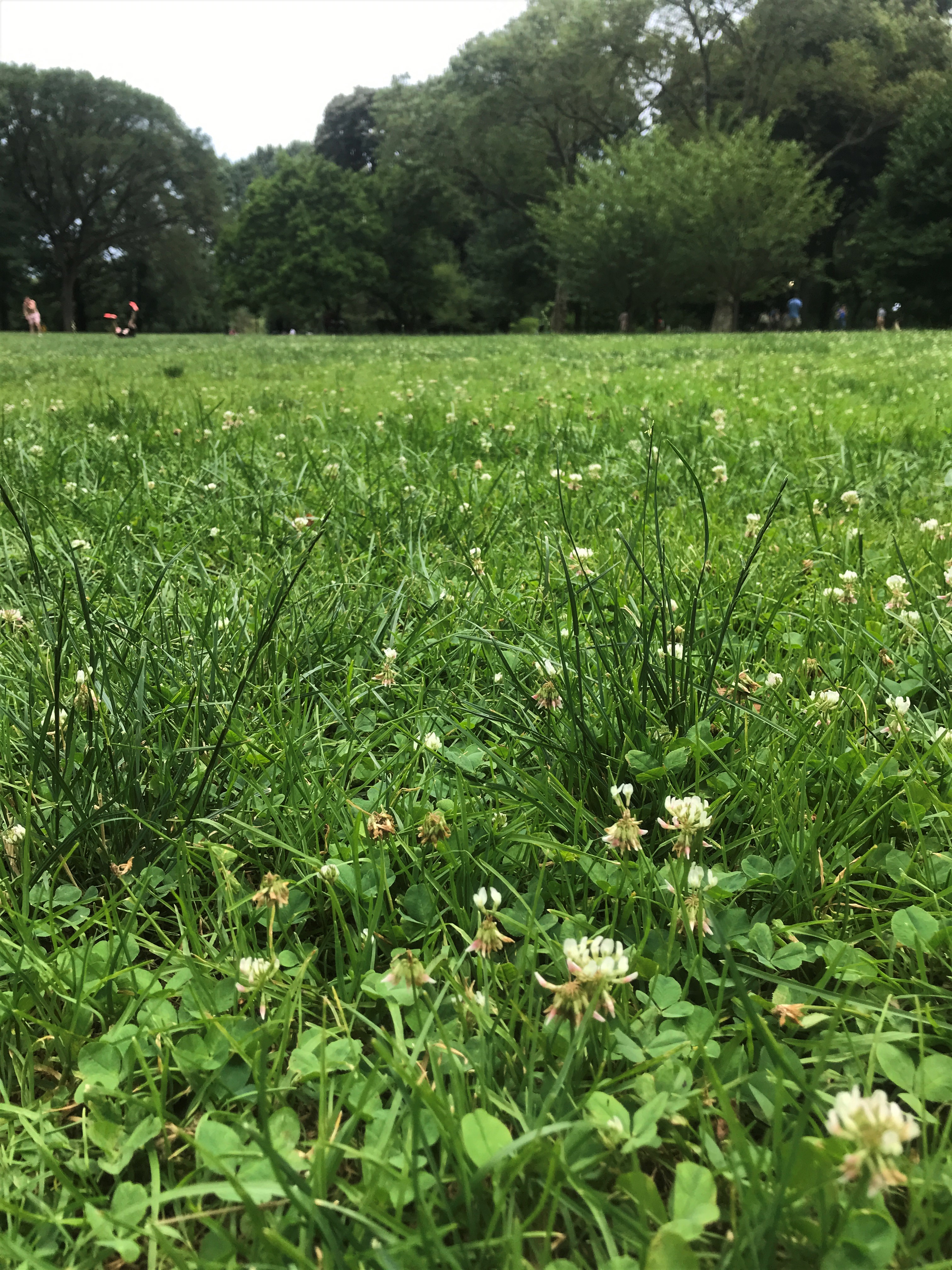
11-53 IMG_0927 (2)

East Green, Central Park, New York; photograph by Roger W. Smith


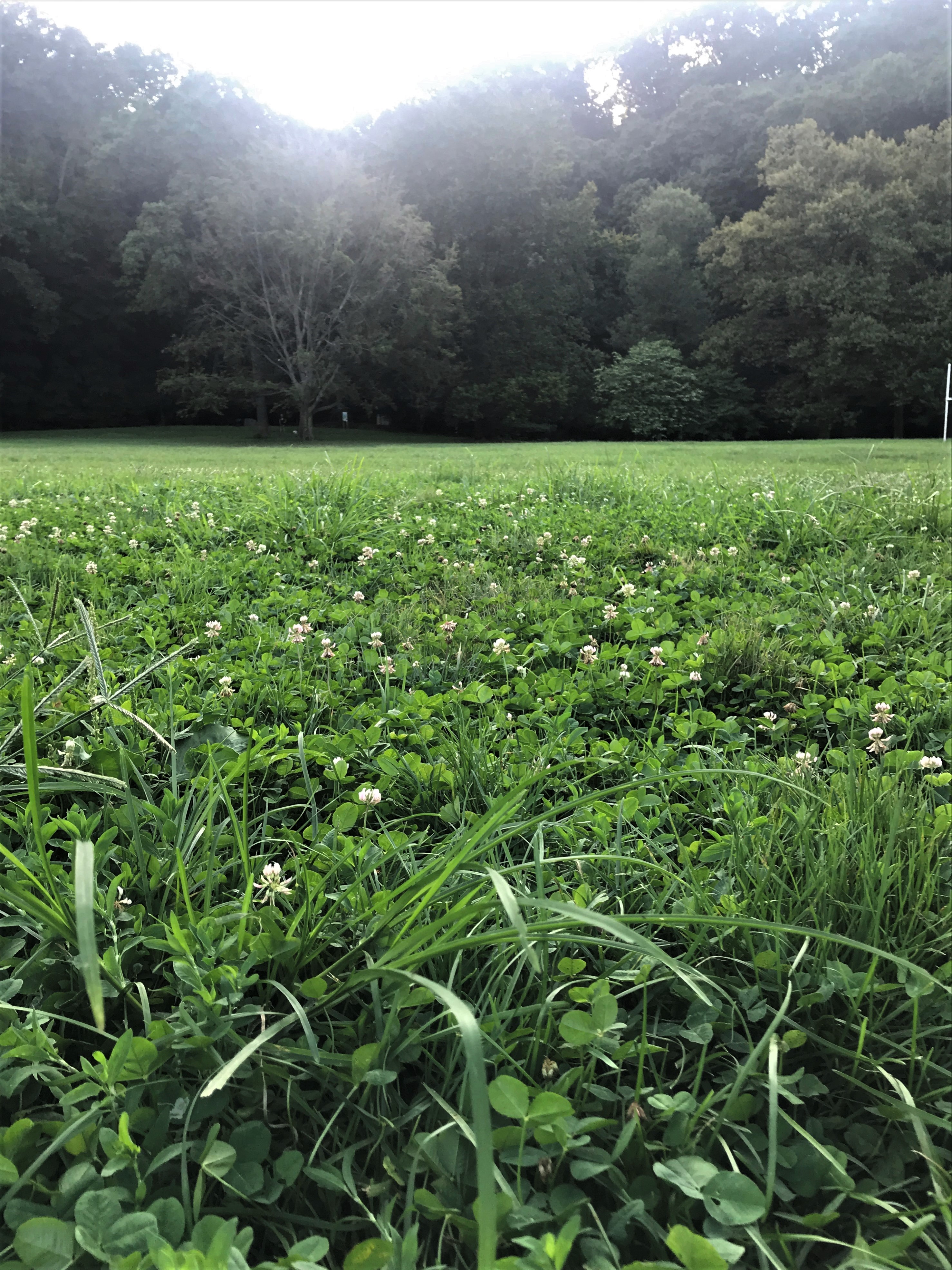
Inwood Hill Park 6-28 p.m. 8-20-2019

Inwood Hill Park, New York City; photograph by Roger W. Smith

A child said, What is the grass? fetching it to me with full
hands;
How could I answer the child?. . . .I do not know what it
is any more than he.

I guess it must be the flag of my disposition, out of hopeful
green stuff woven.

Or I guess it is the handkerchief of the Lord,
A scented gift and remembrancer designedly dropped,
Bearing the owner’s name someway in the corners, that we
may see and remark, and say Whose?

Or I guess the grass is itself a child. . . .the produced babe
of the vegetation.

Or I guess it is a uniform hieroglyphic,
And it means, Sprouting alike in broad zones and narrow
zones,
Growing among black folks as among white,
Kanuck, Tuckahoe, Congressman, Cuff, I give them the
same, I receive them the same.

And now it seems to me the beautiful uncut hair of graves.

Tenderly will I use you curling grass,
It may be you transpire from the breasts of young men,
It may be if I had known them I would have loved them;
It may be you are from old people and from women, and
from offspring taken soon out of their mother’s laps,
And here you are the mother’s laps.

This grass is very dark to be from the white heads of old
mothers,
Darker than the colorless beards of old men,
Dark to come from under the faint red roofs of mouths.

O I perceive after all so many uttering tongues!
And I perceive they do not come from the roofs of mouths
for nothing.

I wish I could translate the hints about the dead young men
and women,
And the hints about old men and mothers, and the offspring
taken soon out of their laps.

What do you think has become of the young and old men?
What do you think has become of the women and
children?

They are alive and well somewhere;
The smallest sprouts show there is really no death,
And if ever there was it led forward life, and does not wait
at the end to arrest it,
And ceased the moment life appeared.

All goes onward and outward. . . . and nothing collapses,
And to die is different from what any one supposed, and
luckier.

— Walt Whitman, Leaves of Grass


*****************************************************

I wish to thank Elisabeth van der Meer for sharing her photograph from her adopted country, Finland, with me, and for giving me permission to post it.


— Roger W. Smith

   July 6, 2018

“After the Supper and Talk”


This poem made me think of my recently departed friend Bill Dalzell, and of our talks during his last months.


AFTER THE SUPPER AND TALK.

After the supper and talk—after the day is done,
As a friend from friends his final withdrawal prolonging,
Good-bye and Good-bye with emotional lips repeating,
(So hard for his hand to release those hands—no more will they
meet,
No more for communion of sorrow and joy, of old and young,
A far-stretching journey awaits him, to return no more,)
Shunning, postponing severance—seeking to ward off the last
word ever so little,
E’en at the exit-door turning—charges superfluous calling back—
e’en as he descends the steps,
Something to eke out a minute additional—shadows of nightfall
deepening,
Farewells, messages lessening—dimmer the forthgoer’s visage
and form,
Soon to be lost for aye in the darkness—loth, O so loth to depart!


— Walt Whitman, Leaves of Grass


*****************************************************

Having finalized the arrangement of Leaves of Grass, Whitman published a supplemental volume of prose and poetry with the autumnal title November Boughs. Many of its sixty-four lyrics and what Whitman labeled its “poemets” … were added as an “Annex” to the 1888 edition as “Sands at Seventy.” These verses reported his cheerful bearing as he faced physical deterioration—solemn-sweet announcements of his readiness for death, and cheerful expressions of farewell. … In the prose preface “A Backward Glance O’er Travel’d Roads” (1888), Whitman wrote: “In the free evening of my day I give you reader the foregoing garrulous talk, thoughts, reminiscences,” and suggested that, alive or dead, he would ever aspire to talk to the living reader. That sentiment is beautifully developed in the bittersweet vers de société masterpiece ”After the Supper and Talk.” Against the onrush of the ultimate night the poem shows the Whitman figure striving to the very end to preserve his voice—the same “garrulous talk” he had referred to in the introduction to “A Backward Glance”—the “talk” that embodies his life force and his spiritual selfhood. He feels that his words alone will perpetuate him in the mortal sphere. Standing at the “exit-door” of life but loath to leave for the unknown, he clings compulsively to the warmth of human hands, to the music of human voices, and to the sound of his own voice. Although he hopes that his poetic voice will endure into the future, he wishes to prolong his mortal vocal powers as long as he can. In order to achieve dramatic distance, and perhaps to cushion the shock of his impending death, the poet employs a rhetorical device that is rarely found in his poems. He refers to himself in the third person and pictures himself observing from a distance the vanishing figure of the mortal Whitman. His reluctance to depart from the House of Life is expressed in a series of death-related metaphors. And as a master of participials, Whitman constructs a verse that (except for three lines contained within parentheses) forms an uncompleted statement, so that his departure, as he might have wished, seems to be postponed indefinitely.

— Harold Aspiz, So Long! Walt Whitman’s Poetry of Death


— posted by Roger W. Smith

   March 2018

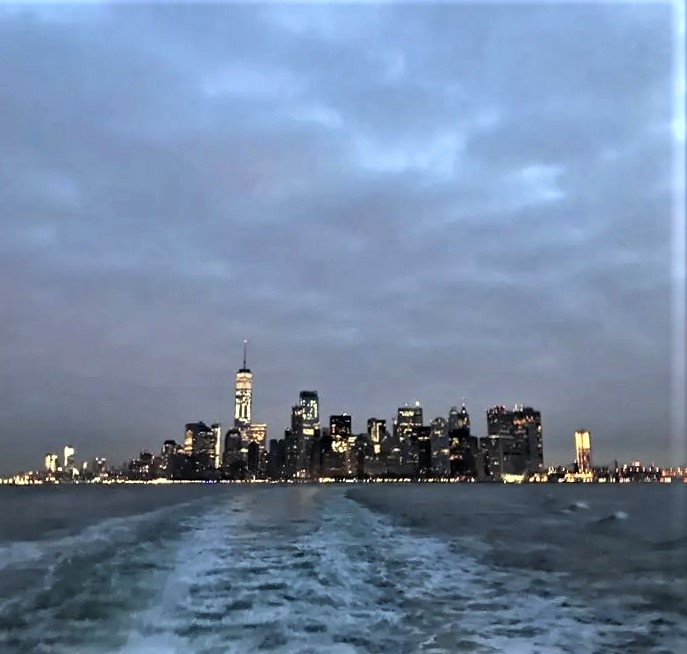
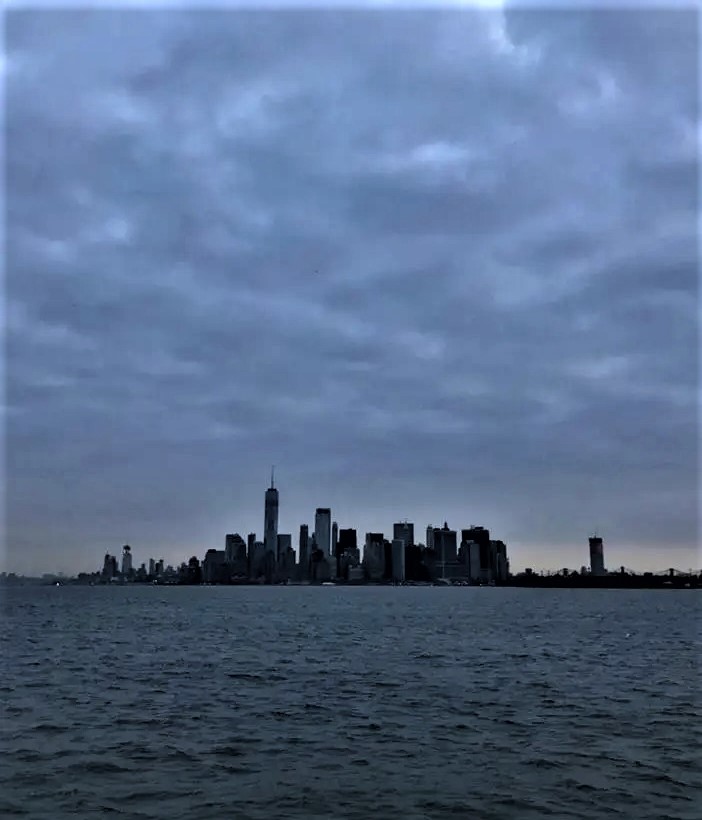
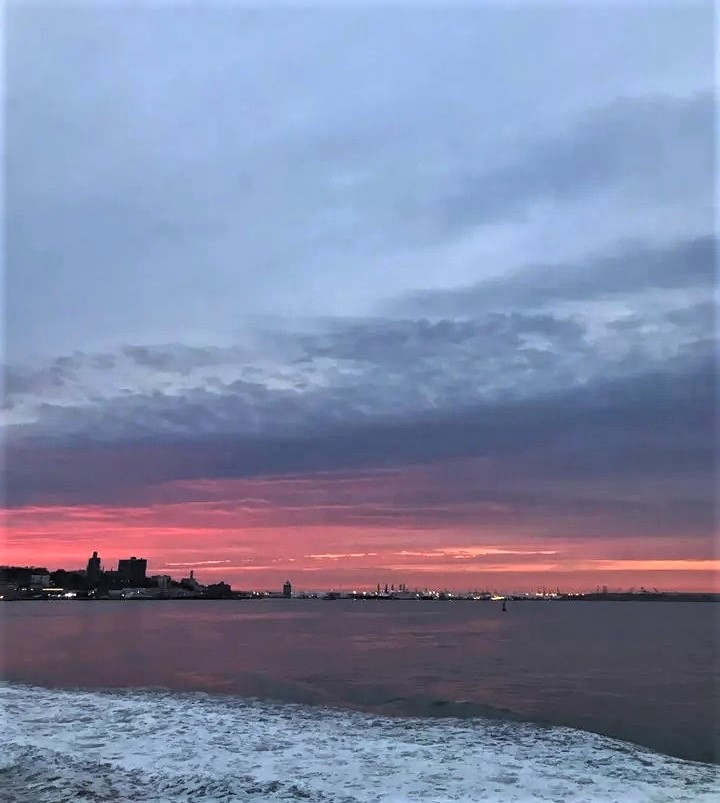
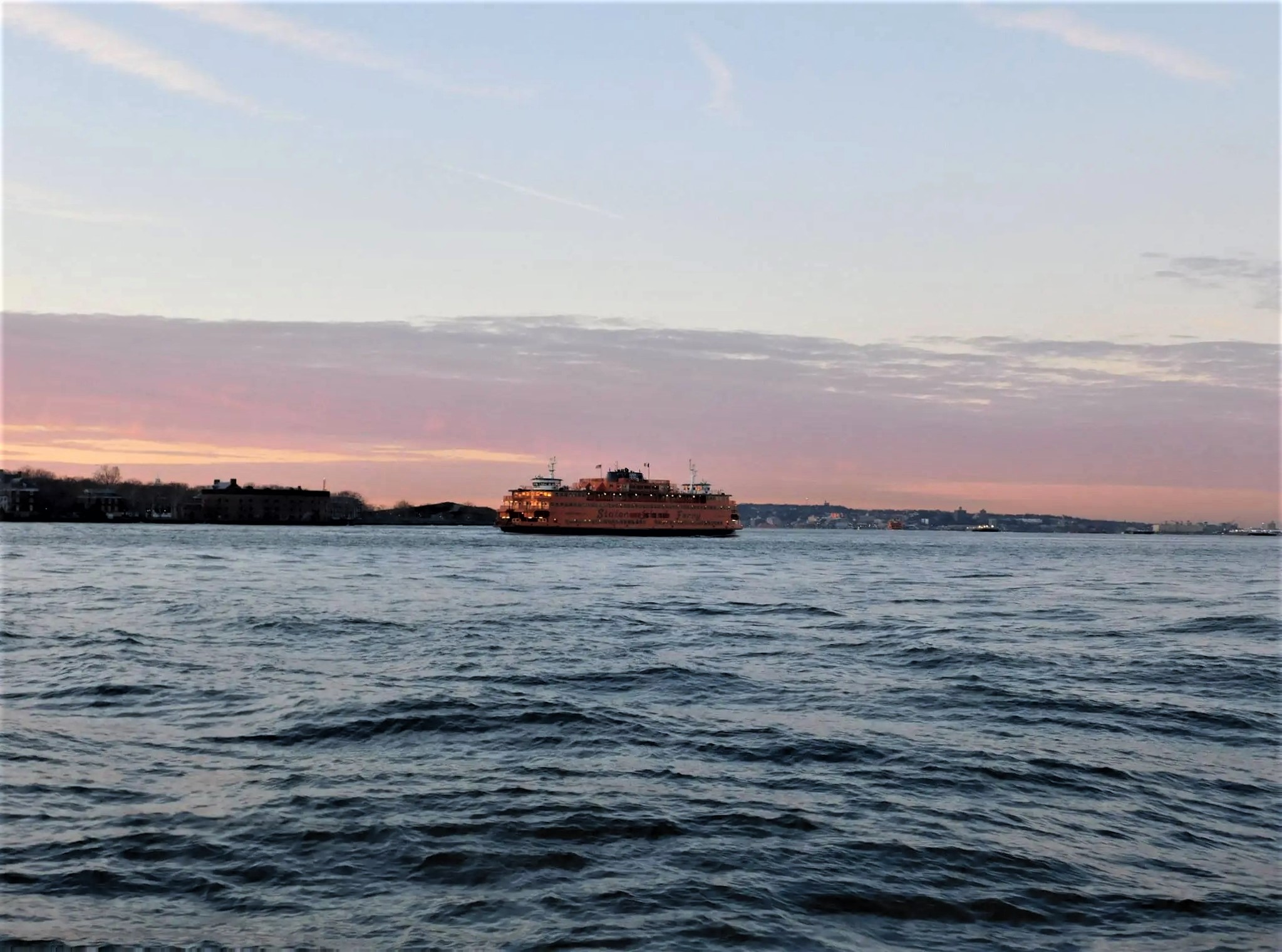
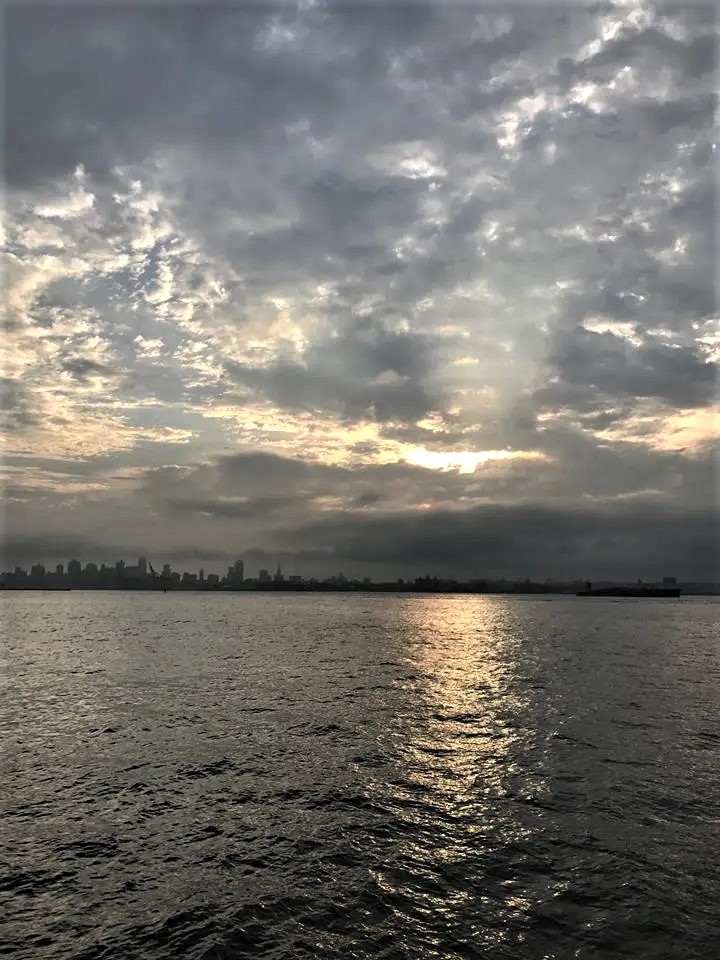
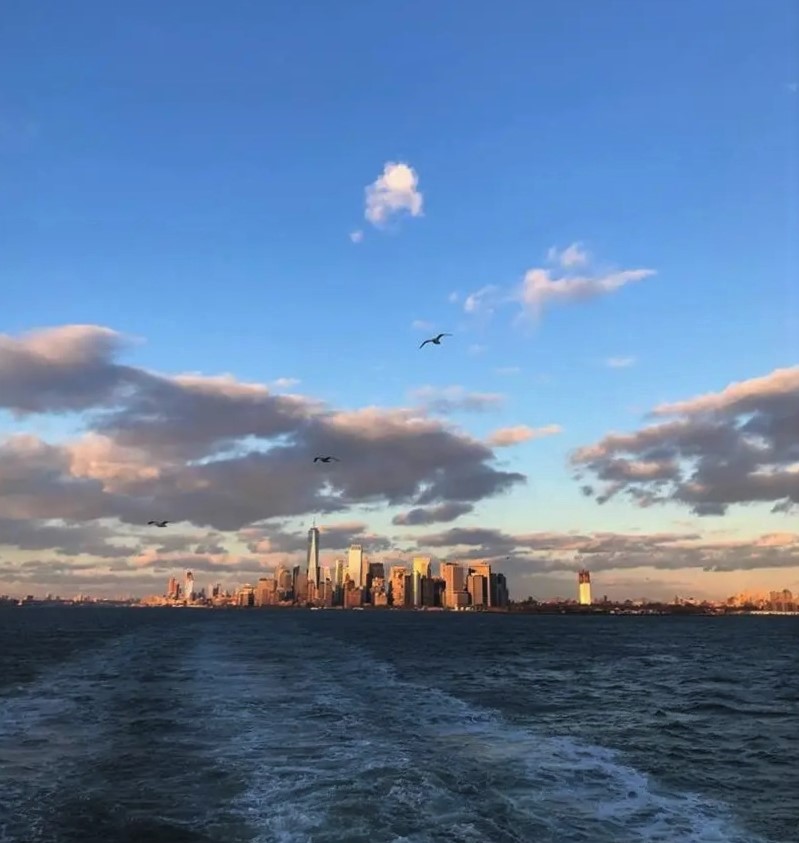
the ferry


photographs by Roger W. Smith


*****************************************************

The glories strung like beads on my smallest sights and hearings—on the walk in the street, and the passage over the river;
The current rushing so swiftly, and swimming with me far away;

Just as you are refresh’d by the gladness of the river and the bright flow, I was refresh’d;
Just as you stand and lean on the rail, yet hurry with the swift current, I stood, yet was hurried;
Just as you look on the numberless masts of ships, and the thick-stem’d pipes of steamboats, I look’d.

I too many and many a time cross’d the river, the sun half an hour high;
I watched the Twelfth-month sea-gulls—I saw them high in the air, floating with motionless wings, oscillating their bodies,
I saw how the glistening yellow lit up parts of their bodies, and left the rest in strong shadow,
I saw the slow-wheeling circles, and the gradual edging toward the south.
I too saw the reflection of the summer sky in the water,
Had my eyes dazzled by the shimmering track of beams,
Look’d at the fine centrifugal spokes of light around the shape of my head in the sun-lit water,

Look’d on the haze on the hills southward and southwestward,
Look’d on the vapor as it flew in fleeces tinged with violet,

The scallop-edged waves in the twilight, the ladled cups, the frolicsome crests and glistening,

Now I am curious what sight can ever be more stately and admirable to me than my mast-hemm’d Manhattan,
My river and sun-set, and my scallop-edg’d waves of flood-tide,
The sea-gulls oscillating their bodies, the hay-boat in the twilight, and the belated lighter*;

Flow on, river! flow with the flood-tide, and ebb with the ebb-tide!
Frolic on, crested and scallop-edg’d waves!

Gorgeous clouds of the sun-set! drench with your splendor me, or the men and women generations after me;
Cross from shore to shore, countless crowds of passengers!
Be firm, rail over the river, to support those who lean idly, yet haste with the hasting current;
Fly on, sea-birds! fly sideways, or wheel in large circles high in the air;
Receive the summer sky, you water! and faithfully hold it, till all downcast eyes have time to take it from you;
Diverge, fine spokes of light, from the shape of my head, or any one’s head, in the sun-lit water;
Come on, ships from the lower bay! pass up or down, white-sail’d schooners, sloops, lighters!

— excerpted from Walt Whitman, “Crossing Brooklyn Ferry”

* A lighter is a flat-bottomed barge used to transfer cargo to and from ships in harbor.


— posted by Roger W. Smith

   January 2018